

Balance Bikes with Pedals + DIY Method
Convertible balance bikes are designed to convert to a small pedal bike once your child masters the balance bike. As a balance bike and a pedal bike, this 2-in-1 idea sounds ideal, but does it deliver on expectations?
We’ve tested all the major options on the market and have summarized our findings below. After helping readers navigate the balance bike to pedal bike transition for years, we have also included a frequently asked questions section about convertible balance bikes below.
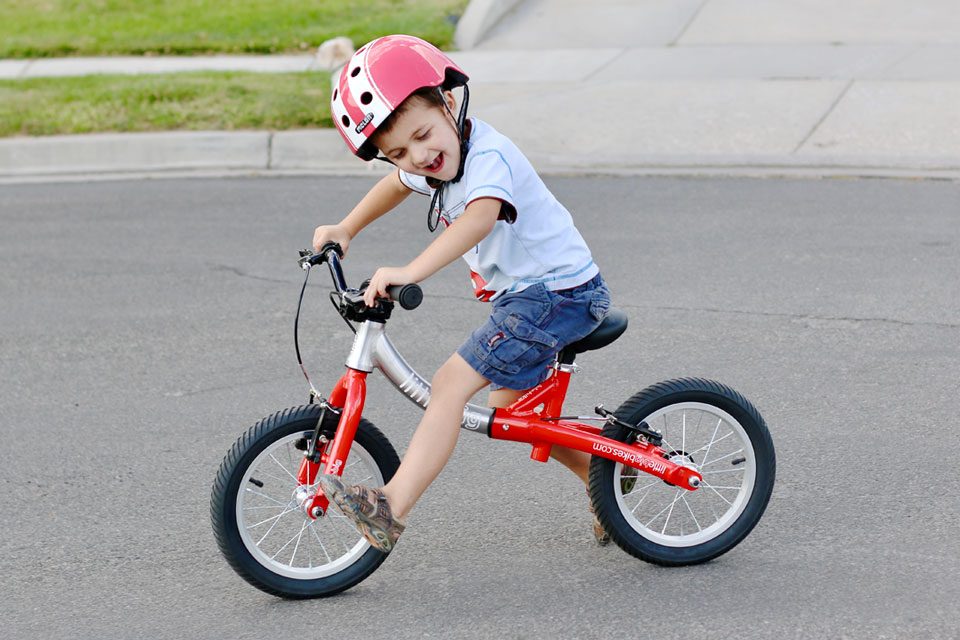
Best Balance Bikes with Pedals
| Balance Bike with Pedals | Seat Height Range | Balance Bike MSRP | Pedal Kit MSRP |
| Strider 14x | 15" - 22" | $219 | $70 |
| LittleBig | 14" - 21" | $295 | $75 |
| Strider 20x Sport | 21.5″ – 33.1″ | $379 | $80 |

Strider 14x
$219 (balance bike only), $70, optional pedal kit
SEAT HEIGHT: 15″ – 22″
WEIGHT: 12.5 lbs (as a balance bike)
BRAKES: As a pedal bike, it has a coaster brake
BEST FITS KIDS: While the manufacturer recommends from ages 3 to 7, based on our testing, we recommend only from ages 3 to 5, or with inseams ranging from 15″ to 20″ in balance bike mode and 14″ to 20″ in pedal bike mode.
Pros:
Cons:
What You Should Know About the Strider 14x
If you’ve heard of the Strider bike with pedals, this is it! The Strider 14x was a long time coming for the brand that made balance bikes a household name. With 14″ air tires (the traditional Strider has 12″ foam), a larger frame, taller handlebars to give the rider more room, and a larger footrest, the Strider 14x is an affordable option for kids starting off their balance bike journey a little later.
We appreciate that the Strider 14x’s pedal kit is optional, so you only need to buy it if you need it. However, the Strider is the only bike on this list that doesn’t have a handbrake. It offers a coaster brake in pedal mode, but no brake at all in balance bike mode. While kids generally use their feet to stop on a balance bike, kids on 14″ balance bikes are larger and can ride faster, making a brake very useful.
LittleBig
$295 (balance bike only), $75, optional pedal kit
SEAT HEIGHT: 14″ – 21″
WEIGHT: 11.2 lbs. (balance bike), 14.6 lbs. (pedal bike)
BRAKES: Dual hand brakes
BEST FITS KIDS: With a minimum seat height of 14″ as a small balance bike and 18″ as a larger balance bike, the bike fits kids in size 2T to size 5 clothes.
Pros:
Cons:
What You Should Know About the LittleBig
LittleBig Bikes were the first to make a high-quality balance bike with pedals, which is also sold at a very reasonable price. The LittleBig bike is actually three bikes in one. A small balance bike with a minimum seat height of 14″, a larger balance bike with a minimum seat height of 18″, and a pedal bike with a minimum seat height of 18.5″.
After a child has outgrown the small balance bike, the frame of the LittleBig flips to raise the seat height and handlebars to transform it into a larger balance bike. Then when a child is ready for pedals, simply add the pedal kit.
One major benefit of the LittleBig is that it has dual handbrakes in balance bike mode and pedal bike mode. This helps instill proper braking technique from a young age, and makes transitioning to a pedal bike even easier. For US customers, make sure to request that the brakes be set to US standards – left brake on the front wheel, right brake on the rear.
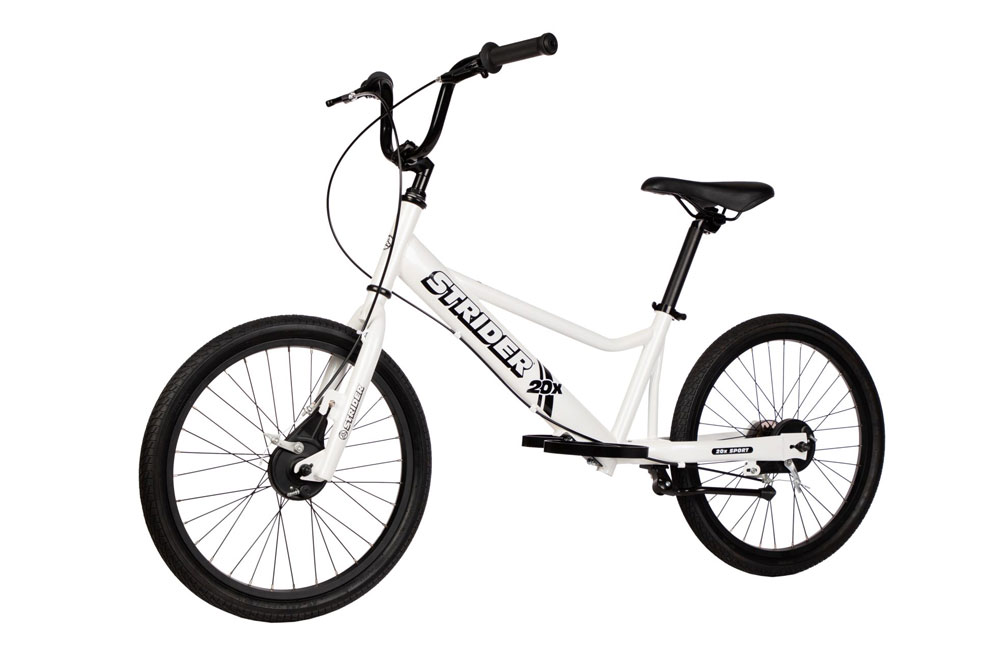
Strider 20x
$369 (balance bike only), $89, optional pedal kit
SEAT HEIGHT: 21.5″ – 33.1″
WEIGHT: 11.2 lbs. (balance bike), 14.6 lbs. (pedal bike)
BRAKES: Dual hand brakes
BEST FITS KIDS: Heights 49″ – 72″
Pros:
Cons:
What You Should Know About the Strider 20
The Strider 20 Sport is the largest balance bike available on the market, and is highly adjustable for a long-term fit. With about 12″ of seat height range and handlebars that can also be raised and lowered, this one balance bike is designed to fit a 7-year-old and a fully grown adult.
For kids and teens who are developmentally delayed and may not take to pedals, the Strider 20x Sport’s pedal kit is optional. Buy it now, buy it later, buy it never… whichever fits your individual needs.
Note: While we tested the older, discontinued, 16″ Strider, we have not yet tested the 20″ Strider.
DIY Balance Bike with Pedals
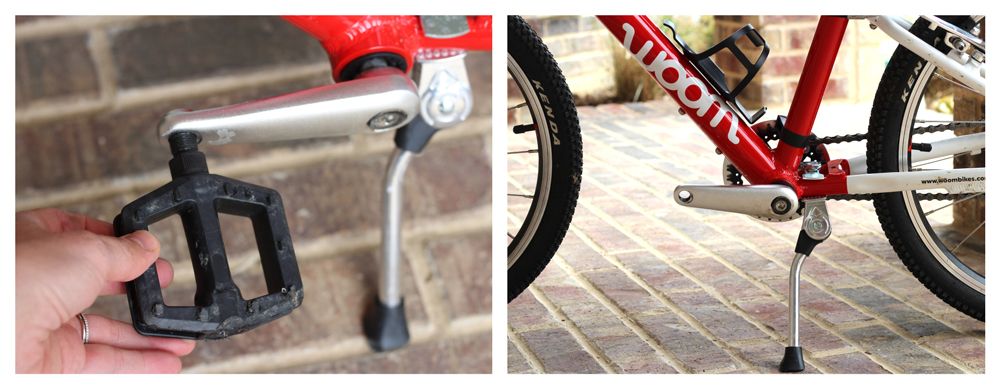
Realistically, any pedal bike can be turned into a balance bike. It’s the ultimate balance bike with pedals! Just unscrew the pedals and take them off the crank arms of your child’s bike.
You’ll need to lower the seat height so your child has a slight bend in their knee. This allows them to comfortably push off the ground with their feet and also stop safely. Once they can confidently balance and maneuver this “balance bike”, put those pedals back on.
This method is best for kids 5 or older on a 16″ bike or larger. This is a temporary solution meant to get a child pedaling on their bike fairly quickly.
We don’t recommend this option for kids in 2T – 4T clothes. 12″ and 14″ pedal bikes are so much heavier than a balance bike – often 6 – 10 pounds heavier! That’s a lot of extra weight for a 25 – 40 pound toddler to manage. Additionally, for a child in 2T pants (and most 3T), there isn’t a pedal bike seat that would even go low enough for them to use it as a balance bike.
Balance Bike with Pedals – What you need to know

Do they perform as well as a separate balance bike and pedal bike?
2-in-1 products are rarely great at both things. Every convertible balance bike we’ve tested is better as a balance bike than a pedal bike.
BALANCE BIKE MODE: Convertible balance bikes perform well as balance bikes. However, they are usually heavier than a standard balance bike. If you have a lightweight, petite, or timid child, these added few pounds can be cumbersome for them as they ride.
PEDAL BIKE MODE: While the balance bike mode can be used for quite some time, the pedal bike mode is a short-term solution. The pedals are generally small and the crank arms are short, making riding the pedal bike unrealistic for long periods of time or distances. As a child gains confidence, they will be uncomfortable on the pedal bike. You will likely need to buy a real pedal bike within a few weeks or months of adding the pedal kit.
Are they a good value?
Most parents buy a balance bike with pedals to save money. Instead of buying a balance bike and then a 14″ pedal bike, they just want to buy one bike.
While you’re saving money, you’re often sacrificing experience. A dedicated balance bike is usually better than a convertible balance bike. A dedicated pedal bike is almost always better than a balance bike with added pedal kit (unless you’re buying a cheap bike at a big box store).
If you’re trying to avoid buying a 14″ pedal bike after a balance bike, we often recommend skipping a 14″ pedal bike anyways. They are very small and kids outgrow them quickly! Many balance bikes have enough seat height adjustability to ride until a child is ready for a 16″ pedal bike. While the balance bike may technically be too small for a time, it’s a cost effective option.
Can you add pedals to any balance bike?
No. You can only add pedals to balance bikes that are designed to accommodate an optional pedal attachment kit. We’ve listed all the bikes we know of on this page.
How hard is it to add the balance bike pedal attachment?
It really depends on the brand. We’ve found the Strider 14x and SmartTrike Xtend to be very straightforward. The process only takes a few minutes.
Attaching the pedals on the LittleBig is more involved, but nothing too complicated for the average parent.
Doesn’t BMW make a balance bike with pedals?
They did, but we can’t find them available anymore. The BMW balance bike with pedals is actually the very first convertible balance bike that we know of. We’ve never gotten our hands on one, but we’d sure love to.
