Best Baby & Child Bike Seats (2026): Tested & Reviewed
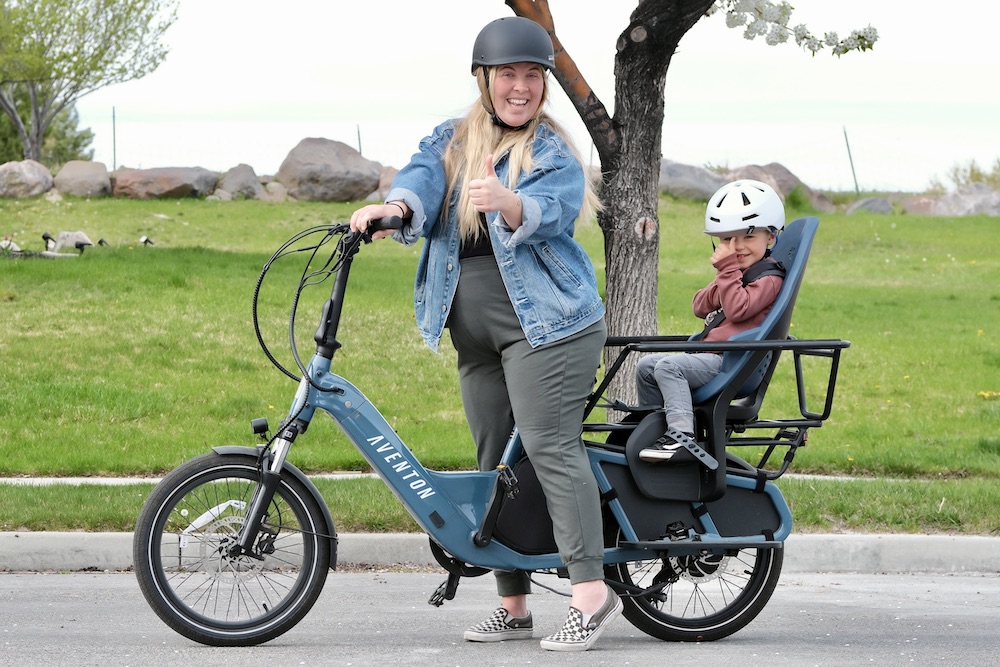
When buying a child or baby bike seat, it’s easy to end up with one that doesn’t fit your bike or your child. That’s where we come in. Over the past 16 years, we’ve personally tested over 60 child bike seats with our own kids, so you can feel confident you’re choosing the right seat for your family.
Below you’ll find our top picks with mini reviews, covering every mounting style (front vs. rear, frame vs. rack) and age range from babies to preschoolers.
A note on infants: We recommend waiting until your child is at least 12 months old before using a bike seat. Babies need sufficient neck strength to support their head while wearing a helmet, here’s more on why.
The Best Child Bike Seats for Ages 1 to 4 Years
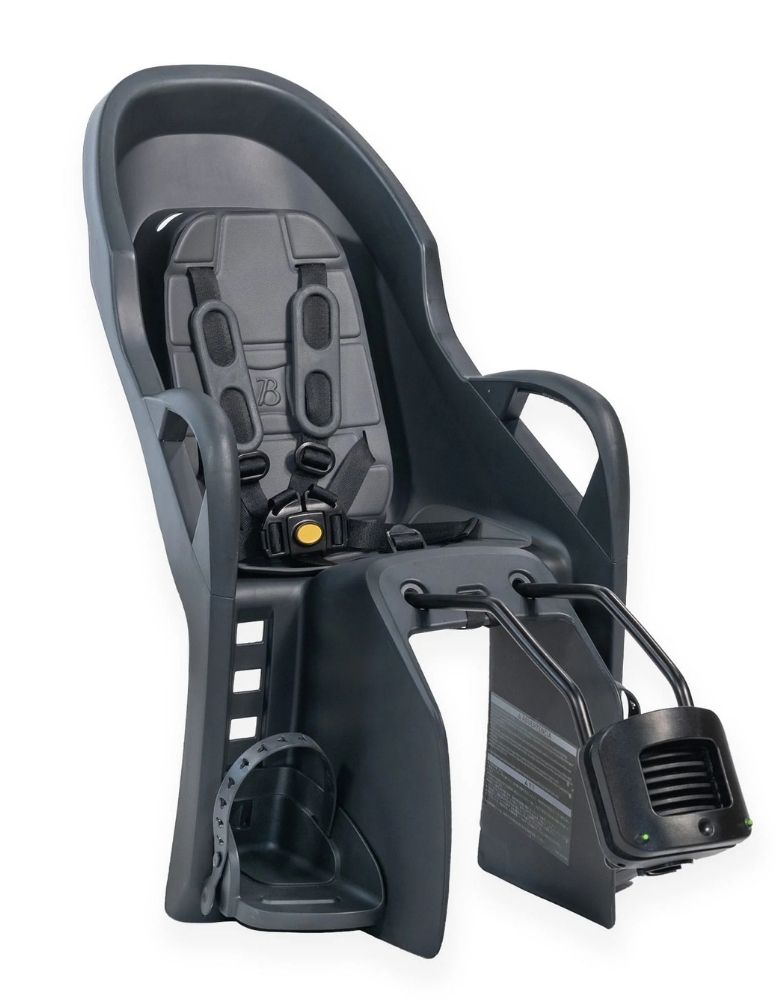
Burley Dash
PRICE: $179+
AGES: 12 mo. to 40 lb.
MOUNT: Frame, Rack, MIK HD
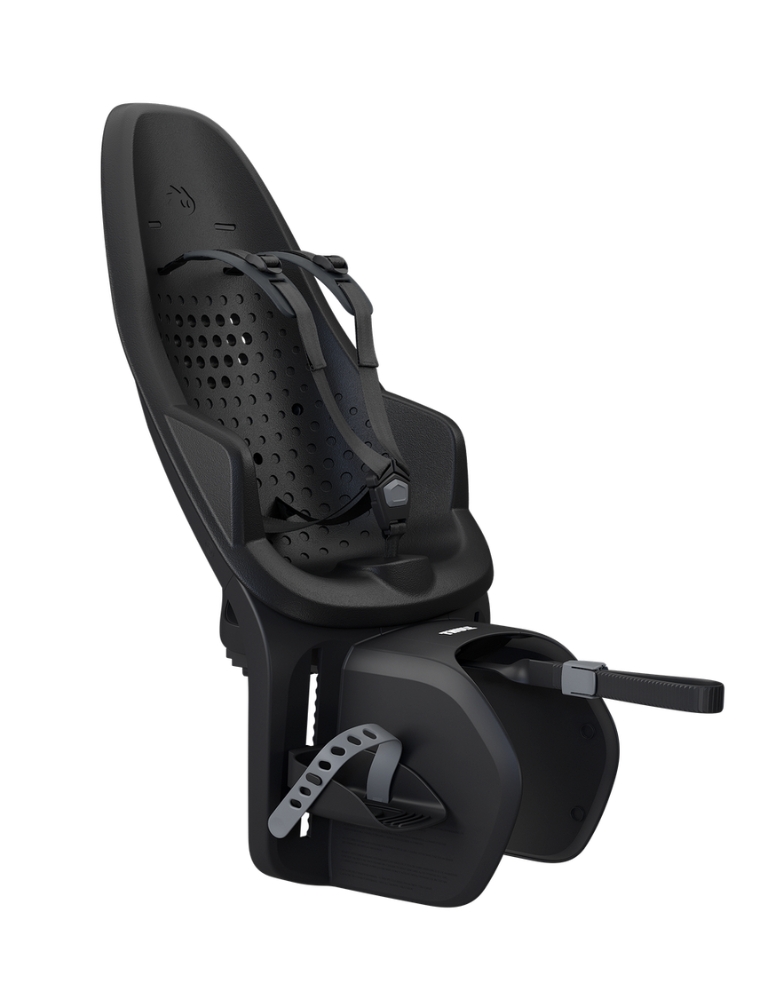
Thule Yepp 2 Maxi
PRICE: $269+
AGES: 12 mo. to 40 lb.
MOUNT: Frame, Rack, MIK HD
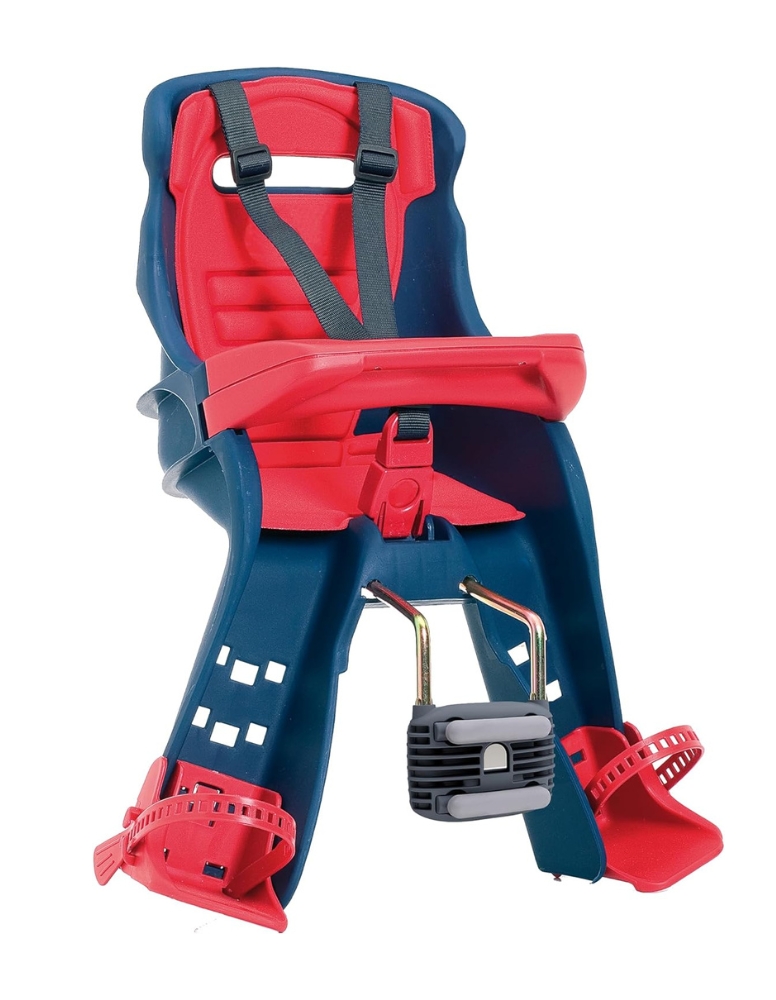
Peg Perego Orion
PRICE: $79
AGES: 12 mo. to 33 lb.
MOUNT: Front mount only
Additional Recommended Child Bike Seats
Frame Mounted Seats
・Thule RideAlong 2, $319 – Best Reclinable Seat
・Thule Yepp Nexxt 2 Maxi, $299 – Best Ventilation
Rack Mounted Seats (Racks Included)
・Burley Dash RM, $229 (w/rack), $179 (seat only) – Best for Smaller Toddlers
・Topeak BabySeat II, $229 – Better for Taller Riders
Front-Mounted Seats for City Bikes
・Thule Yepp Nexxt 2 Mini, $249 – Best for Young Toddlers
・UrRider, $95 – Harness Free for Older Toddlers
Front-Mounted Seats for Mountain Bikes (w/ front suspension)
・Shotgun Pro EVO, $439 – Best for Young Toddlers
・Mac Ride, $269 – Best for Older Toddlers
Never Used a Child Bike Seat?
It is really easy to accidentally purchase the wrong type of seat. If you have never used one before, be sure to check out our Buying Guide at the end of this article.
BABY AND CHILD BIKE SEATS – MINI REVIEWS
We’ve personally tested every seat we recommend. Below are brief summaries of each seat, but for a deeper dive, be sure to check out our full-length, in-depth reviews linked to below!
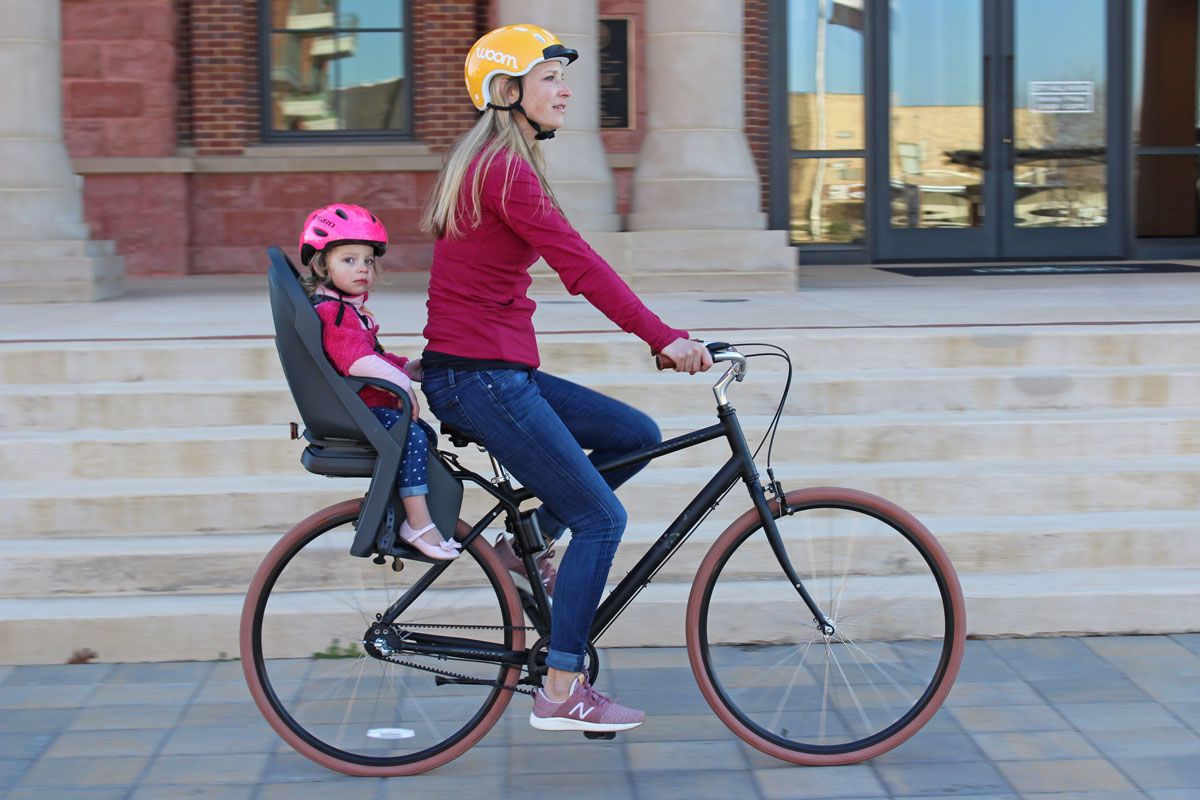
Burley Dash
$179 (frame and rack), $189 (MIK HD), $219 (recline model)
AGE RANGE: 12 months – 40 lbs.
FRAME MOUNTING INFO: Need 4.1″ on seat tube to mount (clear of wires)
RACK MOUNTING INFO: Can be purchased with or without a rack, MIK-HD specific version also available
FEATURES: Rear storage pocket, 5-point harness with higher buckle, optional recline, easy-to-clean padding, variable height footrest
What We Love About the Burley Dash
If you love Burley bike trailers, you’ll love the Burley Dash child bike seat! Durable and well-designed for a very fair price point, the Dash seats are easy to mount and easy to use, and because it needs just 4.1″ of seat tube versus the 6″ other seats require, it fits on smaller bikes many other seats won’t.
Burley’s child bike seats have two unique features that set them apart from the competition. 1) The rear storage pocket is a game changer for short trips when you just need to bring your keys and wallet and don’t want to bother with a purse or backpack. The other seats on this list don’t have this feature!
2) The 5 point harness system adjusts in length from the top, bottom, and sides. All this adjustability allows you to place the buckle lower or higher on your child’s chest according to your preference. We’ve found that being able to place the buckle higher prevents our devious toddler from wiggling her way out of the harness while we’re not looking.
If you’re looking for a rack-mounted seat, Burley makes the process much easier by offering their own proprietary rack that works with the seat. They also offer a version of the Dash that is MIK rack compatible, which is the built-in rack system you’ll find on most cargo e-bikes.
Thule Yepp 2 Maxi
$249 (rack mount), $269 (frame mount), $269 (MIK HD)
AGE RANGE: 1 year to 40 lbs. (48.5 lbs. in Europe)
MOUNTING INFO: >6″ needed to mount bracket on seat tube (clear of wires), or eyelets on bike’s frame for mounting a rack
FEATURES: 5-point harness, variable-height sliding footrest adjustment, suspension on all models
What We Love About the Thule Yepp 2 Maxi
If you’re planning to take your little one for a ride on your ebike, the Thule Yepp 2 Maxi is a fantastic choice. Its waterproof design, suspended seat, tall backrest, and excellent ventilation make it a comfortable option for both short rides around town and longer adventures. Plus, with three different mounting options—frame, rack, and MIK HD rack (a common feature on many cargo ebikes)—the Yepp 2 Maxi is our top pick for ebikes.
While the Yepp 2 Maxi stands out for its quality and ease of use, we did find that the buckle on our test samples wasn’t entirely child-proof, as a few of our testers managed to unbuckle themselves. However, after speaking to Thule, as well as other reviewers and parents, we haven’t come across anyone else reporting the same issue.
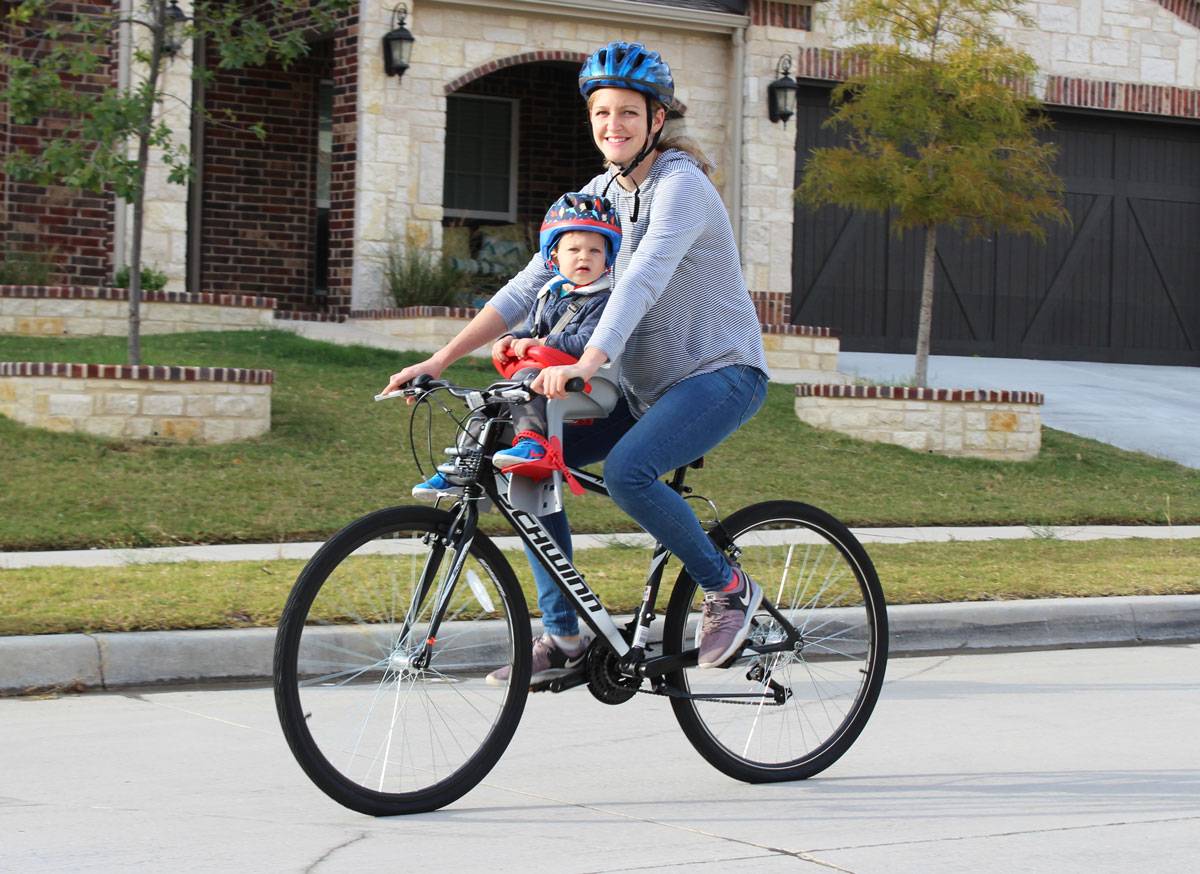
Peg Perego Orion
$79
AGE RANGE: 12 months – 33 lbs.
MOUNTING INFO: One of few front seats to mount to the frame of the bike, rather than the headset. Accommodates many different frame styles.
FEATURES: Suspension, 3-position adjustable footrest, standard nylon shoulder straps, mounting bracket accommodates many types of bike frames
What We Love About the Peg Perego Orion
For the low price, there’s not much you can complain about with the Orion. While not as high-quality as the other seats we recommend, we do appreciate its unique mounting system that works for bikes with little or no room on the headset for a mounting bracket. And because it attaches to the head tube of the bike instead of the headset, the bike seat stays stationary when you turn the handlebars.
With the weight of the seat always in the same spot, the center of balance is more consistent, which is an advantage for adult riders that struggle a bit with balance. The seat is small compared to other front-mounted seats so as your child grows, the seat will provide less coverage.
Additionally, the detachable handlebar only works for kids up to 22 lbs., so the Orion does begin to be less of a bargain as your young toddler grows older.
FRAME MOUNTED SEATS
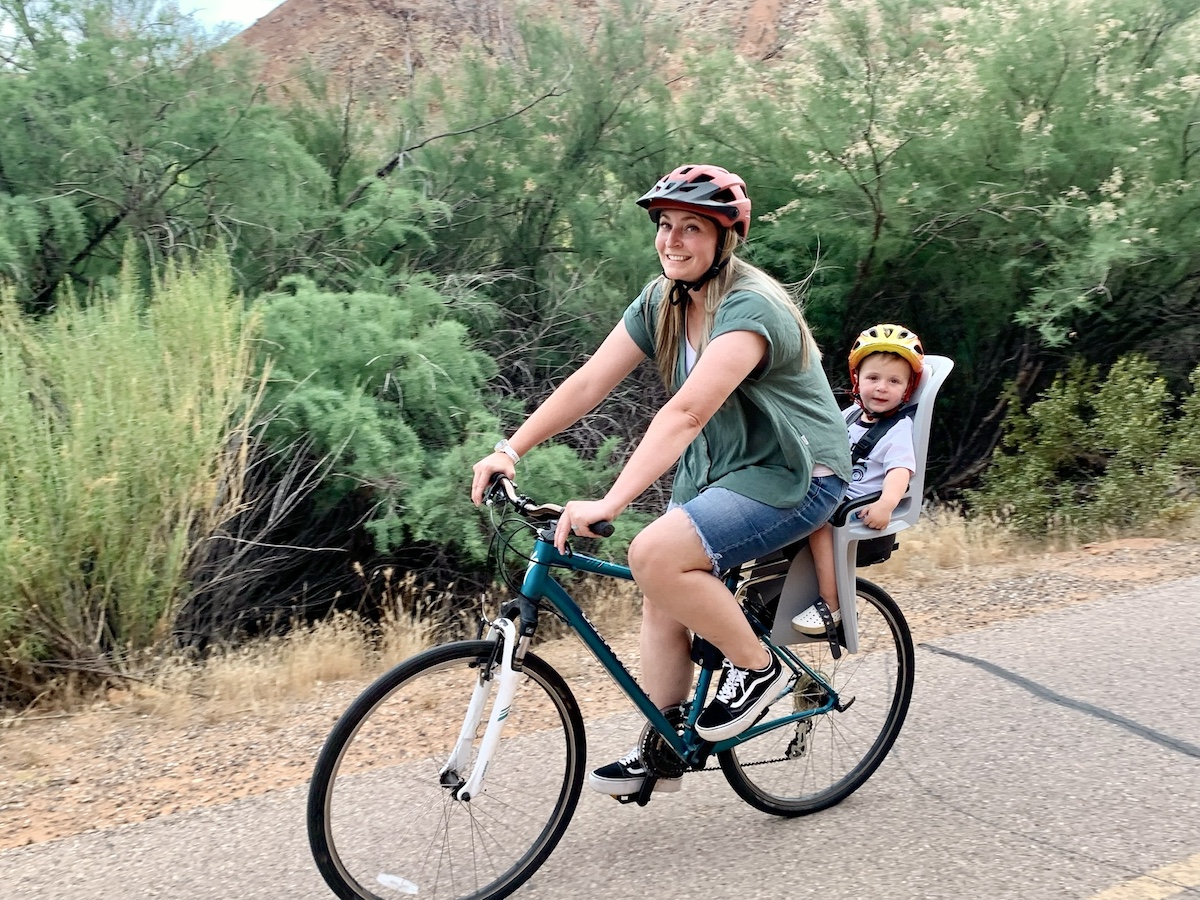
Thule RideAlong 2
$319
AGE RANGE: 1 year – 40 lbs.
MOUNTING INFO: >6″ needed to mount bracket on seat tube (clear of wires)
FEATURES: 5 reclining positions, suspension, variable-height sliding footrest, and soft, easy-to-adjust
What We Love About the Thule RideAlong 2
The Thule RideAlong 2 stands out as one of the most versatile rear-mounted child bike seats thanks to its wide fit range, easy adjustments, and ability to recline on the go. Its continuously adjustable, no-rethread shoulder straps make dialing in the perfect fit effortless, whether you’re strapping in a 12‑month‑old or a growing toddler.
We also love the RideAlong’s long armrests with integrated safety wings, which not only give kids a comfortable place to rest their arms but also help keep them cooler on warm rides. Add in the quick-mount bracket that makes swapping the seat on and off a breeze and a fabric pad that stays cooler in the sun than most competitors, and it’s easy to see why the RideAlong 2 remains a family favorite.
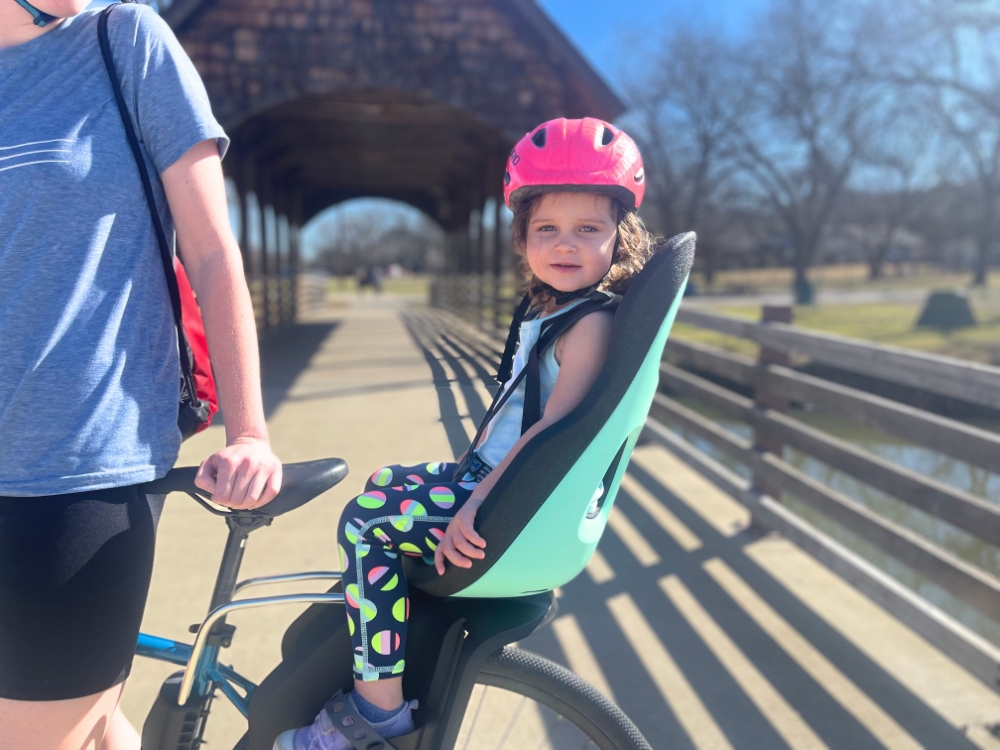
Thule Yepp Nexxt 2 Maxi
$269 (rack mount), $299 (frame mount)
AGE RANGE: 1 year – 40 lbs. (48.5 lbs. in Europe)
MOUNTING INFO: >6″ needed to mount bracket on seat tube (clear of wires), or eyelets on the bike’s frame to mount a rack
FEATURES: Large vents for keeping toddlers cool, foot straps better than most, variable-height sliding footrest, 5-point harness, magnetic buckle
What We Love About the Yepp Nexxt 2 Maxi
Lightweight with a low center of gravity, we found the Thule Yepp Nexxt 2 Maxi to have minimal effect on the adult rider’s balance. It also has large vents to keep a child’s back cool in hot weather, and a soft, dense foam pad for added bum comfort.
Parents will appreciate the unique, child-proof magnetic buckle and the foot straps that do a much better job than most of keeping little feet secured in place. And of course, made by Thule, the quality and ease-of-use are top notch.
RACK MOUNTED SEATS
Many of the seats listed above are also available in rack-mounted versions, but aside from the Burley Dash, their rack-mounted options do not include a rack. Since finding a bike rack that is compatible with child seats can be surprisingly difficult, choosing a seat that comes with a rack can save you a lot of time and hassle.
If you already have a bike rack, be sure to check its compatibility before mounting a child seat, as many racks are not designed for this purpose. Also, keep in mind that once a child bike seat is attached, panniers cannot be used on the same rack.
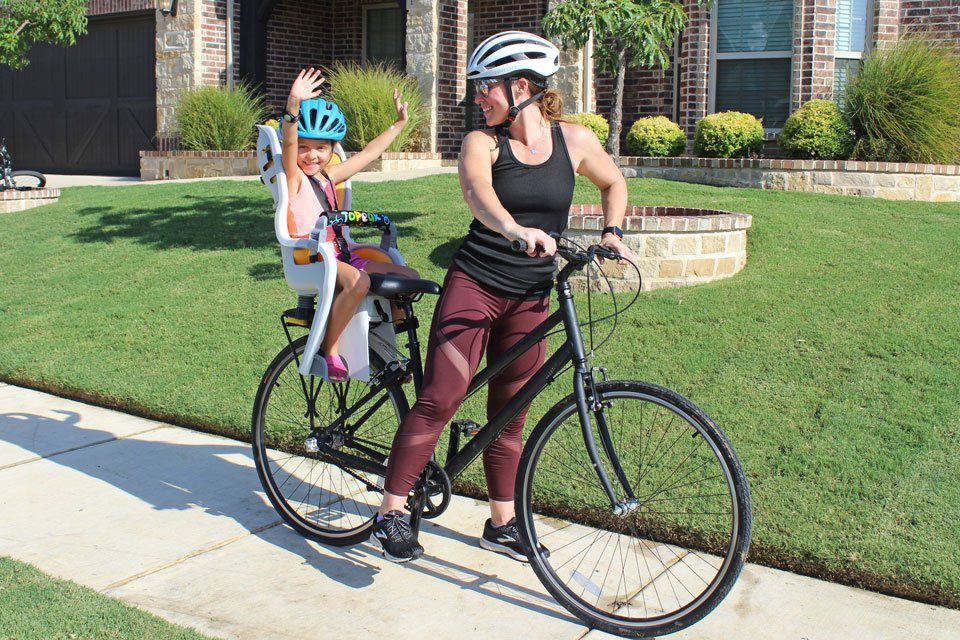
Topeak BabySeat II
$189 (without rack), $229 (with rack)
AGE RANGE: 12 months – 48.5 lbs.
RACK MOUNTING INFO: Available with a rack for mounting. Different options for standard brakes or disc brakes. There is not an option for mounting on the frame of the bike.
FEATURES: Wrap-around design for extra protection, suspension, soft mesh-layered padding, variable-height footrest, easy on and off
What We Love About the Topeak BabySeat II
If you know that your bike doesn’t work with a frame mounted seat and you need a rack mounted seat, the Topeak BabySeat II with an included rack is a simple choice. With all the racks on the market, it can be confusing to find a rack that will work with your child bike seat. Topeak takes that frustration factor out of the equation!
The BabySeat II is also unique because it attaches to the rack via a proprietary mounting system that simply clicks into place and is much faster to mount and un-mount than other rack-mounted seats.
FRONT MOUNTED SEATS
Front-mounted seats are a fantastic way to ride together with your little one. With them safely between your arms, you can easily chat and point out sights along the way. These seats come with or without a harness—models without a harness are best suited for confident preschoolers who can hold on independently! If you’re interested in checking out other front kids bike seats, check out our Best Front Child Bike Seats comparison list.
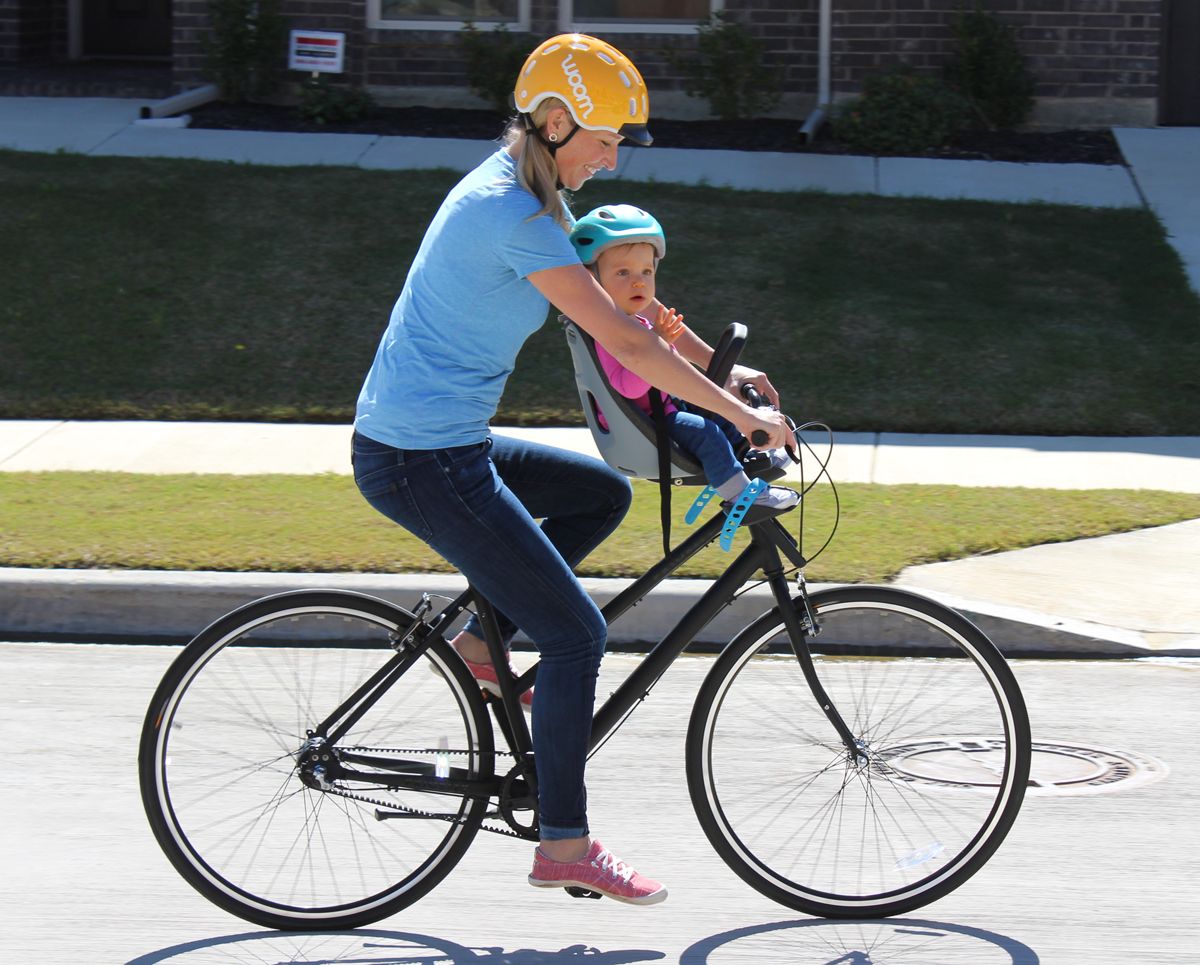
Thule Yepp Nexxt 2 Mini
$249
AGE RANGE: 12 months – 33 lbs.
MOUNTING INFO: Need 0.83″ of free space on the stem for the mounting block
FEATURES: Large vents for keeping toddlers cool, foot straps better than most, variable-height sliding footrests, handlebar to keep toddlers’ hands occupied, magnetic buckle
What We Love About the Thule Yepp Nexxt 2 Mini
In addition to being one of the best seats on the market, the Thule Yepp Nexxt 2 Mini is also one of the lightest. It features the high quality and ease-of-use you’d expect from Thule, with a unique, child-proof magnetic buckle. Its large air vents will keep your baby cooler in hot climates.
The Yepp Nexxt 2 Mini’s quick release bracket allows you to snap the seat on or take it off in less than 5 seconds. This makes getting out for spur of the moment rides exceptionally easy. We also love the large handlebar in front to keep little one’s hands occupied and off your handlebars!
The Yepp Nexxt 2 Mini, however, is not compatible with mountain bikes with suspension forks or with carbon frames.
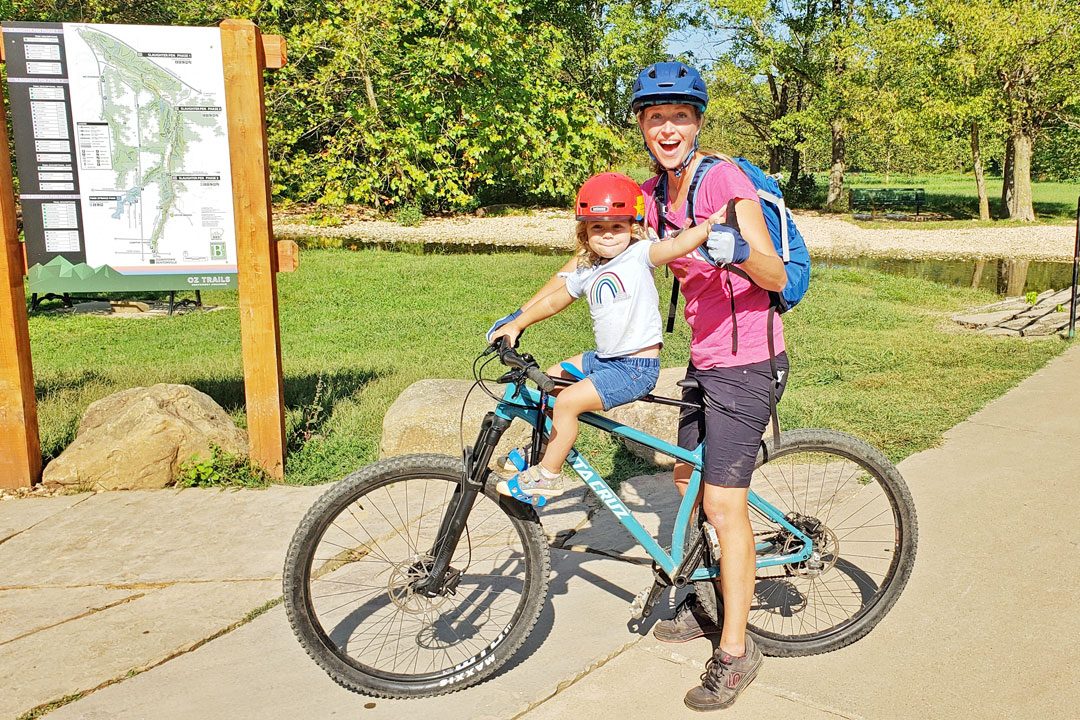
Mac Ride
$269
AGE RANGE: 24 months – 5 years (up to 60 lbs.)
MOUNTING INFO: Mounts on the headset and the seat post. Headset mounting spacer required.
FEATURES: Open set-up and low-placed saddle provide much more space for the parent rider. U-shaped saddles keeps kids in place on rougher terrain. No frame contact.
What We Love About the Mac Ride
The Mac Ride bike seat is a unique “mid-mount” child bike seat that places kids front and center while riding. Originally designed for mountain bikes, the Mac Ride will accommodate a wide variety of frames – from trail bikes to downhill full-suspension mountain bikes.
The Mac Ride is a great choice for any trail riding family, but if your family isn’t quite ready to hit the trails, not to worry! The Mac Ride also makes for a great seat around town and can fit on cruiser style bikes with a quill stem adapter.
The unique mounting system of the Mac Ride allows you to take it on or off your bike in mere seconds, and swap between bikes just as easily.
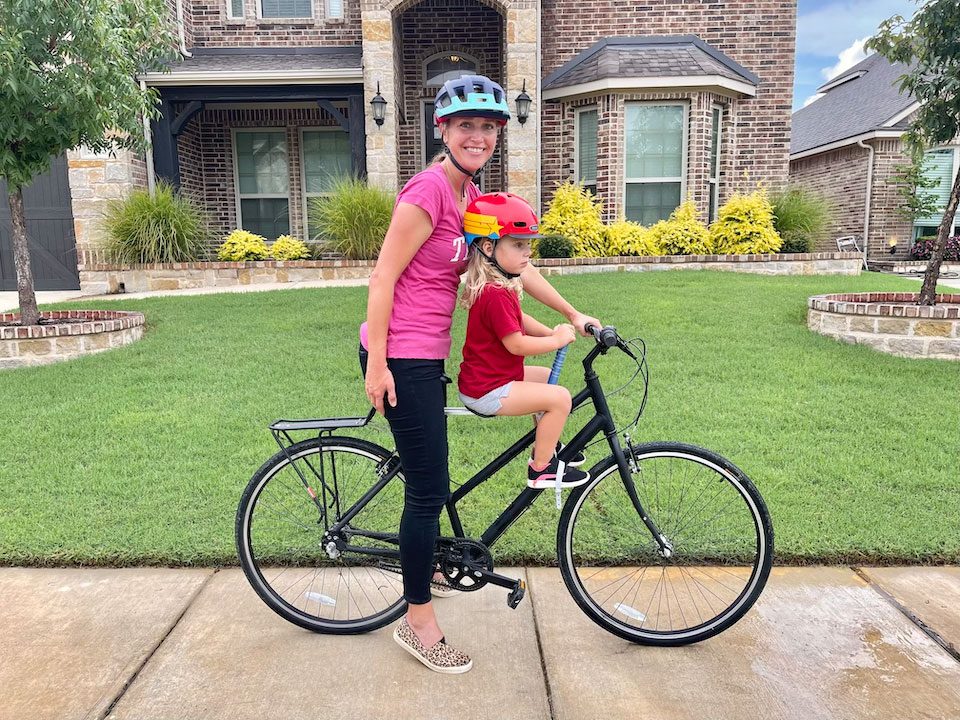
UrRider
$95
AGE RANGE: 2 to 5
MOUNTING INFO: No mounting hardware, attaches to seat post while also resting on the bike’s top tube
FEATURES: Easily mounts on and off in 30 seconds, padded and ventilated seat, handlebar included
What We Love About the UrRider
The UrRider is a front-mounted, open-style child bike seat designed for kids ages 2 to 5 who are ready to ride up front with a parent. Unlike traditional front seats that max out around age three, the UrRider accommodates kids up to 49 inches tall. Whether it’s a school drop-off, a trip to the park, or a casual paved trail, the UrRider is a versatile and convenient option for everyday family biking.
One of the UrRider’s biggest strengths is its effortless setup: no mounting hardware is required, and the seat can be attached or removed in under 30 seconds. It also folds down compactly, making it easy to store or even pack in a suitcase for family vacations.
Our testers appreciated the included handlebars and padded, ventilated seat. Due to the seat’s width, parents will need to bow their legs out while riding to make room for their child. And because of its size and large grab bar, the UrRider is best kept to paved paths and casual rides and is not suited for technical terrain or trail riding.
How to Find the Best Child Bike Seat for Your Bike
With over 60 different child bike seats tested, we know firsthand how to find the right seat for your child and bike setup. The key to success is understanding the options available and how they suit your needs. Let’s break it down.
STEP 1: Front or Back Child Bike Seat?
Front mounted seats position the child between you and your handlebars. Rear mounted seats position the child behind you.
This is largely a matter of preference but also depends on your child’s age, weight, and your comfort level. We outline the major differences in these styles below.
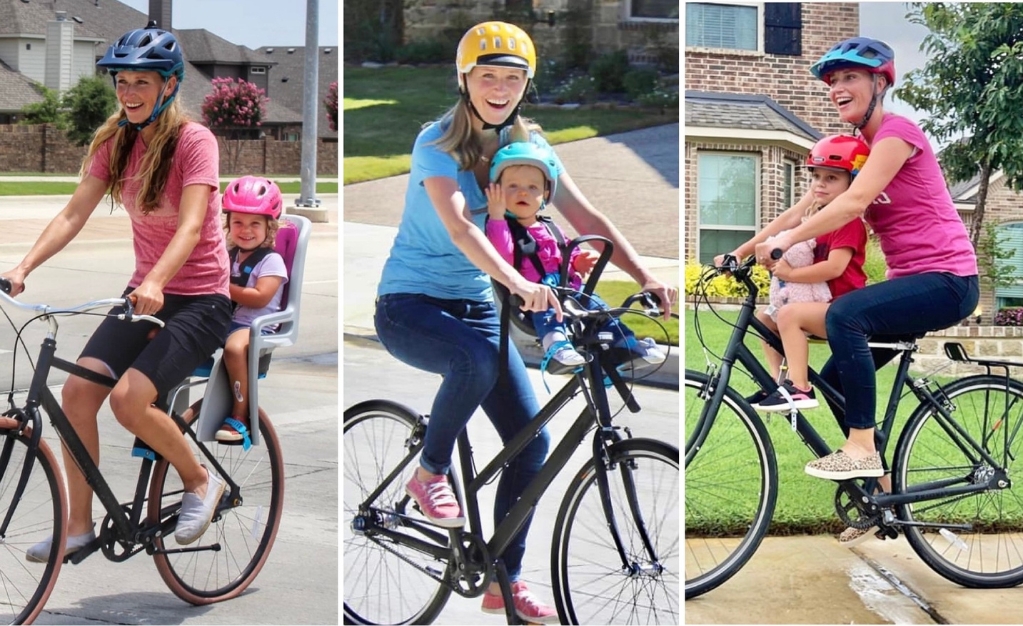
REAR MOUNTED SEAT – in the back
- AGE AND WEIGHT CAPACITY: Rear seats are suitable from 12 months old up to 40 lbs. (in Europe up to 48 lbs.) All rear seats are larger than front-mounted seats and have a longer life span as a result. On the flip side, they are usually not as good of a fit for toddlers under 18 months old.
- MOUNTING: Rear seats can mount to the frame of the bike or a rack, which we’ll delve into in the next question.
- FEATURES: Rear seats often come with added comfort features like reclining options, suspension for smoother rides, and adjustable shoulder straps for better fit and security.
- BIGGEST BENEFIT: These seats last longer, often accommodating your child for 3 to 4 years, compared to 1.5 to 2 years with front-mounted seats. If you’re looking for longevity, a rear-mounted seat is the way to go.
- BIGGEST DRAWBACK: The weight of both the seat and your child being behind you can significantly affect your balance, especially as your child grows. This makes rear-mounted seats a bit more challenging to handle, particularly for less experienced riders.
FRONT MOUNTED SEAT – with a harness
- WEIGHT CAPACITY: Traditional front-mounted seats are smaller and typically accommodate children from 12 months to about 2.5 years old, with a weight limit of 33 lbs.
- MOUNTING: These seats mount near the handlebars, usually to a bike’s headset or head tube. This position provides a close, connected experience for both rider and child. These seats are also not compatible on bikes equipped with suspension forks.
- BIGGEST BENEFIT: Front-mounted seats are ideal for parents who want their child close. With your little one nestled between your arms, you’ll enjoy better visibility and easier bike handling. Kids often feel more secure and love the front-row view, while parents love the “snuggle factor.”
- BIGGEST DRAWBACK: Kids grow out of a standard front seat much quicker than a rear seat.
FRONT MOUNTED SEAT – No Harness, No Seat Back
- AGE AND WEIGHT CAPACITY: Without a harness or seat back to secure your child in place, these mid-mount seats are suitable for ages 2 to 5. At the young end, a child must be old enough to safely hold on to your handlebars. At the older end, many of these seats have a 60 pound weight limit!
- MOUNTING: This newer style of front child bike seat is mounted mid-way between your bike saddle and the bike’s handlebars.
- BIGGEST BENEFIT: These seats have the longest comfortable life span – we rode our 60 pound, 6-year-old to kindergarten on one! Additionally, even at that weight, because the weight is centered on your bike, there is minimal effect on your ability to balance the bike.
- BIGGEST DRAWBACK: Not all parents will be comfortable with small toddlers riding without a harness to secure them.
STEP 2: Bike Compatibility – Frame or Rack Mounted Child Seat?
With a wide variety of child bike seat styles and adult bike frame designs, compatibility is a major issue and is the result of most negative reviews on seats. Once you’ve selected front vs. rear, you’ll need to examine your bike to determine if you can mount the seat to the frame or a rack.
REAR FRAME MOUNTED CHILD BIKE SEAT
Mounting a rear seat to the bike’s frame is more cost-effective because it doesn’t require a separate purchase of a rack. Unfortunately, many bikes are not compatible with frame-mounted seats.
Two Key Questions
(1) Is your bike’s seat tube compatible with a child bike seat?
(2) Is your saddle (seat) set too close to the frame of the bike?
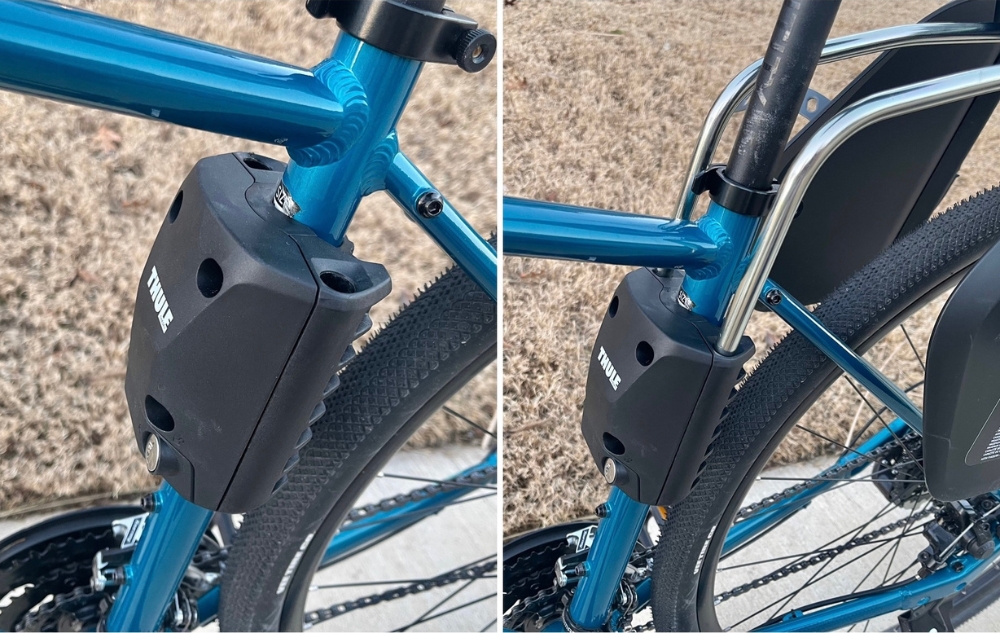
The mounting bracket attaches to the seat tube, which needs to be round and have 4″–6″ of unobstructed space. That means no water bottle studs, wire mounts, or — for most seats — no cables running along that section of the tube.
Interfering Cables for Rear Frame-mounted Seats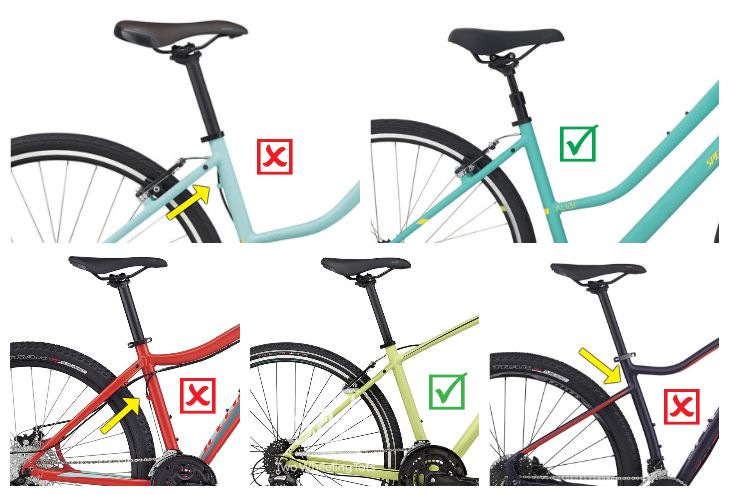
Even if your bike’s frame has enough clearance for the mounting block, a saddle set at or near its lowest position can still prevent a rear frame-mounted seat from fitting properly.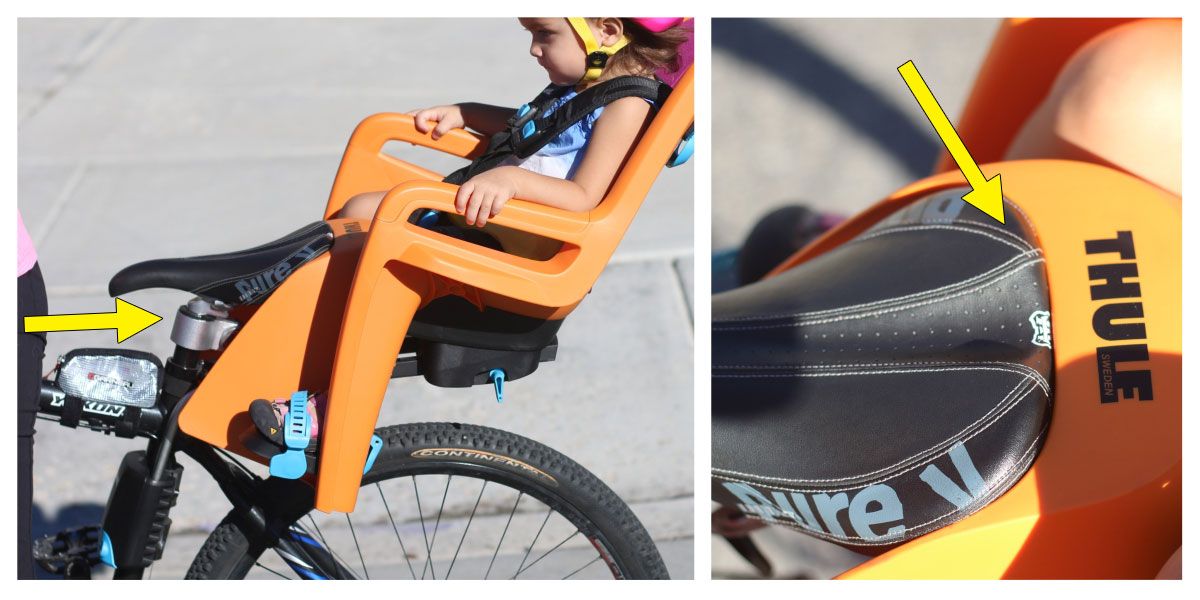
If that’s the case, the Burley Dash frame-mounted seat with extended rails or the Thule RideAlong with a low saddle adaptor are both designed to work around this limitation.
REAR RACK MOUNTED CHILD BIKE SEAT
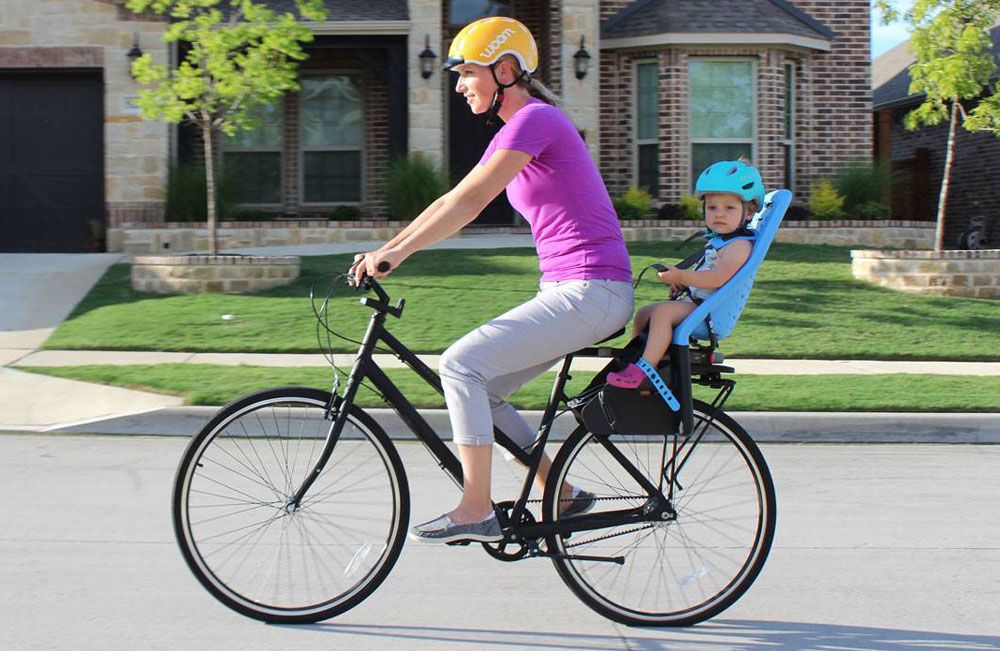
Rear rack-mounted seats mount to a rack attached to the frame of the adult bike over the rear tire. Child bike seats typically do not come with a rack. If your bike can take a rack, any rack-mounted child bike seat will likely work. The rack’s weight capacity should be at least 60 lbs.
Two Key Questions
(1) Does your bike have eyelets for mounting a rack?
(2) Does your bike have disc brakes?
Eyelets are the small threaded holes on your frame that a rack bolts into — no eyelets, no rack. A rack-compatible bike has two sets: one near the rear axle and one near the top of the rear triangle. The upper ones are easier to spot, and if you see those, the lower ones are almost certainly there too. 
You can spot disc brakes by the large rotor attached near the wheel’s hub. If you have them, make sure to buy a rack specifically designed for disc brakes — most standard racks won’t work.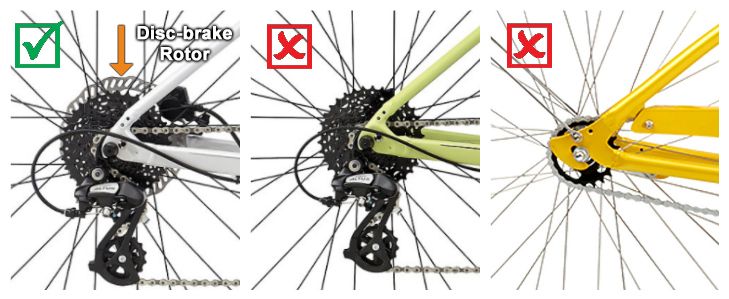
FRONT FRAME CHILD BIKE SEAT
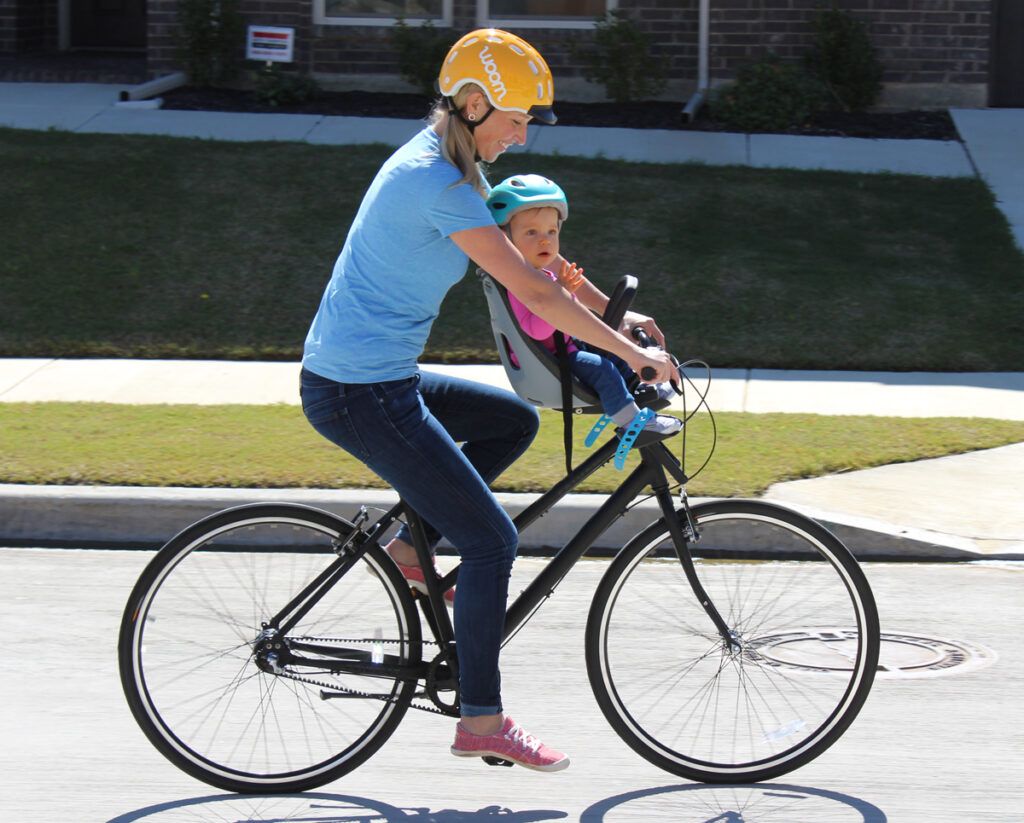
Traditional front mounted baby bike seats (with a harness and seat back) can vary pretty wildly in how they attach to a bike. We’ll cover the two most common methods here – attaching to a threaded stem or to the head tube.
Two Key Questions
(1) Is your bike big enough to comfortably ride with a front-mounted seat?
(2) What type of headset does your bike have? Threaded/Quill or Threadless/Ahead?
Don’t worry, these questions can easily be answered with a tape measure and your eyes, no pros needed. 🙂
Front-mounted seats take up about 10″ between the stem and saddle. If your top tube is shorter than 20″, your chest or knees may hit the seat while riding, though upright bikes like cruisers and hybrids can often get away with as little as 18″ due to the rider’s more relaxed posture.
Road bikes aren’t a good fit for front-mounted seats at all, the forward-leaning position puts the rider’s chest directly in contact with the seat.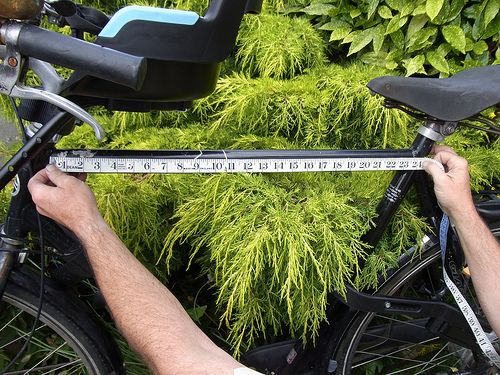
Photo Source: Dutch Trading Company (Brighton UK)
Knowing which style of headset your bike has is important as it can determine which seat is compatible with your bike. Not sure which headset you’ve got? Don’t worry, you don’t need to be a bike mechanic to figure this out. It takes about ten seconds and a quick look at where your handlebar stem meets the frame.
If your stem slides down inside the frame and you see a single bolt (locknut) sitting on top of it, you have a threaded (quill) headset. These are common on cruisers, older bikes, and lower end kids’ bikes. The good news is that most front-mounted seats are built for this style, and if you’re short on space, loosening that top bolt and raising the bars a bit will usually give you the room you need.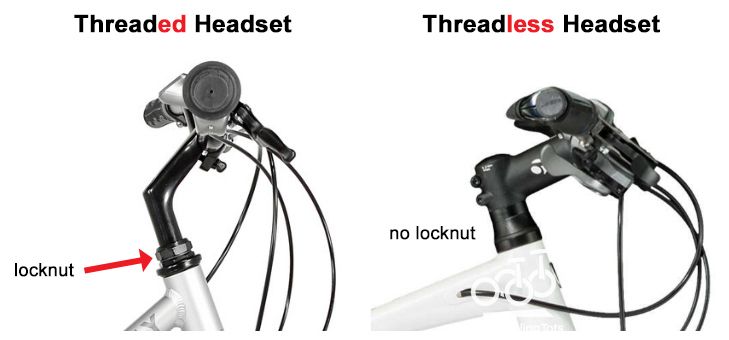
If your stem clamps around the outside of the fork tube, with two or three pinch bolts on the side and a small cap on top, you have a threadless (ahead) headset. This is what you’ll find on most newer bikes and just about every mountain bike. You still have front-seat options, but you’ll want to check compatibility, since some seats need a threaded stem. The Peg Perego Orion gets around this by mounting to the head tube instead, and the Thule Yepp Nexxt 2 Mini works with both (just not on suspension forks or carbon frames).
FRONT MOUNT SEAT – NO HARNESS
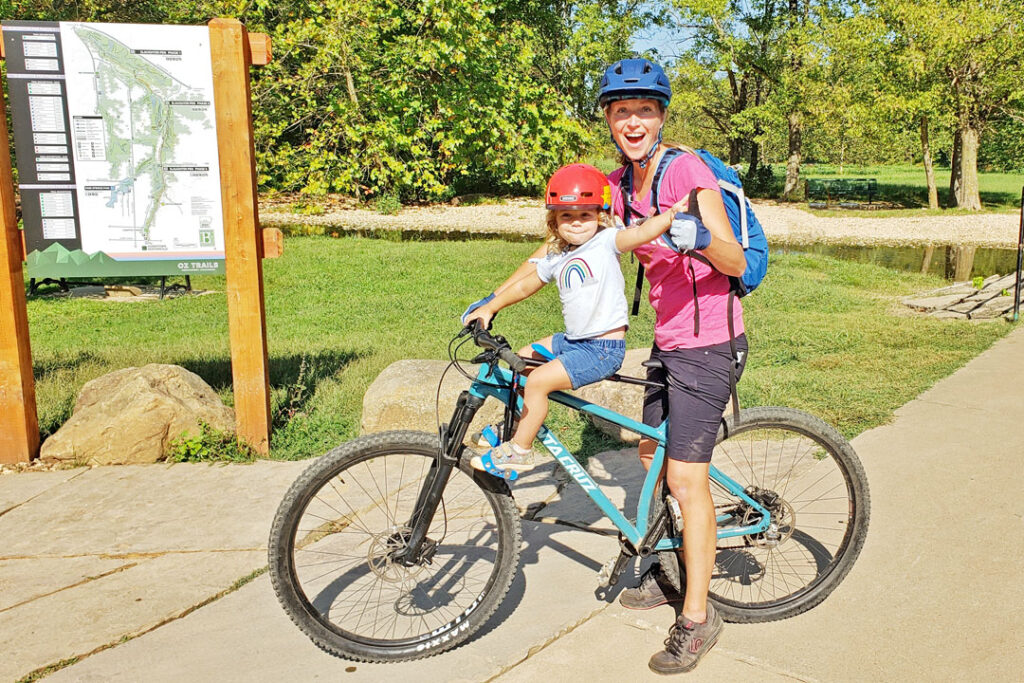
Front child bike seats that mount mid-way between your saddle and the handlebars are MUCH easier to fit on a bike than rear and traditional front-mounted seats. Since most of these mid-mount seats mount by “squeezing” the top tube and bottom tube on a bike, or mount to the seat post, they can adjust to fit a wide range of bikes.
There are two main styles of mid-mount seats that are designed for completely different uses. Recreational seats are designed for quick and easy rides about town while mountain bike child bike seats are design for mountain biking, but can also be used recreationally.
Because each brand has its own method for mounting to a bike, we suggest reading the full reviews on our website. To learn more about the fitting requirements of each seat, check out their individual reviews: Do Little, Tyke Toter, Mac Ride and Kids Ride Shotgun,
Baby Bike Seat Age and Safety
You’ll notice that many baby and child bike seats are technically safety rated for infants as young as 9 months old. This doesn’t mean it’s safe to put a 9-month-old on a bike. In many states it’s illegal to put a child under 12 months in a child bike seat.
The American Academy of Pediatrics recommends waiting until a child is 12 months old, and also until they can sit unsupported. Many other safety organizations agree, including the CPSC. You can read the CPSC’s guidelines for babies on bikes in their official rules.
ASTM Certification and EN Certification
In the US, rear child bike seats are safety-rated to 40 lbs. under ASTM F1625. In Europe, the equivalent standard is EN 14344, which allows up to 48.5 lbs. (22 kg).
Here’s where it gets confusing: most seats sold in the US are certified under both standards. That means the exact same seat carries a 40 lb. limit in the US and a 48.5 lb. limit in Europe — and product listings don’t always make this distinction clear. If a seat sold in the US advertises a 48.5 lb. weight capacity, that figure almost certainly refers to its European rating, not its US one.
If you need to carry a child over 40 lbs., there is no US safety rating that covers it. Some parents choose to follow the European standard instead — that’s a personal decision. An alternative worth considering: open-style front seats like the Mac Ride or Shotgun Pro have weight capacities up to 60 lbs.
A note on certification: Not every child bike seat on the market carries an ASTM or EN certification. ASTM compliance isn’t legally required in the US, so uncertified seats can be sold legally, but there’s also no independent verification that they meet safety standards. When it doubt, stick to known and established brands.
Related Kids Bike Seat Articles
Child Bike Seats: How to Choose: It’s complicated! Get educated on the proper fit for your child and your bike.
Child Bike Seats: Comparison Chart: To view, sort, and read reviews on even more bike seats.
If you still need a bike for yourself, we’ve tested a lot of great adult bikes and summarize our favorites on our Best Women’s Bikes page.
FTC Disclosure: Affiliate links are included in this review. No monetary compensation was provided for this review, however, some of the reviewed products were supplied by the manufacturer or distributor to help facilitate this article. All opinions and images are that of Two Wheeling Tots LLC. All content and images are copyrighted and should not be used or replicated in any way. View our Terms of Use.