Best Kids Hydration Packs
From hiking to bike riding, hydration packs for kids are a must for active families. Over the last 11 years, our team has personally tested two dozen different hydration packs with kids ranging from 2 to 14.
We’ve found that hydration packs are certainly not created equal and are not one-size-fits-all! Well-known brands like Camelbak and Osprey have amazing options for kids of all ages, but the unique characteristics of different packs make them best suited for different types and ages of kids.
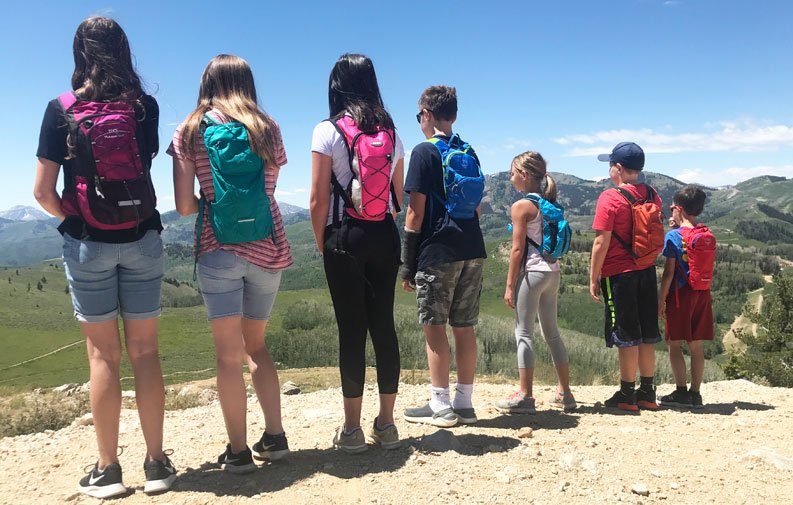
Our Favorite Hydration Packs for Kids
Here’s a quick run of our favorite hydration packs for kids. From providing great storage to helping kids stay hydrated on the trail, these packs came out on top. Detailed comparisons, how we ranked the packs as well as the pros and cons of each pack can be found below.
Packs for Kids 3+
- Camelbak Mini M.U.L.E. – Easiest to Use, $60
- Osprey Moki – Best for the Smallest Kids, $65
- Outdoor Products Tadpole – Best on a Budget Kids 5+, $36
Packs for Kids 10+
- Camelbak Hydrobak Light – Best Overall for Tweens, $65
- Osprey Kitsuma (1.5 and 3) – Best Storage and Ventilation for Tweens, $35 – $65
- Camelback Women’s LUXE – Best Overall for Teens taller than 5’6″, $115
- Unigear – Best on a Budget, $35
What We Look for in a Hydration Pack
After years of testing, we’ve determined two main factors to consider before purchasing a hydration pack for your child –
(1) the style of the bite valve and
(2) the length of the pack (from top to bottom).
While other features such as ventilation and ease of filling are also important, they don’t have as direct an effect on the overall usability of the packs like size and bite valve do. Learning to stay hydrated while exercising is a skill children can learn young, but they can’t stay hydrated if they can’t get the water out of the pack!
In this review we’ll dig into the problem with bite valves and kids, explain the differences in pack sizes, as well as provide a round-up of our favorite packs for ages 3+ and 10+.
The Problem with Young Kids and Bite Valves
Bite valves are the bread and butter of hydration packs. If the rubber mouthpiece on a bite valve doesn’t work, then there really isn’t a point in using a hydration pack. There are various styles of bite valves. For most adults, it really comes down to personal preference. But for kids, some styles of bite valves are MUCH harder for kids to use than others.
The problem with bite valves is that kids often literally bite and puncture the rubber mouthpieces! Many of our testers, of all ages, have accidentally punctured the bite valves on their packs within minutes of putting their packs on! Once a bite valve is punctured, it will drip water whenever the bite valve is turned to “on”.
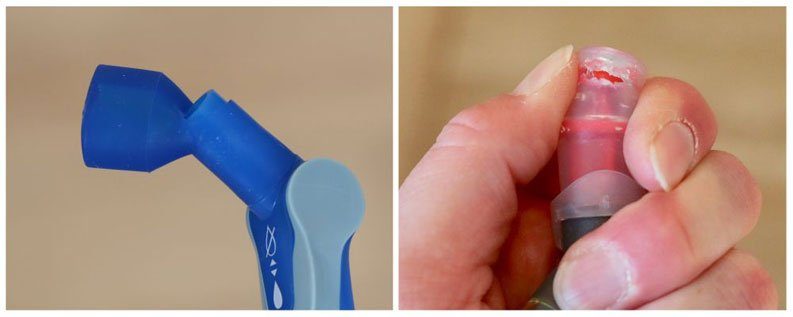
Teaching kids to gently bite down on the valve with their back teeth instead of their front teeth can help prevent punctures. But for some kids, especially “chewers”, bite valves can be a lost cause.
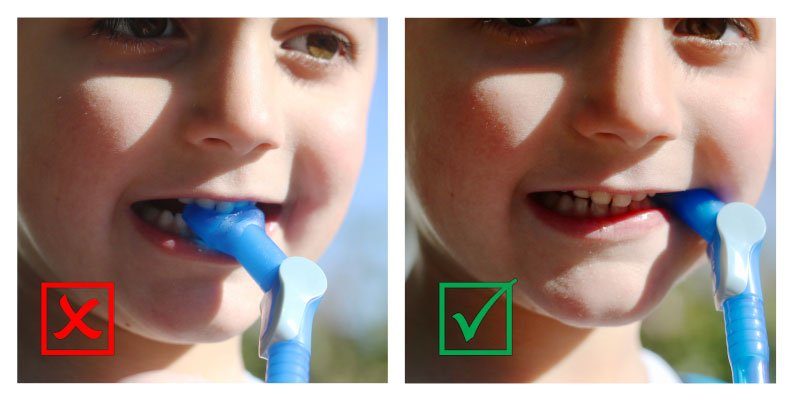
So what’s the solution? While constantly purchasing replacement valves is an option, we’ve found that relying on the bite valve’s on/off switch to prevent dripping is a game-changer. To drink from your pack, turn the switch “on” and then turn it “off” when you are done. This method works regardless of the condition of the bite valve. For some packs, it even works great WITHOUT any bite valve at all!
To further clarify, for packs that do not have punctured bite valves, you can keep your valve set to “on” during your entire ride or hike without experiencing dripping. Turning it “on” and “off” during a hike or ride becomes necessary to prevent dripping from broken valves.
Differences in Bite Valve On/Off Switches
So if we’re going to rely on on/off switches, is one style better than another? YES! Some on/off switches are harder for kids to use compared to others.
Of the many styles we tested, Camelbak’s large “on/off” switch lever was by far the easiest for kids of all ages to see and use. In addition to being easy to engage, it was visually easy for kids to check if they had remembered to turn the switch off.
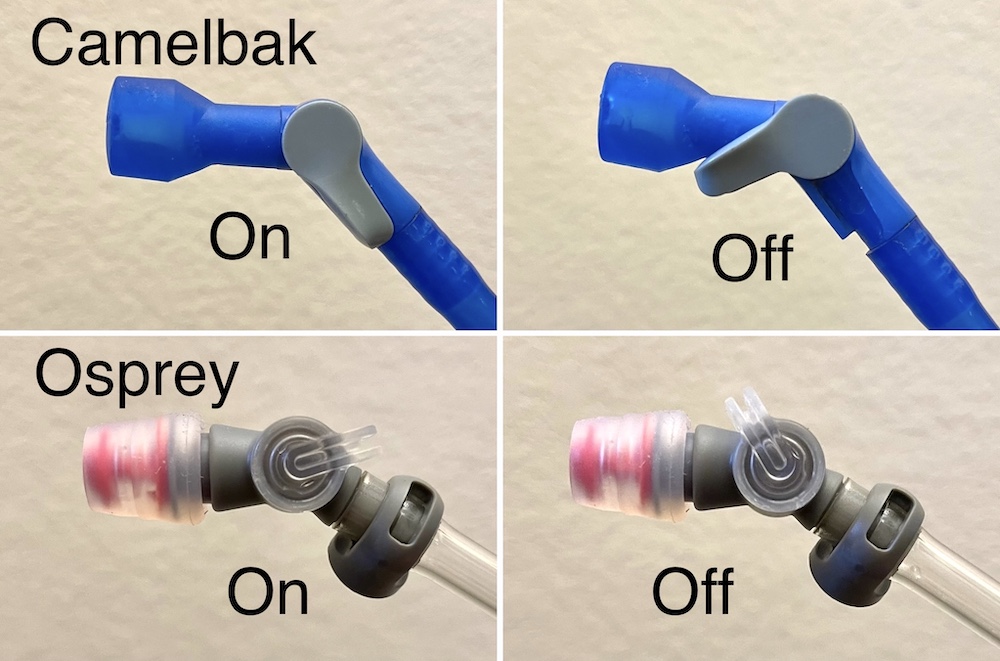
Osprey valves are a bit harder to turn on and off, and much harder to tell if the valve is on or off, even with the 2023 re-design of their valve. The new design is absolutely easier to turn on and off than the original, and an adult can do it with just one hand, which was very difficult with the original design. That said, turning the valve is still more difficult than the Camelbak’s design.
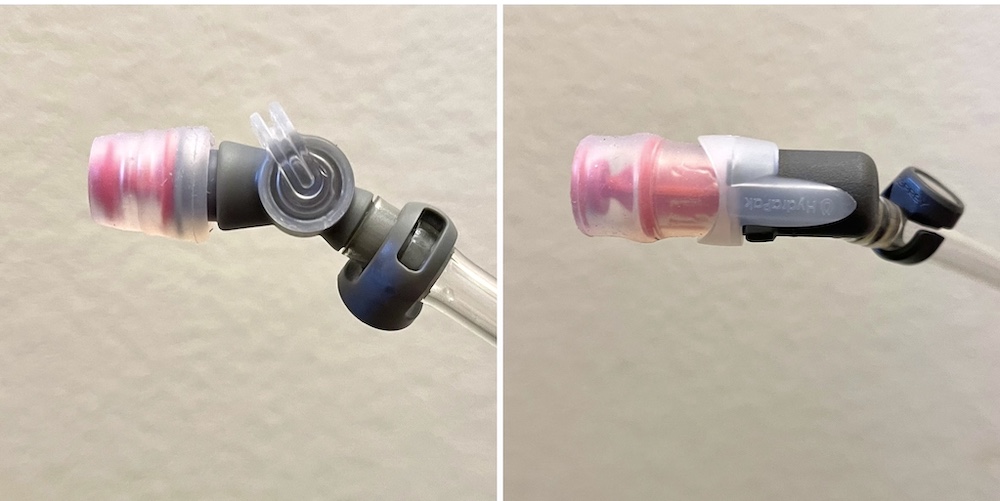
As an added bonus, the Camelbak’s bite valve can easily be used WITHOUT the rubber mouthpiece. We’ve done this on many occasions once a bite valve gets too destroyed to use any longer. We just take it off completely!
As shown below, the blue Camelbak mouthpiece on the left is long enough to be used as a straw while the gray Osprey is much shorter and more awkward to use without the rubber valve.
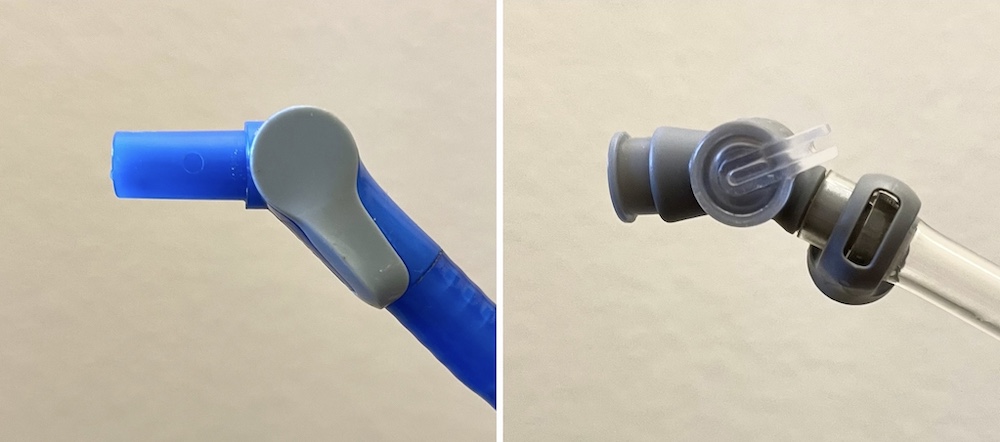
For those lucky enough to have kids who don’t seem to have any issues with chewing the valves, the style of bite valve shouldn’t be the main deciding factor for purchase. While Camelbak’s system was easier for our testers to use, other factors like ventilation and fit (covered in the Other Features section below), should be taken into consideration.
Differences in Hydration Pack Sizes: Youth vs. Women’s and Men’s
Hydration pack sizes come in three general categories – youth, men, and women. Youth packs are the shortest and narrowest while men’s are the longest and widest. In the image below you can see the difference in the size of a men’s, women’s, and youth Osprey back on the left and a women’s and youth Camelbak pack on the right.

The back of a properly sized hydration pack should start just below the shoulders and end above the pants. If a pack hangs past a child’s waist, the pack can interfere with their mobility, especially while hiking.
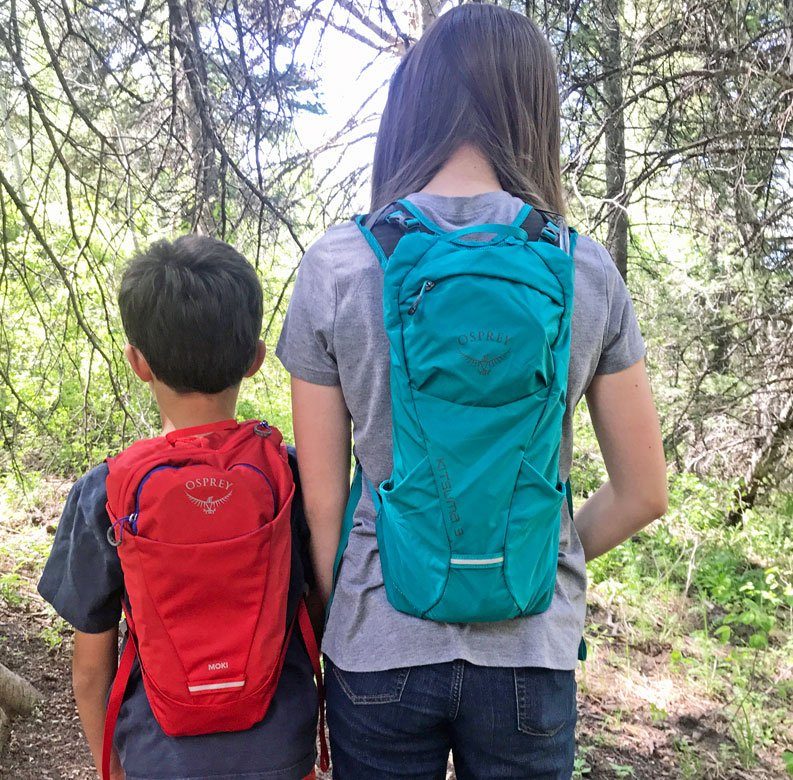
We found that youth packs – the Osprey Moki and Camelbak Mini MULE – are a great fit for ages 3 to 12. Women-specific packs or packs with smaller bladders, such as the Camelbak Hydrobak Light and Osprey Kitsumi, are best for kids (girls and boys!) 10+. We found that men’s packs are typically too large for kids under the age of 16.
If you are unsure which size pack will best fit your child, be sure to measure the length of their torso (from the bottom of the neck to waist) before ordering. All three youth-specific packs mentioned above are about 14″ long from top to bottom and fit kids with torsos ranging from about 12″ to 16″.
The smallest adult pack, the Camelbak Hydrobak Light, is similar in length to kids packs, but wider to accommodate wider shoulders. This makes it a great choice for tweens (it comes in gender-neutral colors as well).
Camelbak Kids Pack vs. Camelbak Hydrobak Light on 12 Year Old

Best Hydration Packs for Kids 3+
Shorter and narrower than standard size hydration packs, these packs typically fit kids starting around age 3 and max out around 10 or 11. Larger (and often cheaper) adult-size packs are not recommended for younger kids because they are too wide and hang too low on the torso for kids to comfortably wear.
- Camelbak Mini M.U.L.E. – Easiest to Use, $60
- Osprey Moki – Best for Short and Petite Kids, $65
- Outdoor Master Tadpole – Best on a Budget 5+, $25

Camelbak Mini M.U.L.E
$60
OUR RATING: Exceptional
BITE VALVE STYLE: Traditional “Camelbak” Style
LENGTH OF PACK: 14″
CAPACITY: 1.5 liters
Pros:
Cons:
About the Mini M.U.L.E.
A true workhorse, we’ve had several M.U.L.E.s over the years. Not only are they extremely durable, but very easy to use. The water comes out quickly without much effort, and the on/off valve (which is essential to keep the tube from dripping), is very intuitive and manageable for little hands.
When the bite valve gets chewed to pieces by ambitious chewers, the Camelbak M.U.L.E. really shines because it can easily be used without the bite valve (the Osprey cannot, see testing section above).
While the Camelbak Mini M.U.L.E. was able to fit all of our testers, the chest strap is rather long, so really petite kids would benefit from the Osprey Moki, which has a chest strap that can cinch down smaller.
Osprey Moki
$65
OUR RATING: Highly Recommended
BITE VALVE STYLE: “Osprey style” valve
LENGTH OF PACK: 14″
CAPACITY: 1.5 liters
Pros:
Cons:
About Osprey Moki
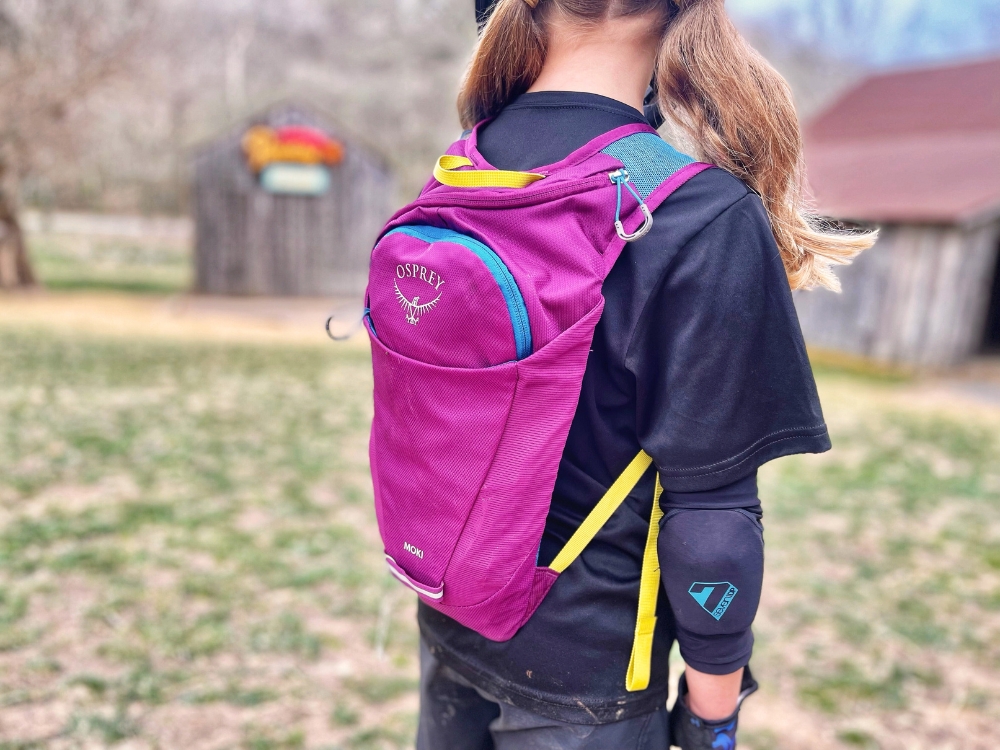
The Osprey Moki is another great choice for young hikers and bikers, especially for smaller kids. The chest strap of the Moki is able to slide up higher on the shoulder straps, and also cinches down tighter than the Camelbak. This allows the Moki to fit narrow and short torsos better.
We also appreciate that the Moki has a magnetic clip to keep the hose in place. The clip is located on the opposite side of the hose and requires kids to manually connect the hose to the clip. (This may be difficult for kids under 6.)
The upright position of the Moki clip points the bite valve up to help it stay clean, as well as minimize drips with punctured mouthpieces. (See comparison pictures of the various clips systems in the Other Features section below.)
As discussed in the Problem with Young Kids and Bite Valve’s section above, the harder-to-use on/off switch on Osprey packs does limit the Moki’s appeal for kids, especially if your child is a chewer.
Outdoor Products Tadpole
$36
OUR RATING: Recommended
BITE VALVE STYLE: Unique push/pull valve best for kids 5+
LENGTH OF PACK: 14″
CAPACITY: 1.75 liters
Pros:
Cons:
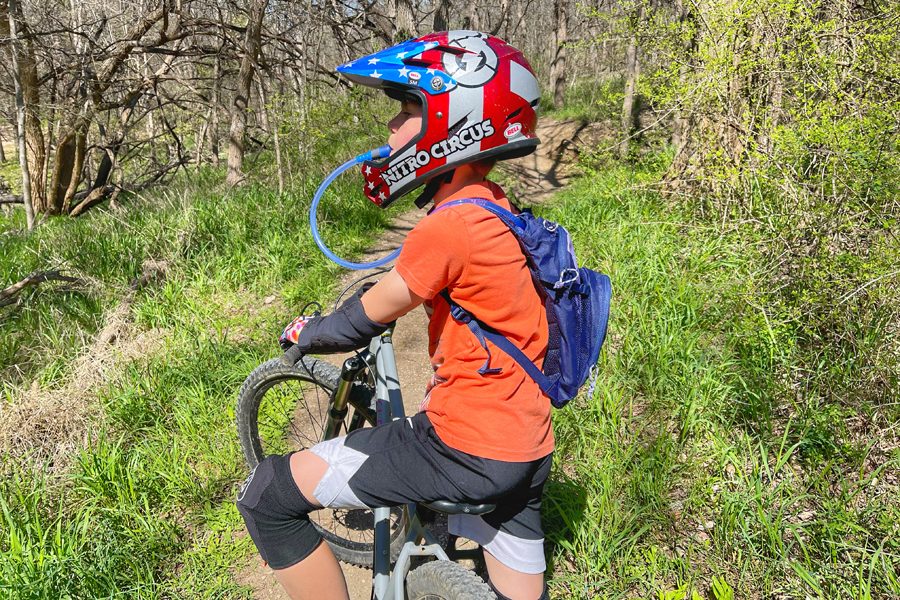
About the Tadpole
The Tadpole is essentially a cheaper alternative to the Camelbak Mini MULE. Its design and size is almost identical, but with a more basic canvas body (think your old Jansport backpack.)
The big difference is the bite valve. To open and close the valve, you pull up or push down. Simple enough, but it can be a little slippery for little hands. Additionally, the bite valve is made from harder, more durable plastic. While this makes it less likely a kid will chew through the valve, it can also be MUCH harder to get water out of it.
If you bite the tip of the valve, the water drip is minimal. If you bite the center of the valve, the water flows freely. While this was easy enough to explain to our 10-year-old Kid Bike Tester, our 3-year-old Baby Bike Tester just didn’t get it. (She uses the Cambelbak Mini MULE just fine.)
As a result, we’d say this Outdoor Products Tadpole is a great budget buy for kids 5 and older who will be able to manage the tricky bite valve.
Best Hydration Packs for Ages 10+
- Camelbak Hydrobak Light – Best Overall for Tweens, $65
- Osprey Kitsuma (1.5 and 3)- Best Storage and Ventilation for Tweens, $35 – $70
- Camelback Women’s LUXE – Best Overall for Teens taller than 5’6″, $115
- Unigear – Best on a Budget, $30
Camelbak Hydrobak Light
$65
OUR RATING: Highly Recommended
BITE VALVE STYLE: Traditional “Camelbak” Style
LENGTH OF PACK: 13″
CAPACITY: 1.5 liters
Pros:
Cons:
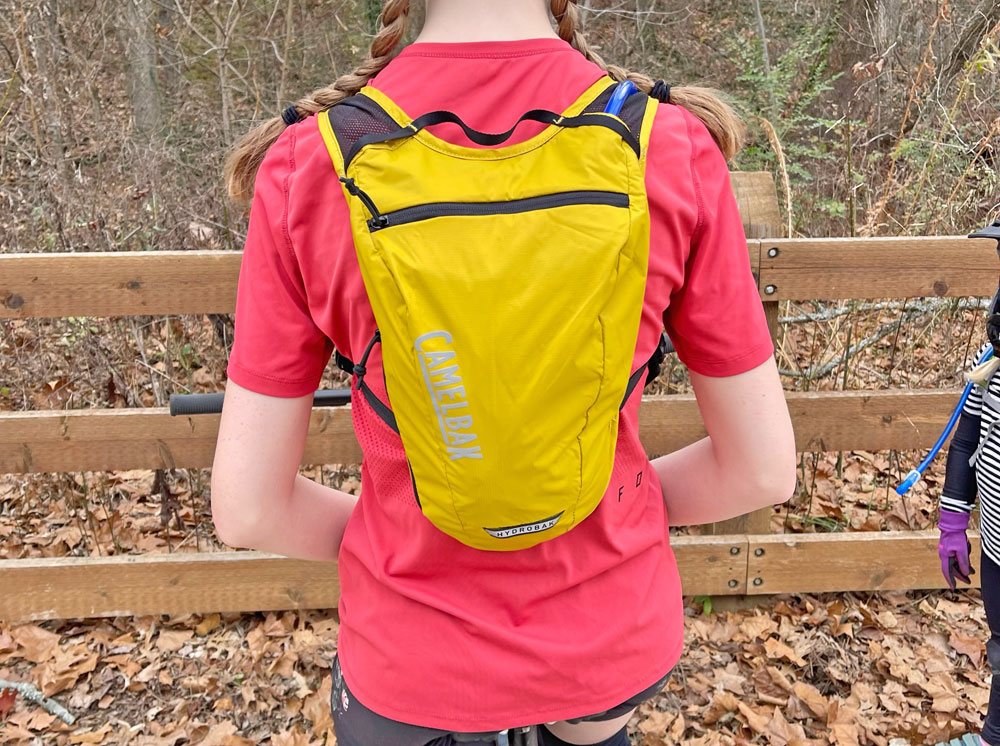
About the Hydrobak Light
Similar in length to the youth packs, but wider to accommodate broader shoulders, the Camelbak Hydrobak Light is a fantastic fit for tweens and teens. About 3″ shorter than your average adult pack, it’s the perfect size for tweens who don’t need the extra length of an adult pack, but struggle with the narrow fit of a youth pack. Available in several gender-neutral colors, the Hydrobak Light is a great pick for tweens of all genders.
As a small pack, the Hydrobak also has the smallest reservoir of the adult packs we tested, holding only 1.5 L. The pack also has the smallest storage compartment but certainly has enough room to hold a snack, spare tube, and a phone. Priced considerably less than other Camelbak and Osprey full size packs, it’s also a great option for families on a budget.
For those who want the ability to shed layers on a ride, the Camelbak Classic Light has bungee cords on the side to secure a jacket. It also has a larger 2L bladder. If you’re curious how much water your tween needs to drink, check out Camelbak’s hydration calculator.
Osprey Kitsuma
$59+
OUR RATING: Highly Recommended
BITE VALVE STYLE: Round “Osprey” Valve
LENGTH OF PACK: Kitsuma 1.5 – 14.5″, Kitsuma 3 – 16″
CAPACITY: 1.5 L or 2.5 L
Pros:
Cons:
About the Kitsuma
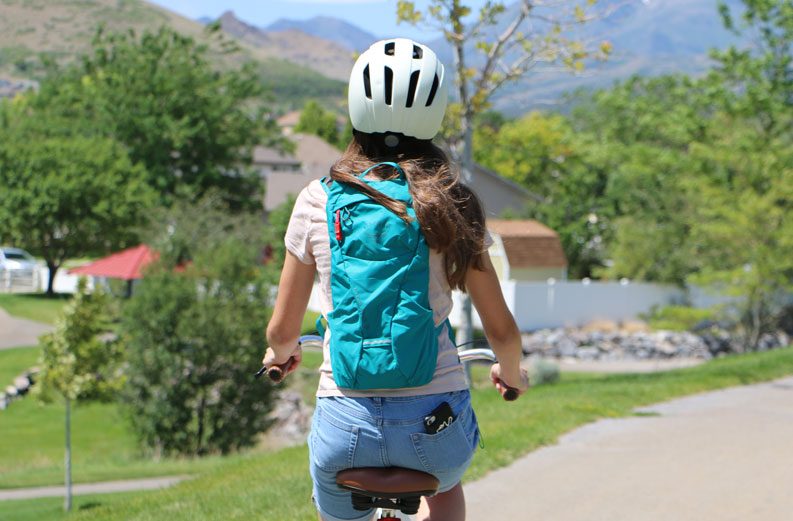
The Oprey’s Kitsuma 1.5 and the slightly larger Kitsuma 3 offer a great fit, a good amount of storage, and excellent quality at a reasonable price point. The Kitsuma 1.5 is about 14.5″ long while the Kitsuma 3 (shown above) is 16″ long. The Kitsuma 3 comes with a 2.5 L bladder while the Kitsuma 1.5 comes with a 1.5 L bladder.
The 13-year-old girl shown in the picture above is 5’6″ tall and is wearing the Kitsuma 3. The pack is an ideal fit as it lands at her waistline, but kids shorter than 5’6″ are likely better off with the shorter Kitsuma 1.5.
As their most basic line of packs for biking, the Kitsuma doesn’t offer a lot of storage, but both the 1.5 and the 3 feature a zippered pocket large enough for a phone and a few snacks. The larger compartment for the bladder also has room for additional storage, but anything placed in this compartment will rest directly on the bladder, so if you need to regularly carry more than a few snacks and a spare tire, you’ll likely be better off with a larger pack.
The Kitsuma 3 has two larger side mesh pockets that can easily fit several granola bars, an apple, or whatever you’re craving to bring along for the ride.
For those who live in hot climates, the Kitsuma line of packs are exceptional as they come with amazing ventilation on both the back panel as well as the shoulder straps. The center of the back panel features a vented foam pack covered with breathable mesh while the sides of the back and the shoulder straps are wrapped in soft fabric with deep channels to allow for additional airflow. (See comparison picture of the rear ventilation in the Other Features section below).
For an added cool factor, the chest strap on the Kitsuma features a magnetic buckle instead of the standard buckle. The magnetic buckle also features a tube clip to help keep the bite valve clean and out of the way.

Camelbak LUXE
$115+
OUR RATING: Exceptional
BITE VALVE STYLE: Round “Osprey” Valve
LENGTH OF PACK: 17.3″
CAPACITY: 3 L
Pros:
Cons:
About the Camelbak LUXE
The Camelbak LUXE is a full-size, full-featured hydration pack designed specifically for biking. As a result, it is much larger and more expensive than the Camelbak Hydrobak Light and Opsrey Kitsuma, but we LOVE it and wanted to be sure to sing its praises.
Coming with a large 3L bladder and with plenty of storage for a day’s trip, the LUXE is a longevity pack that will easily last into adulthood for any tween 10+ years. Whether they are doing smaller day trips now or longer adventures in their 20’s, the LUXE will be their trusty companion. The LUXE was a great fit for our 5’6″ 13-year-old tester as well as our 5’10” mom tester.
As a mountain-bike-specific pack, it comes with clips to easily store your helmet at the end of your ride, is well ventilated with several channeled pads along the back, has a zippered pocket just for your phone, as well as a pouch for a multi-tool kit and tire levers for quick repairs while on the trail.

Unigear
$35
OUR RATING: Recommended
BITE VALVE STYLE: Traditional “Camelbak” rubber valve, but different on/off switch
LENGTH OF PACK: 17″
CAPACITY: 2 L
Pros:
Cons:
About the Unigear
While none of the budget hydration packs we tested came close to the quality found in the Camelbak and Osprey packs, we found the Unigear to be the best quality for the price. Compared to other budget packs, the back panel was supportive, without being uncomfortably rigid, and also featured padded vents to allow for air circulation.
Composed of durable nylon with light padding, the Unigear’s shoulder straps were our favorite out of the numerous budget packs we have tested over the years. Some budget packs have straps that are uncomfortably thick while others have the opposite problem and are way too thin!
Compared to the other budget packs that did not make our list, the Unigear offers the least amount of storage, but to compensate it does have a long exterior bungee system to strap down a light jacket or even a sack lunch.
Budget Hydration Packs We Tested But Didn’t Love
- Kuyou, $25 – While offering a unique bite valve that is easy to use, we could not find a replacement mouthpiece in the event of a puncture.
- Mubasel Insulated, $30 – The larger Mubasel insulated pack was a favorite of our tween testers for use around town, but the pack is very large and heavy and not ideal for most hikes or rides.
Other Notable Features of Hydration Backpacks
How we Chose Packs to Review
For this comparison test, we purchased all new hydration packs to ensure we were reviewing the most up-to-date packs available. We also only reviewed packs that came with a hydration bladder. Bladders can be purchased separately and added to any backpack, but without the proper hookups in the bag to hold the bladder, as well as a place for the drinking tube, we found it’s easier to purchase a pack specifically designed for carrying a water bladder.

While hiking or biking, our kids often bring snacks or a small lunch and a small jacket, so the ability to store a light load was a requirement for this comparison review. Since we tend to stick to trails no longer than 10 miles, we selected packs that have decent storage, but not full backpacks.
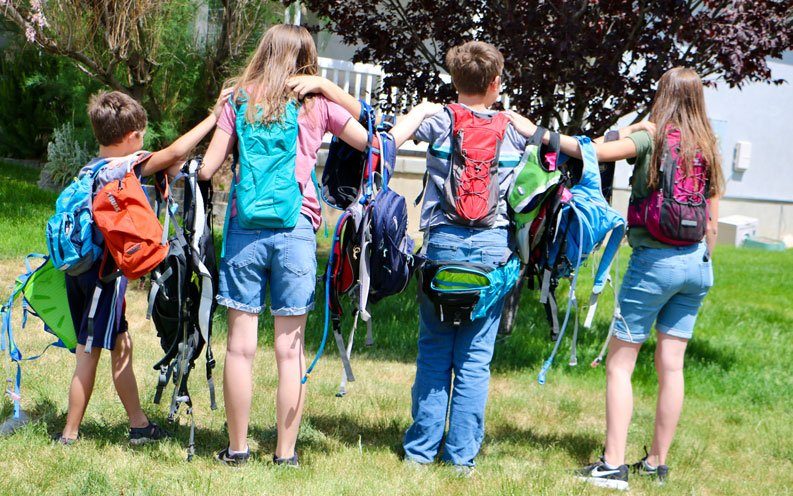
Packs with additional storage are available in both youth and adult sizes. For youth sizes, the Camelbak (Scout) and Osprey (Jet 18) are both great options. For adult biking, there are a wide range of packs in various water and storage capacities offered by both Camelbak and Osprey.
Ventilation
For summer biking and hiking, ventilation of the pack should be a priority. Both Camelbak and Osprey all had decent ventilation on their kids’ pack, but generally have more sophisticated ventilation on their high-end adult packs.
Camelbak vs. Osprey Kids Pack Ventilation
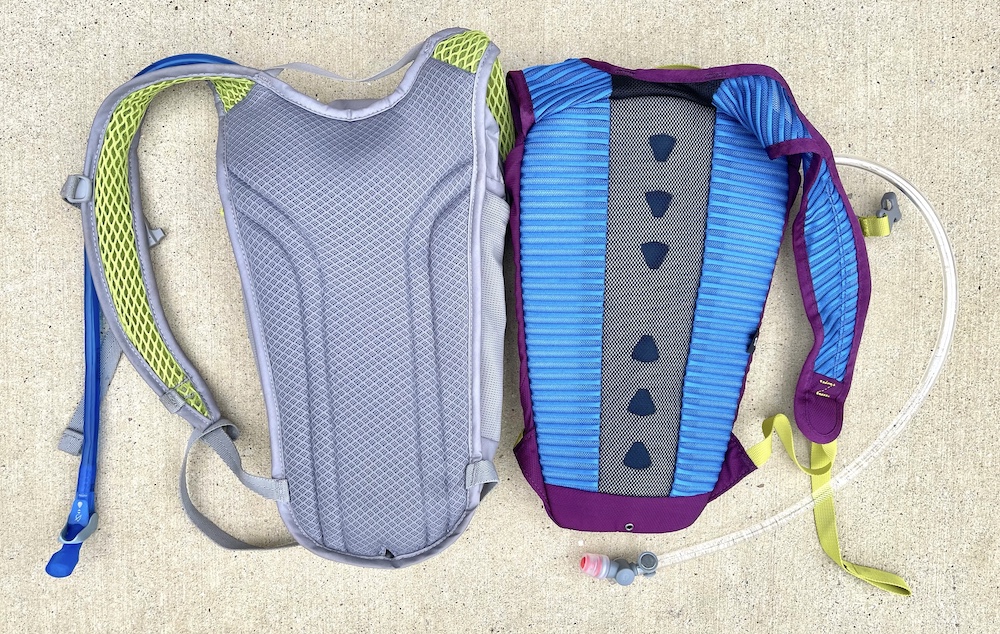
The built-in ventilation also carries over to the shoulder straps. A good-quality hydration pack should have breathable material for the shoulder straps.
Chest Strap & Safety Whistle
The length and design of the chest strap plays a large role in the fit of a pack. Made specifically for smaller frames, the chest strap on the Osprey Moki can both down small enough to fit a toddler well, while the strap on the Camelbak Mini MULE cannot.
The height of the chest strap also varies between the brands. The Osprey can be adjusted up the highest on the chest of the three, while the Camelback is the lowest.
While the chest strap height isn’t an issue with taller kids aged 7+, the Camelbak Mini MULE’s minimal adjustment is less ideal with toddlers and preschoolers than the Osprey.
To prevent the tube of the hydration pack from flopping around while riding or hiking, the Opsrey Moki has a magnetic clips built into the pack. The Moki’s clip consists of a magnet on the tube which attaches to a magnet on the chest strap. This system works great as it also keeps the bite valve upright to help prevent leaks.
The Camelbak Mini MULE does not come with a magnetic clip, but one can be purchased separately as an add-on. This system is also magnetic and stores the bite valve upright, but like the Osprey, it does require kids to properly match up the two magnetic pieces.
A safety whistle on the buckle is a well-loved feature for kids but can be hard on parents’ ears. While we LOVE the ability for a child to be able to blow on the safety whistle when in an emergency, our testers, especially our toddlers, seemed all too happy to blow the whistle at less than ideal times.
Reservoir Design
Filling and emptying the water reservoirs was relatively easy for all of the packs we tested. When it comes to filling the bladders up, Camelbak’s built-in handle made holding the bladder quick and easy. But screwing in the threaded cap back onto the front of the Camelbak bladder, however, can be tricky.
Osprey bladder is VERY different from Camelbak’s. Instead of relying on a screw cap, the bladder is filled by unfolding and opening a flap at the top of the bladder. Once filled, a plastic sliding clip seals the bladder closed.
We learned the hard way that if you aren’t paying attention, the plastic clip can be slid on incorrectly, causing the bladder to pop open. That problem only occurred during our first use and we don’t anticipate it to be a common problem.
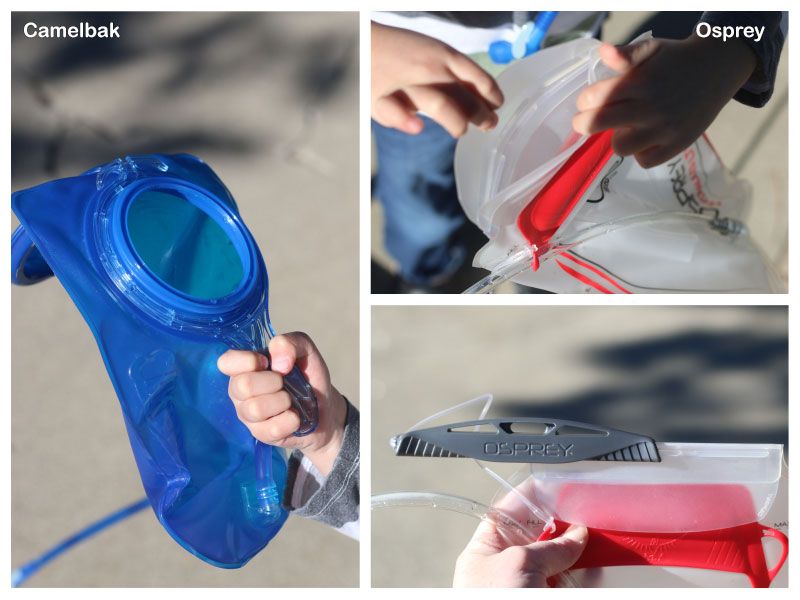
Make sure that you pay attention to the capacity of the reservoir. Hydration pack bladders for kids generally run between 1.5 and 2 liters. You’ll need to make sure your pack can carry enough water so that your child can drink not only when they’re thirsty, but before, during, and after their physical activity.
Hydration Packs for Kids Bottom Line
Hydration packs are a must-have for biking or hiking with kids! While there are many features to consider, we’ve found the size of the pack and the bite valve style to be the most important. If your child is a “chewer”, we recommend packs with a “Camelbak” style bite valve because they can easily be used without replacing the bite valve.
If your child is not a chewer, almost any pack will work, but the magnetic tube clip, ventilated back, and value of the Osprey youth and women’s packs are hard to beat.
If you have a really little one who can’t manage a hydration pack yet, check out our list of our favorite water bottles for kids.