Shotgun Pro and Pro EVO Bike Seat Review – The Best MTB Seat for Tiny Groms
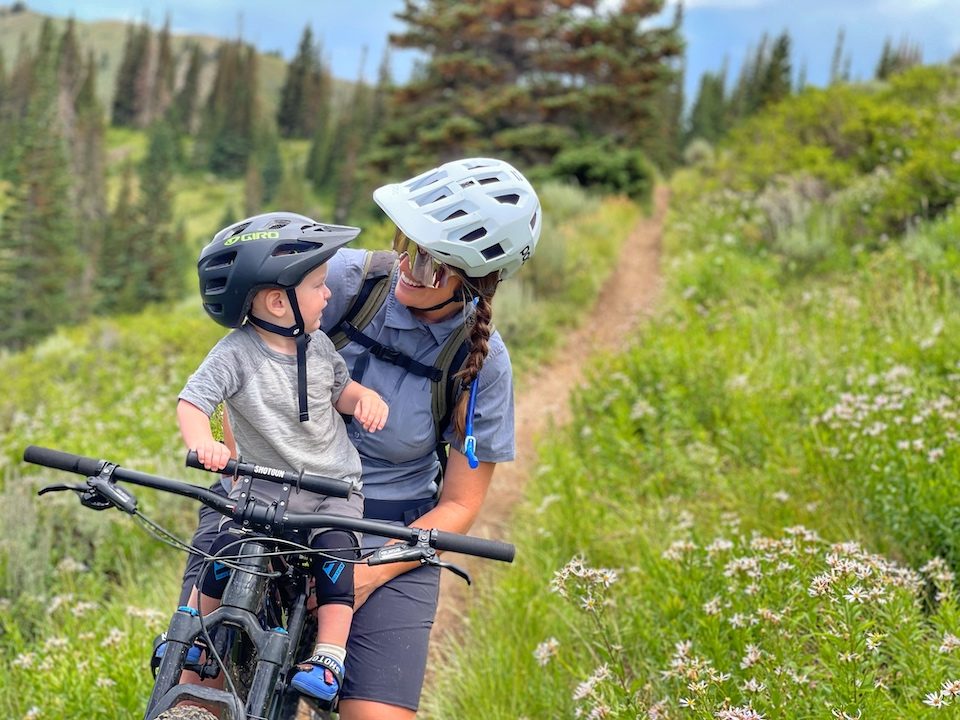
There’s nothing quite like sharing a mountain bike ride with your little one, and the Shotgun Pro bike seat makes it easier than ever to bring them along. The Pro is quick to install and remove, requires no tools, and attaches without touching your bike’s frame. It’s designed specifically for mountain bikes with front suspension forks and works seamlessly with features like dropper posts, full suspension setups, and e-bikes.
For parents looking to start riding even earlier, the Pro EVO builds on the standard Pro by adding a removable, harnessed bucket seat. This add-on allows you to ride with kids as young as 9 months, then transitions to the standard open saddle setup as they grow—extending the seat’s usability up to around age 5.
This review also covers the updated Shotgun Pro, which replaces the outgoing “GEN 1” version. The updated seat won’t be marketed as a “GEN 2,” but for clarity, we’ll refer to it that way throughout this review to highlight improvements over the older “GEN 1″ model. The Pro EVO includes this updated Pro “GEN 2” base, plus the bucket seat and Shotgun Pro handlebars.
In this review, we’ll walk through the features of both the new Shotgun Pro (GEN 2) and Pro EVO, and provide helpful comparisons to other front-mounted MTB seats based on hands-on testing by our team as well as years of real-world riding by Lauren from Backcountry Mom.
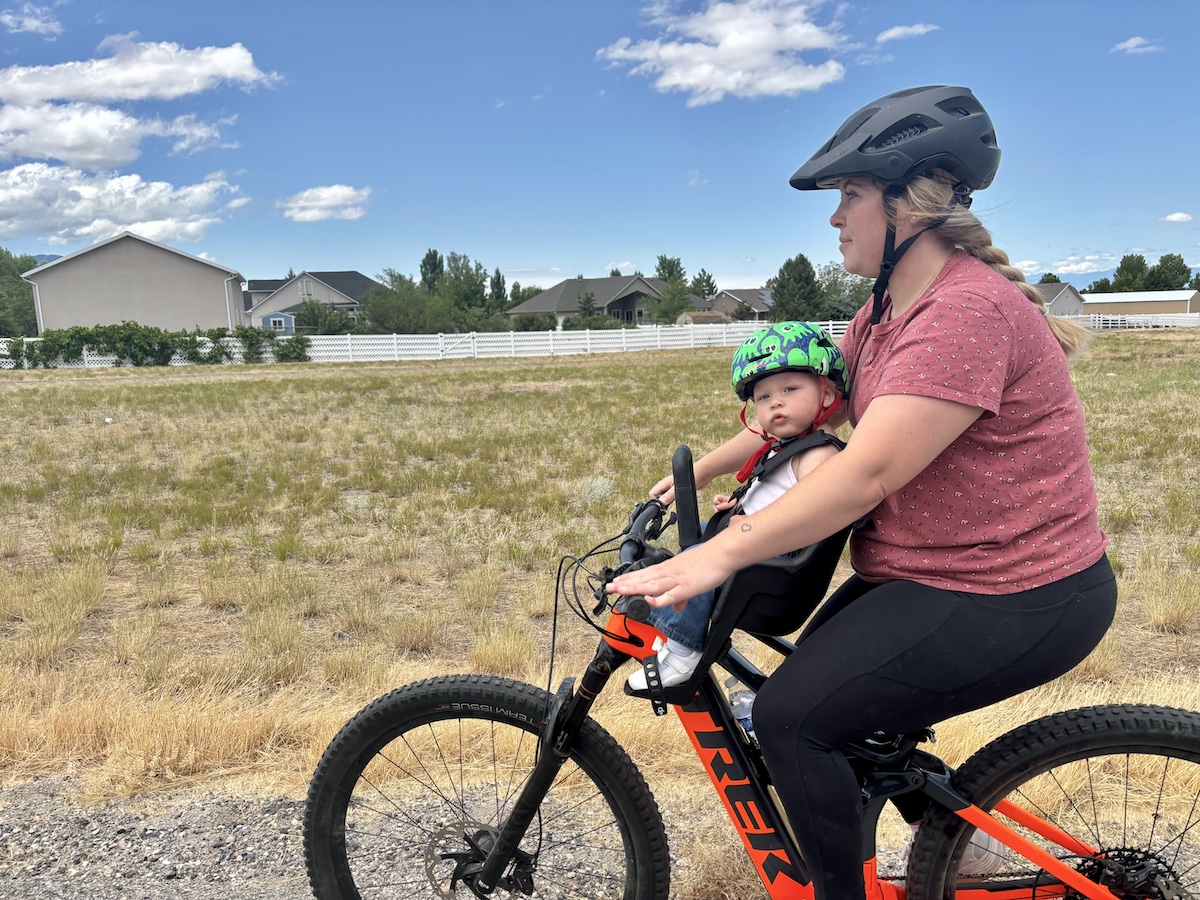
Shotgun Pro and Pro EVO
MSRP: Pro: $275, Pro EVO: $439 (includes handlebars)
BEST FOR: MTB families with kids aged 9 months to 5 years
BIKE COMPATIBILITY: Most modern MTBs with 1 1/8 steerer
AGE COMPATIBILITY: Pro: 2 to 4 years, Pro EVO: 9 months to 5 years
WEIGHT LIMIT: Up to 60 lb. (child weight)
Cons:
Shotgun Pro and Pro EVO Child Bike Seat – Results of our Test Rides
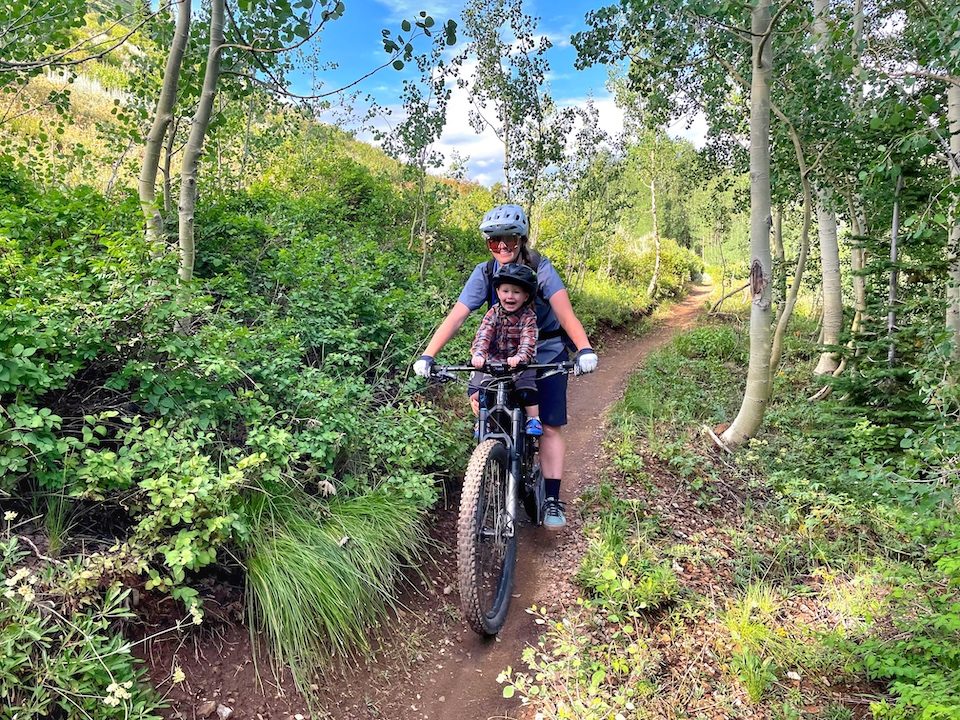
There’s nothing quite like riding singletrack with your little one nestled between your arms. These rides bring a whole new level of connection—your kid chattering about the most random things while the wind rushes past both of your helmets.
It’s a magical stage of parenthood that passes quickly, but the Shotgun Pro makes the most of it. As a mountain biking mom whose three kids have aged out of this front-seat stage, I can assure you—this is a window of time you don’t want to miss.
The Shotgun Pro is one of the only seats designed to work with modern mountain bikes, and the Pro EVO is the only front-mounted MTB seat certified for children as young as 9 months. While other certified front-mounted seats like the Thule Yepp Mini 2 and Nexxt Mini 2 exist, they aren’t compatible with carbon frames or recommended for mountain biking.
Frequently Asked Questions
Who is the Shotgun Pro ideal for?
Mountain biking parents who want a front-mounted seat that fits modern MTBs, both full squish and hardtales. The Pro is suitable for ages 2 to 5 and is especially useful for families who plan to share one seat across multiple bikes, since it quickly swaps between setups (the Shotgun Original is challenging to swap).
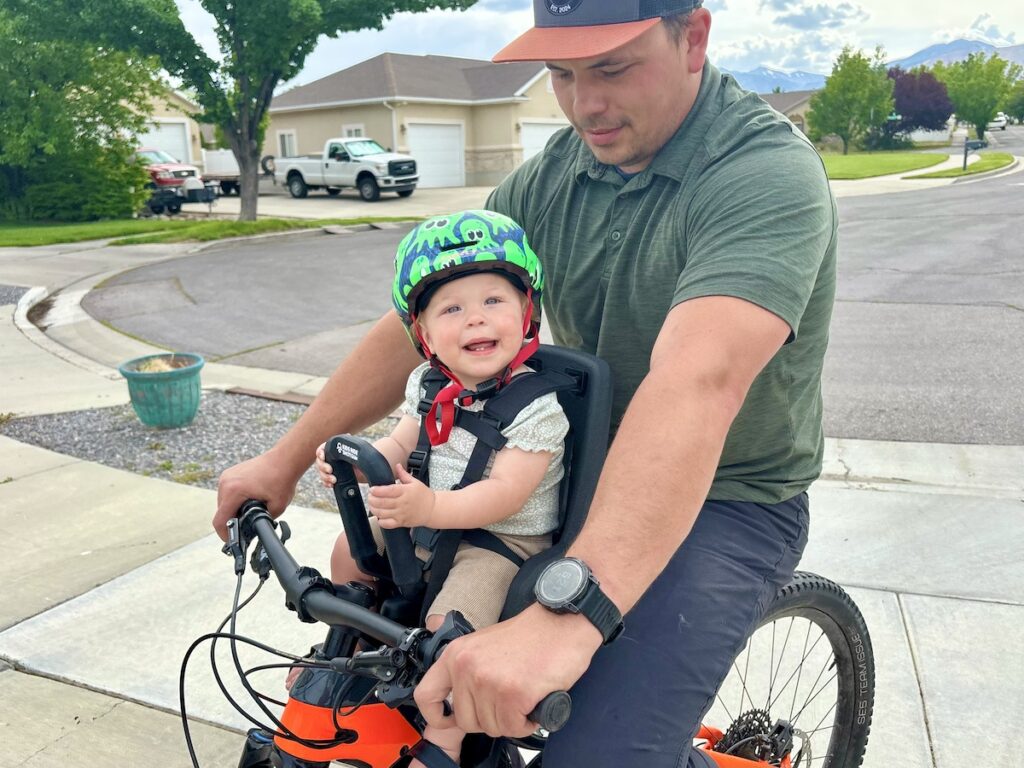
The Pro EVO is ideal for riders with kids under 2 years old. It’s the only front-mounted seat compatible with suspension MTBs and eMTBs that’s certified for babies as young as 9 months. The Pro EVO also includes the Pro base that is compatible with ages 2 to 5.
Who is the Shotgun Pro not ideal for?
The Pro is designed specifically for modern mountain bikes with front suspension forks and a 1 ⅛” steerer tube. It won’t work on bikes without suspension forks, road or gravel bikes, or those with quill stems. Be sure to check Shotgun’s full fit guide before purchasing.
Shotgun Pro vs. Shotgun Pro EVO — What’s the Difference?
If your child is under 24 months—or if you plan to use the seat with a younger sibling down the road—the Shotgun Pro EVO is the better choice. It includes a removable bucket seat with a 5-point harness, designed for use from around 9 months up to approximately 2 years. The EVO also comes with Shotgun’s mini handlebars, which are required to meet ASTM safety certification standards.
The standard Shotgun Pro is designed for older toddlers ages 2 to 5. It features a simple padded saddle without a harness or bucket seat, and does not include handlebars by default (though they can be purchased separately).
Can I use the EVO bucket seat with an older Shotgun Pro?
No. The bucket seat on the Pro EVO is not compatible with older “GEN 1” versions of the Shotgun Pro. To use the bucket seat feature, you’ll need to purchase the full Pro EVO, which includes the updated “GEN 2” Pro base.
The “GEN 2” version of the standard Pro will be available starting August 2025.
How does the Shotgun Pro Bike Seat Work?
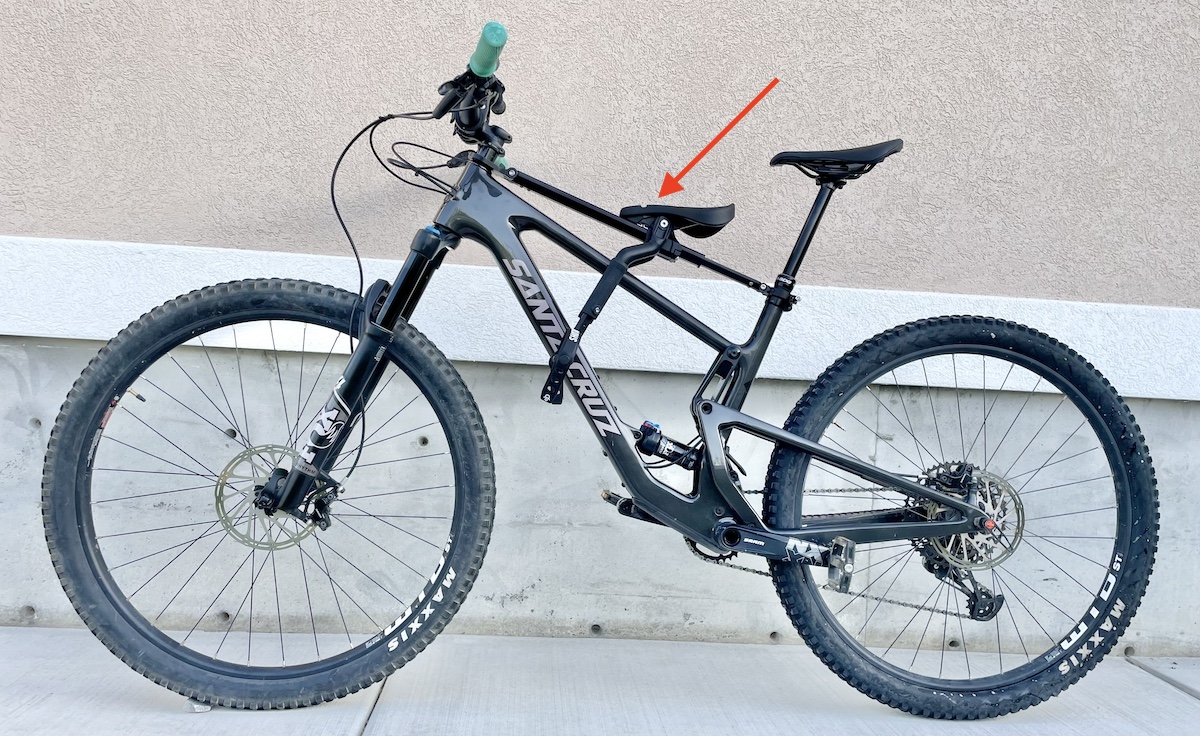
The Shotgun Pro positions your child between your chest and the bike’s handlebars, seated on a padded saddle attached to a mounting bar. This mounting bar runs from the headset (via a specialized spacer) to the seatpost, making no contact with the bike’s frame. It’s compatible with bikes that have a 1 ⅛” steerer tube and a front suspension fork, and it works with dropper posts as long as at least 14mm of seatpost is showing.
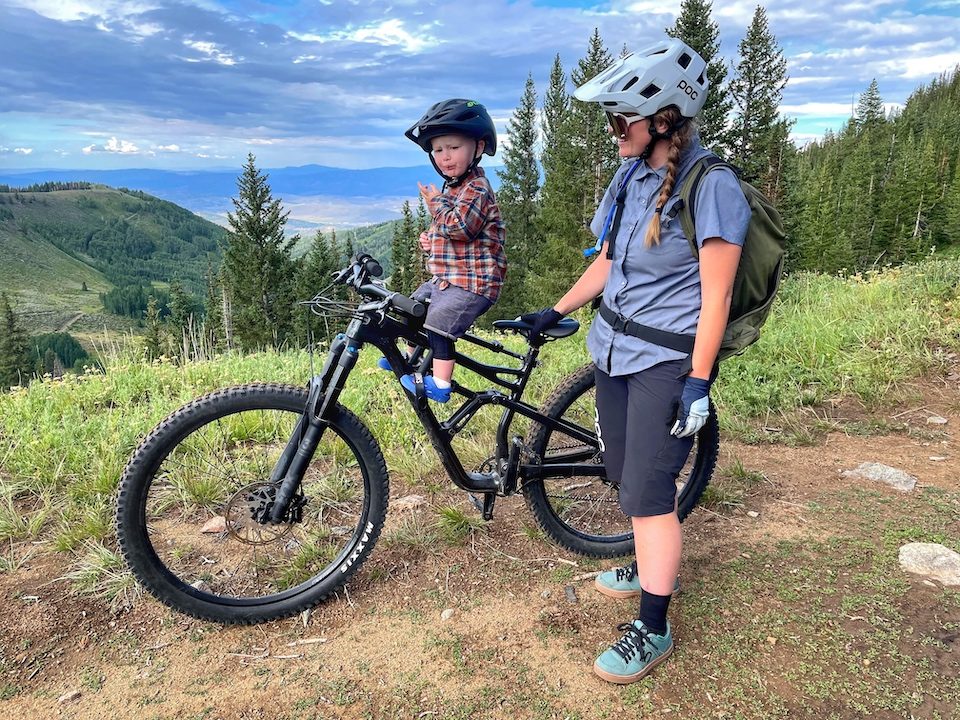
The child rider holds onto your handlebars or a set of optional mini handlebars. There’s no harness; kids simply hold on themselves—so the Pro is recommended only for children aged 2 to 5 years and up to 60 pounds, who are strong enough to stay balanced and secure while riding.
How Does the Shotgun Pro EVO Work?
The Shotgun Pro EVO mounts to the bike in the same way as the Pro, but adds a bucket-style seat with a 5-point magnetic harness for younger riders. This bucket seat bolts to the base of the standard Pro saddle and is suitable for kids aged 9 to 24 months. When your child is old enough, the bucket seat can be removed to convert the EVO into a standard Shotgun Pro setup.
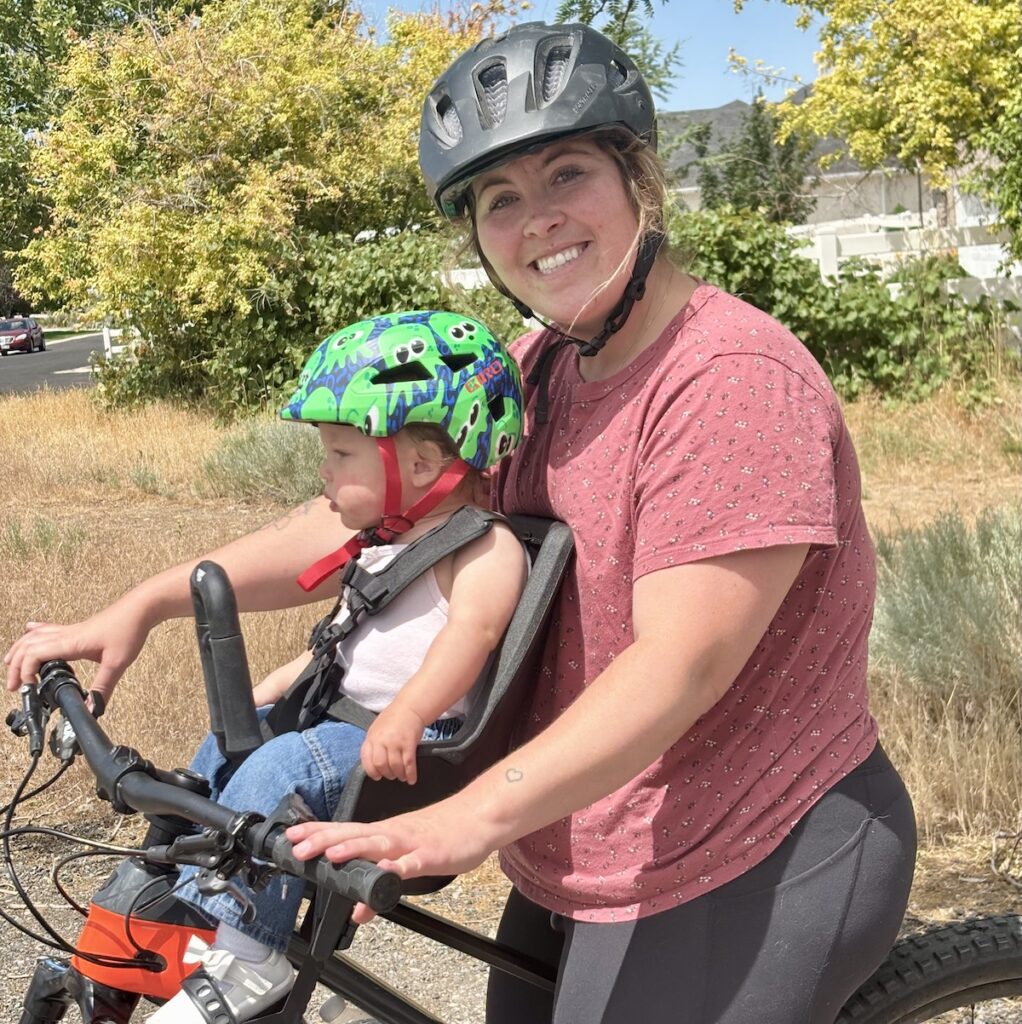
What’s unique about the EVO is its adaptability: once the bucket seat is removed, the EVO handlebars flip down and become footrests, and the standard Shotgun Pro handlebars can be attached to give your now-toddler something to hold onto as they ride.
Riding with the Shotgun Pro and Pro EVO
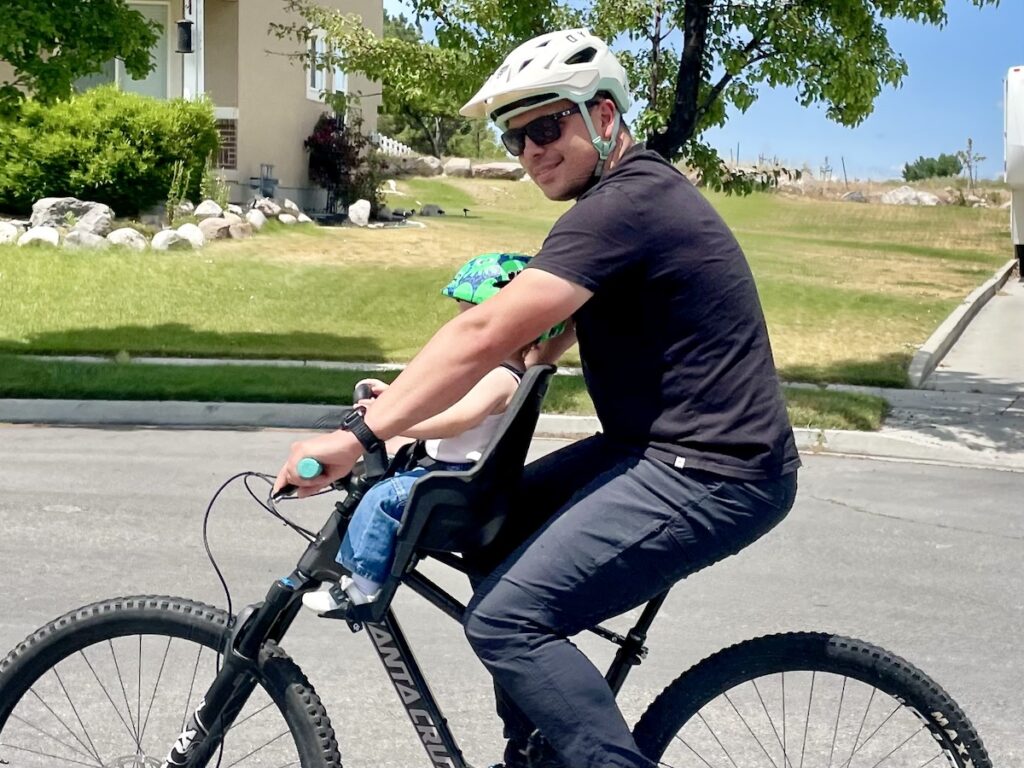
Riding with the Shotgun Pro or Pro EVO is hands-down one of the best ways to share your stoke with your little one. There’s something unforgettable about hearing them whoop as you roll over roots, swoop through turns, or hit a little pop of trail. It’s pure joy—for both of you.
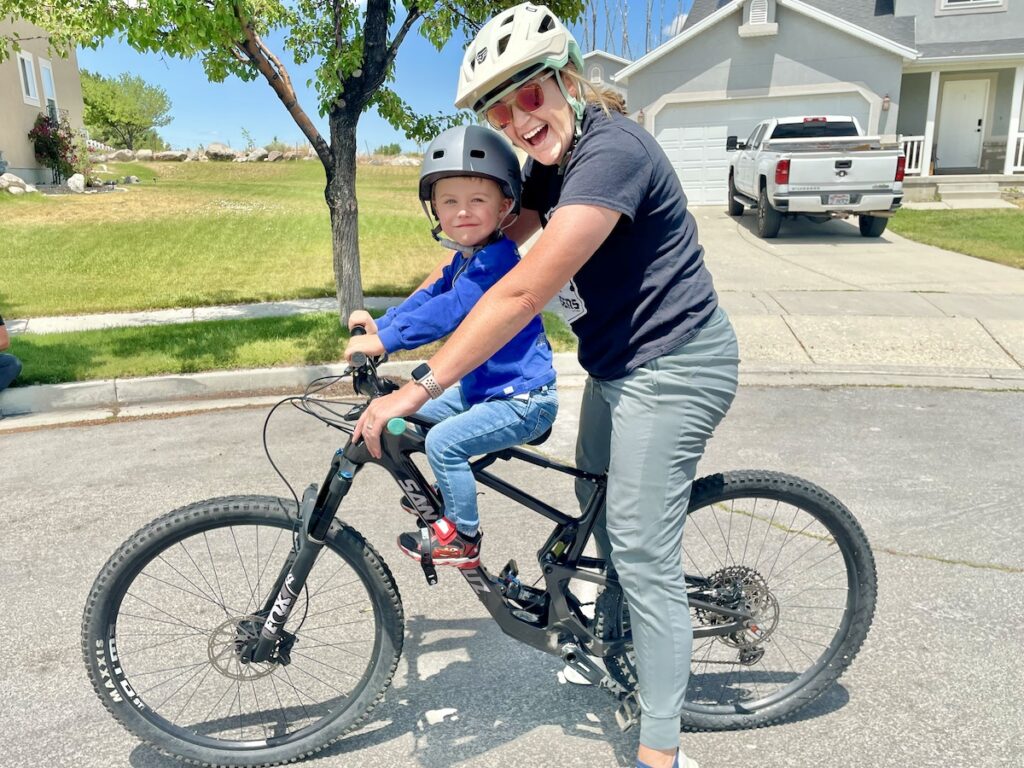
That said, like any front-mounted seat, the Shotgun Pro does change the way you ride. With your kiddo between you and the handlebars, you’ll have less room to move on the bike. Your chin or chest might bump their helmet and your range of motion in technical sections is going to be limited. Body-bike separation becomes harder, especially on chunkier terrain or when trying to power through a rock garden or steep climbs.
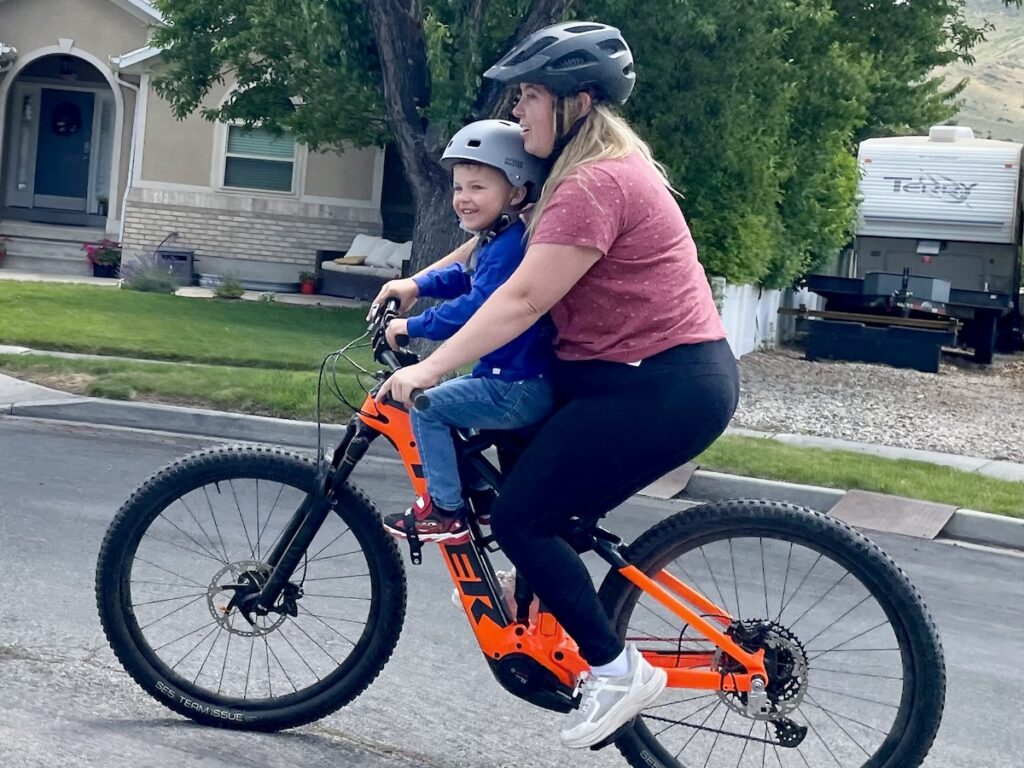
If you’re on a smaller frame or have a shorter torso, you’ll notice the limited space even more—especially with taller kids. On the Pro EVO, the bucket seat adds extra bulk, and for some riders, the top edge may rest against your chest, depending on your bike’s geometry.
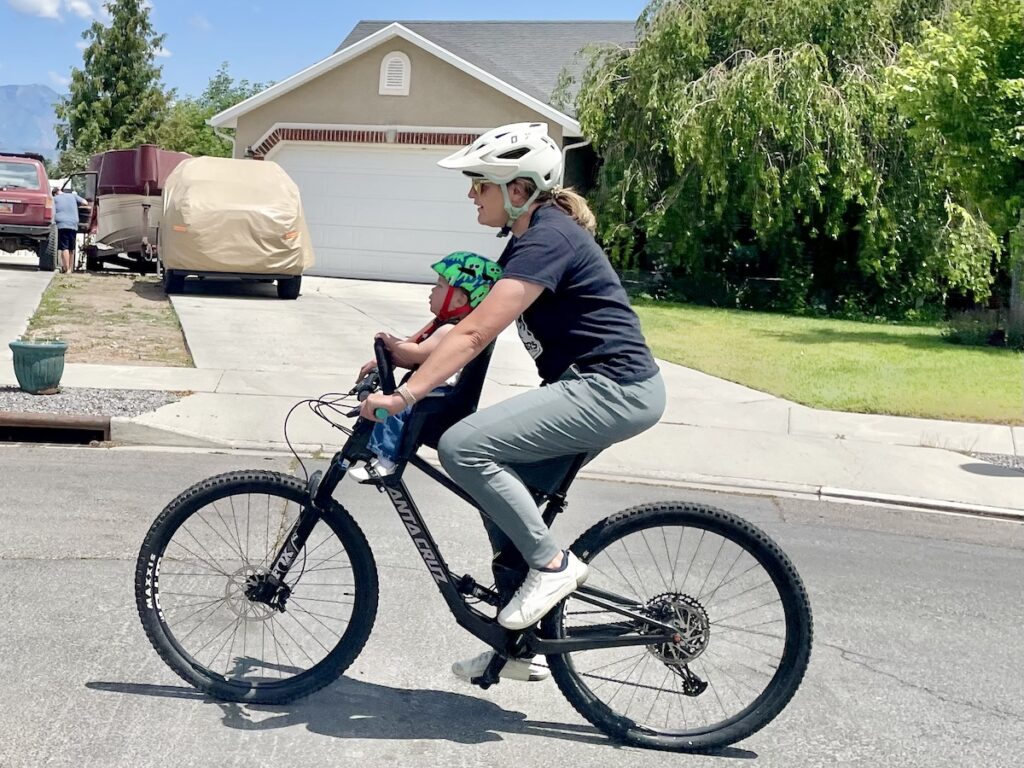
Tight switchback turns can also get tricky on the EVO. Your handlebars may bump into your child’s legs if the turn is sharp enough. But we are taking super tight turns that you wouldn’t hit at speed anyway.
As your little one grows, their head and body can also start to block your sightlines. It’s another reason to keep things mellow—stick to green and light blue trails where flow, fun, and chatter matter more than speed or tech.
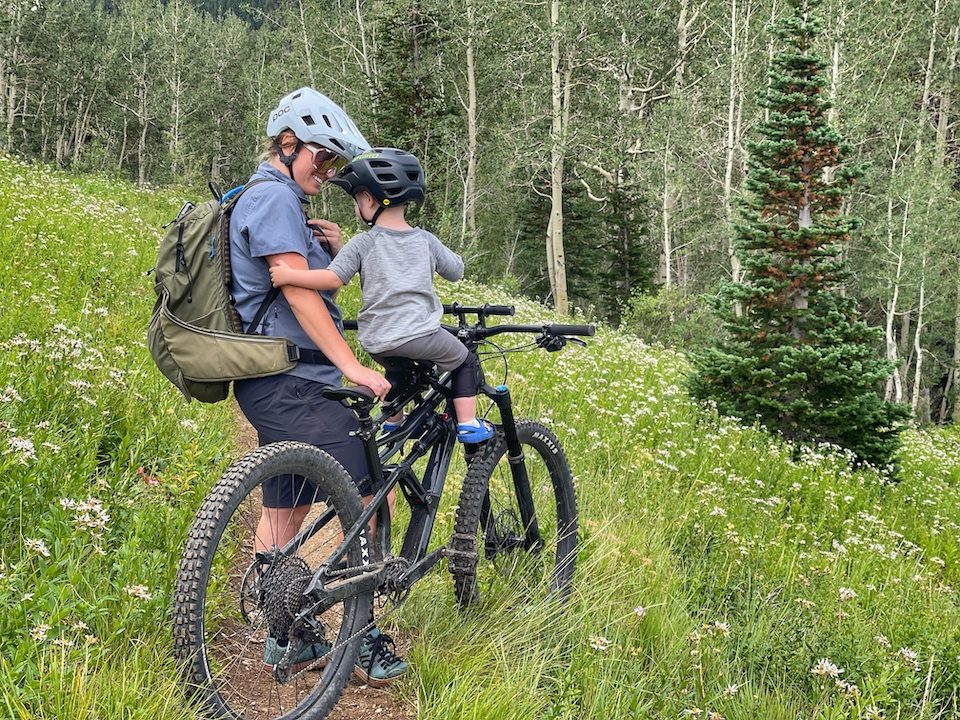
And remember, on the Pro, your child isn’t strapped in. They’re holding on with their own hands and grip strength. It’s a good reminder that even though the ride may feel casual, there’s still some risk—and rough terrain, drops, or jump lines are off the table.
Still, none of that will matter the moment your little one starts laughing mid-trail or lets out a full-throttle whoop on a fun downhill. I promise you that no PR or KOM will top the stoke of sharing the ride together.
Parent and Child Fit with the Shotgun Pro
While your riding style will definitely need to adjust when using the Shotgun Pro or Pro EVO, the seat offers several points of adjustability to help dial in a more comfortable and functional fit. Small changes in saddle position, angle, and footrest setup can make a huge difference in your control, balance, and overall ride experience—especially on longer or more technical trails.
Before heading to the trails, it’s essential to take a few test rides around your neighborhood. This gives you time to experiment with fit and get used to how the seat changes your riding posture. For shorter adult rider, just be aware that the smaller the your bike frame, the less room you’ll have to work with, and the more limited your adjustments will be.
Adjusting the Shotgun Pro
Saddle Position
The Pro’s saddle slides along the mounting bar and its position is set on the bar via two Allen bolts. This simple design allows you to shift the saddle forward or backward to find the right balance between rider comfort and cockpit space.
While the saddle position can be changed on the trail with your multitool, we highly recommend doing test rides around the neighborhood to dial in the perfect position before you hit the trail. In general, the longer your bike’s top tube, the more the Pro’s expandable mounting bar will be exposed and the more room you’ll have for adjustment. Before making any changes, drop your dropper post to ensure the Shotgun saddle won’t interfere with your saddle on the way down.
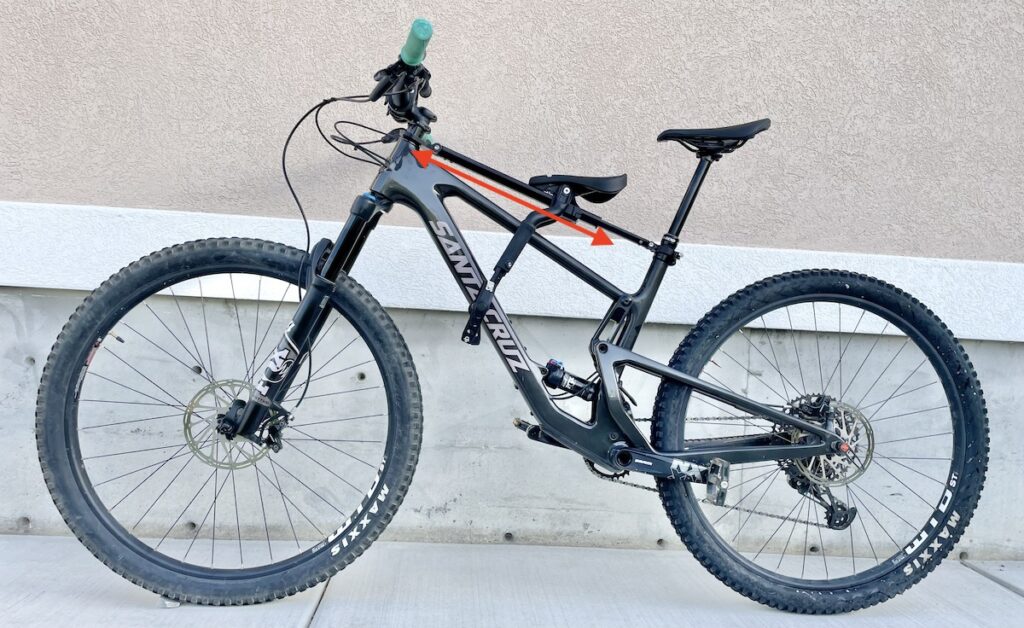
We recommend starting with the saddle positioned as far back on the mounting bar as possible. This encourages your child to lean forward slightly, which helps free up space between their helmet and your chin. It also lowers their center of gravity, which can improve bike handling.
That said, setting the saddle far back also positions your child slightly lower, which may require you to splay your knees more while pedaling. Sliding the saddle forward raises the child’s position and reduces knee splay, but it also brings their helmet closer to your head.
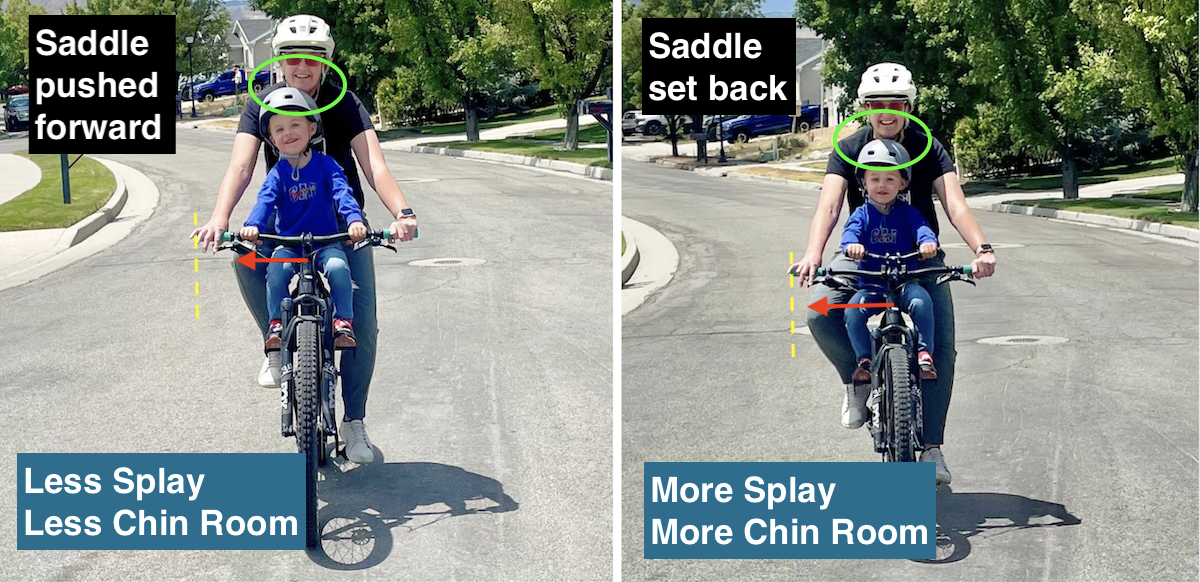
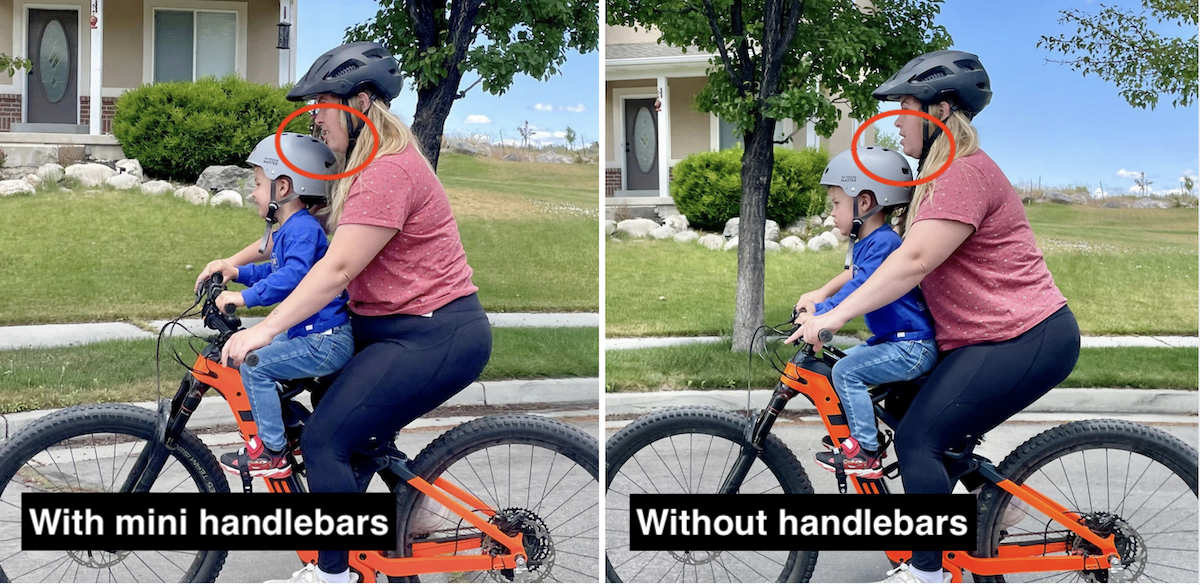
During testing, as a 5’10” rider on a size Large Santa Cruz Tallboy I noticed a clear difference in fit depending on saddle position. With the saddle moved forward (image on the left), the child sat higher allowing for no clearance between his helmet and my chin; with the saddle pushed back (image on the right), our 3-year-old tester sat lower, allowing for some clearance between my chin and his helmet, but requiring more splay to pedal.
After a few rides, I eventually found the sweet spot for me. By pushing to seat about two inches up the mounting rail and by NOT having our testers use the mini handlebars (which caused him to sit up more), I found a good compromise between body space and head space.
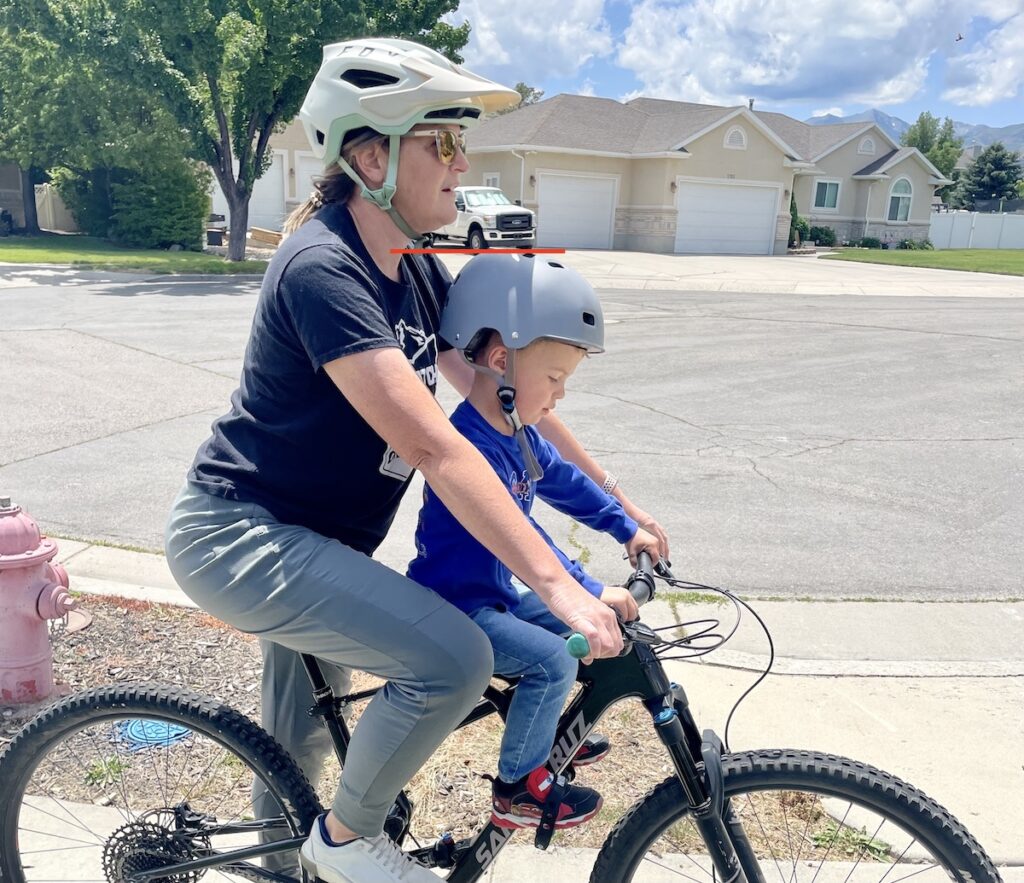
Our 5’3″ tester on a size Small Trek Rail eMTB had far less room to work with. Even with the saddle all the way back, her child’s helmet often bumped into her. She was still able to ride somewhat comfortably, but it required more upper body adjustment.
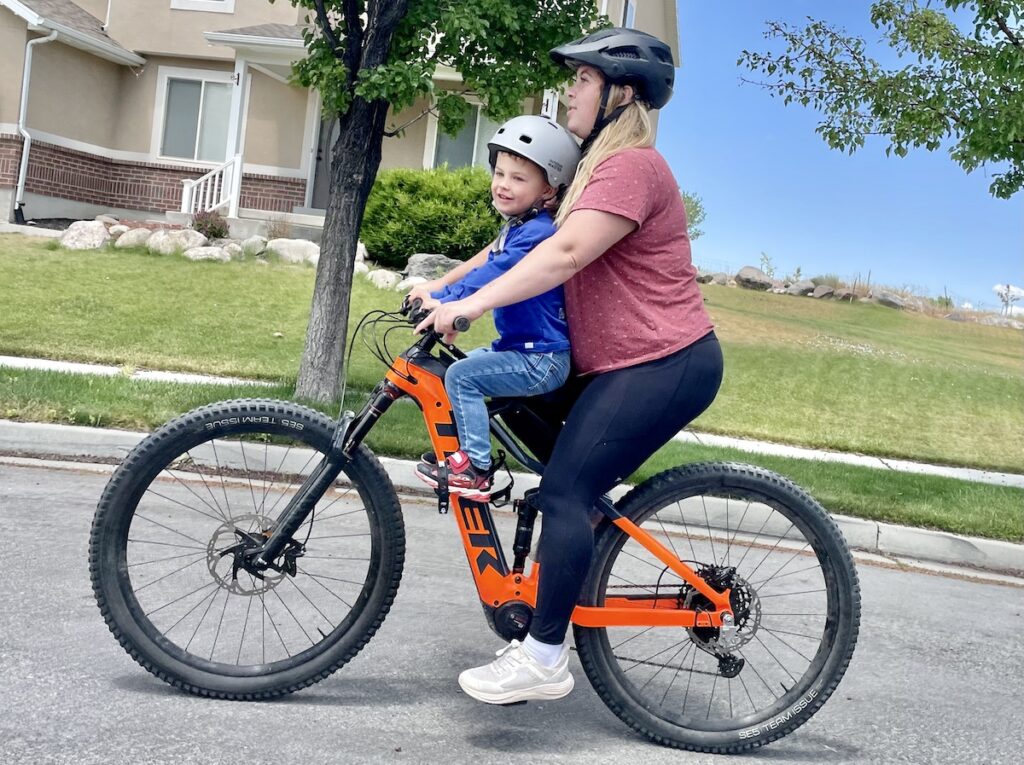
In contrast, our 6’2″ rider on a size Large frame had ample space, even with the EVO seat, and found the seat much less limiting.
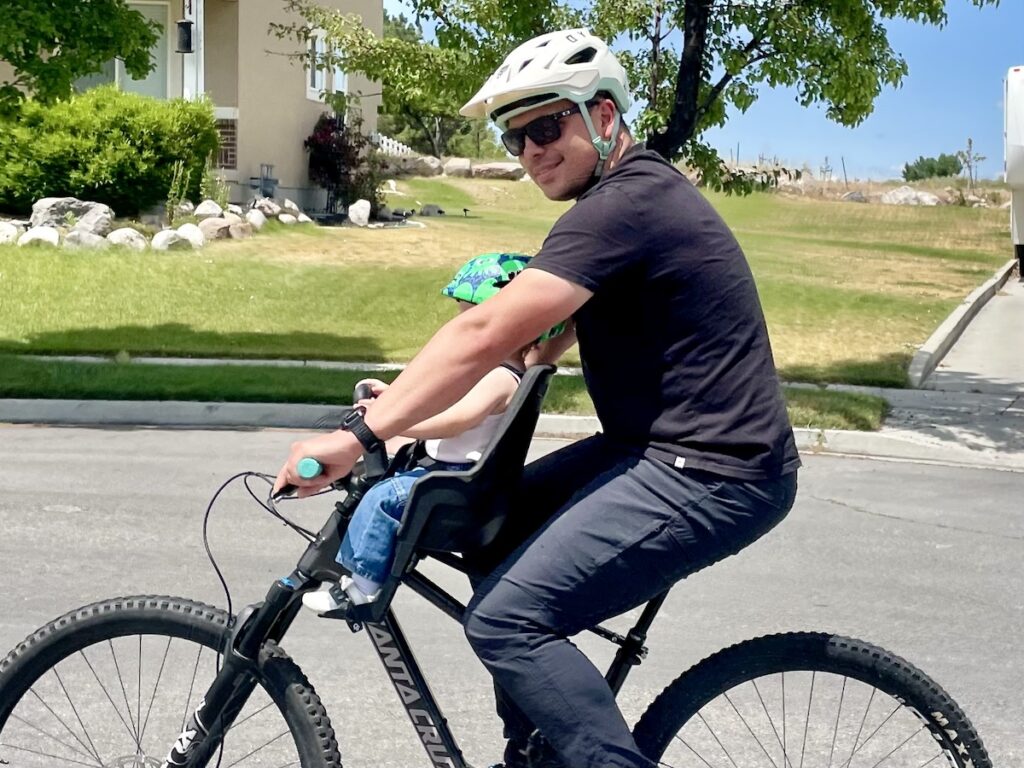
Riding with or without kids handlebars
One way to lower your child’s position on the bike is to ride without the Shotgun Pro handlebars. While we’re big fans of using them—since they give kids a safe, designated place to hold on and discourage them from grabbing your bars—they do raise the child’s hand position, which naturally encourages a more upright posture.
Both taller and shorter adult riders noticed the difference in cockpit space when removing the bars, but our shorter tester found the most benefit. Without the bars, her child leaned in more, giving her noticeably more room and a more comfortable riding position.
Saddle Angle Adjustment
The Pro also allows for quick, tool-free angle adjustments using a simple release lever under the saddle. In most cases, we found that having the nose of the saddle touch the mounting bar offered the best balance between support and fit. However, this may vary depending on your bike’s geometry—bikes with less aggressive angles might benefit from a different tilt.
Footrest Angle and Height
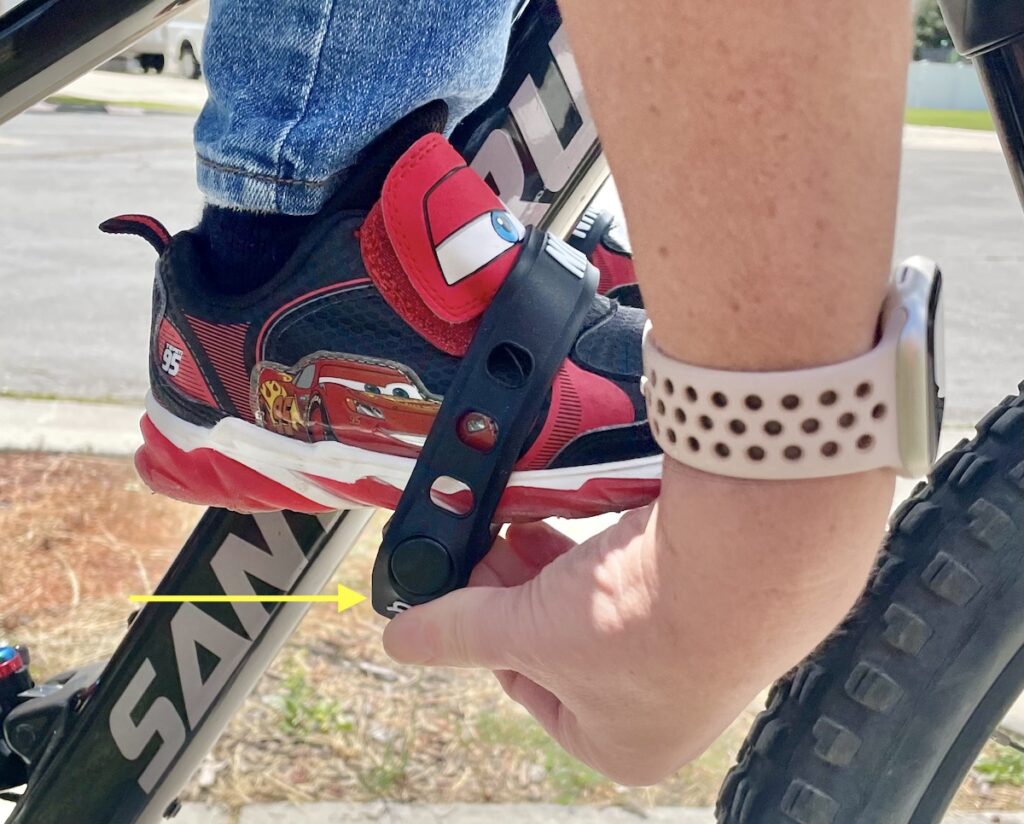
The angle of the footrests can also be adjusted. For better balance, your child’s legs should ideally extend slightly forward, but if the footrests are set too far forward, their toes may hit the front wheel during turns. Always test foot placement with turns before heading out on trail.
As your child grows, you can lower the footrests and adjust the footstraps accordingly. On the GEN 2 Pro, we did notice the updated footstraps were a little harder to secure—there’s not much of a tab to grab, which makes pulling them tight a bit tricky.
Adjustments on the Shotgun Pro EVO
The Pro EVO bucket seat attaches to the same rail system as the Pro saddle and can slide forward or back for fit. Due to the bucket seat’s high backrest, however, we found it worked best when positioned as close to the headset as possible. The same lever used to adjust saddle angle on the Pro also adjusts the bucket seat’s tilt and the position of the EVO’s grab bars.
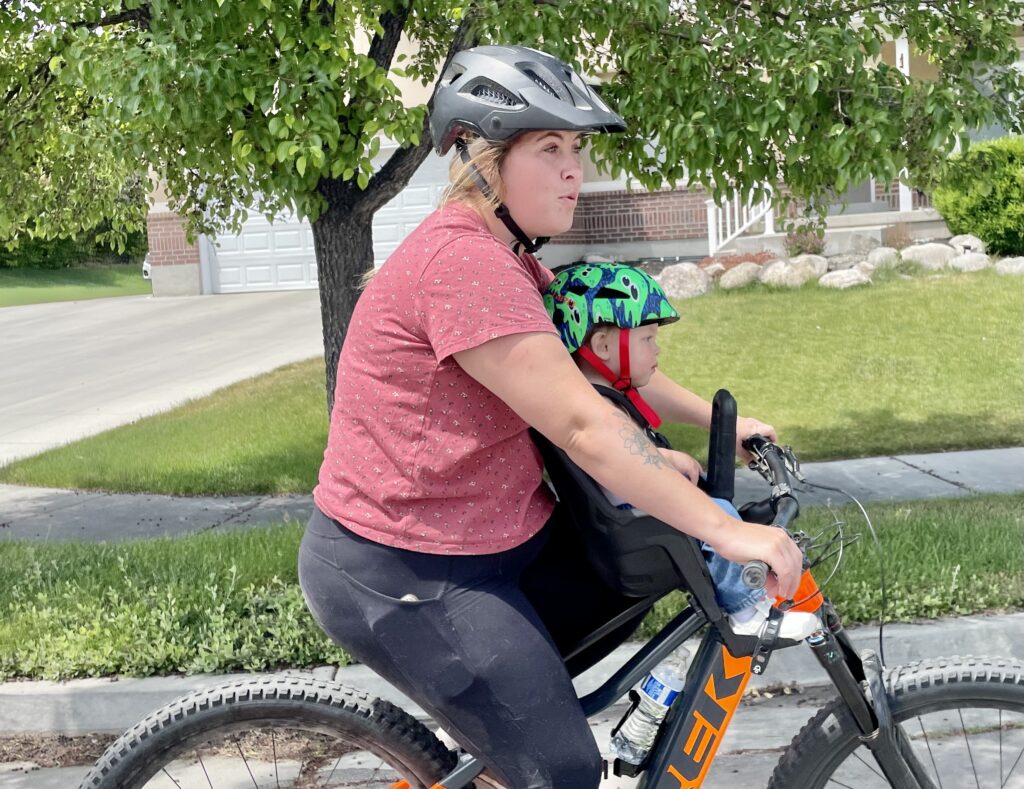
Just like with the Pro, shorter adult riders on smaller frames will find the fit tighter and the cockpit more cramped when using the EVO. It’s still absolutely doable—and still delivers plenty of stoke—but the added bulk of the bucket seat does restrict movement more than the open saddle setup, especially when climbing or cornering.
Installing the Shotgun Pro
Installing the Shotgun Pro is relatively quick but does require a basic understanding of bike repair. If you’re not comfortable removing or reassembling your headset, we highly recommend having a bike shop handle the installation.
Replacing the Headset Spacer
The core of the install involves replacing one of your bike’s 10mm headset spacers with the Shotgun Pro’s specialized spacer. This spacer includes an integrated ring, which serves as the front mounting point for the seat’s mounting bar.
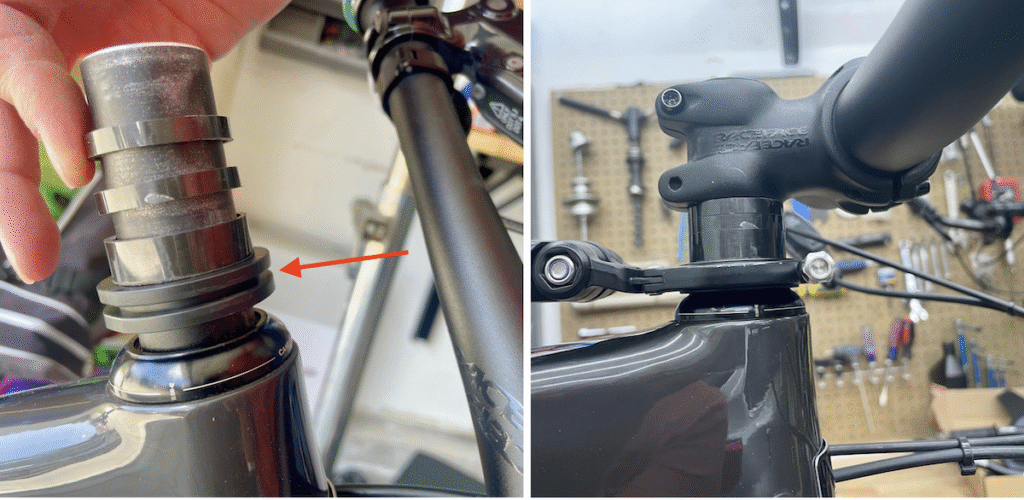
While the actual swap is straightforward, it’s crucial that your headset is reassembled correctly to maintain safety. If you’re unsure, err on the side of caution and have a pro take care of it.
Adding the Bucket Seat to the Pro EVO
The Pro EVO uses the same headset spacer as the standard Pro. However, when you buy a new Pro EVO, you’ll need to attach the bucket seat to the saddle. The bucket seat bolts onto the underside of the standard Pro saddle using five screws that thread up through the bucket and into pre-set mounting points.
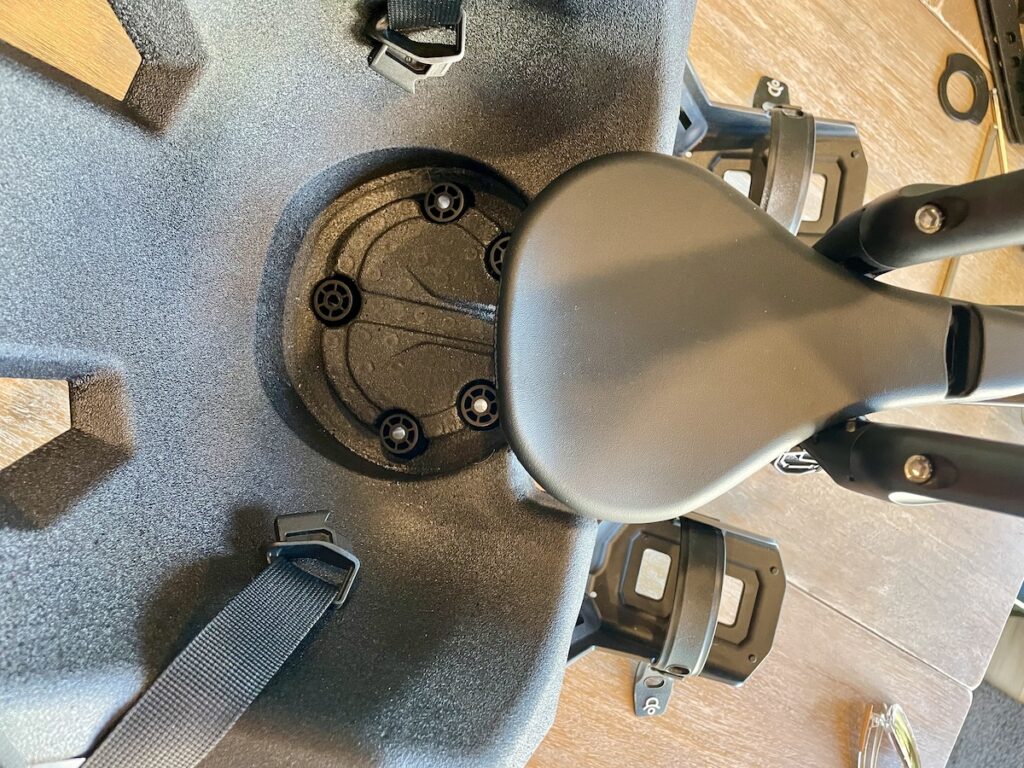
The process is simple with a bit of patience, and all required hardware is included.
Converting the Pro EVO to Preschool Mode
Once your little rider turns 2 and is ready to hold on without the harness, it’s time to transition the Pro EVO into a standard Pro setup. The conversion isn’t difficult, but it does have a bit of a learning curve. After a few tries, we were able to make the full switch in about 10 minutes—but it’s definitely not something you’ll want to do frequently.
The steps, as outlined by Kids Ride Shotgun (full illustrated instructions come with the seat), boil down to three main actions:
- Remove the bucket seat.
- Flip the EVO handlebars to the underside of the saddle.
- Swap out the handlebar loop for the leg rest extensions and foot pegs.
Shotgun Pro “GEN 1” vs. “GEN 2”
The newer GEN 2 version of the Shotgun Pro brings a few important updates, mostly to accommodate the addition of the EVO bucket seat. However, the standout change is the redesigned saddle, which now sits about ½ inch lower than the GEN 1. This small adjustment gives all adult riders—especially shorter ones—more clearance between them and their child.
The new saddle also swoops up in the back to help keep little bums from sliding off the saddle.
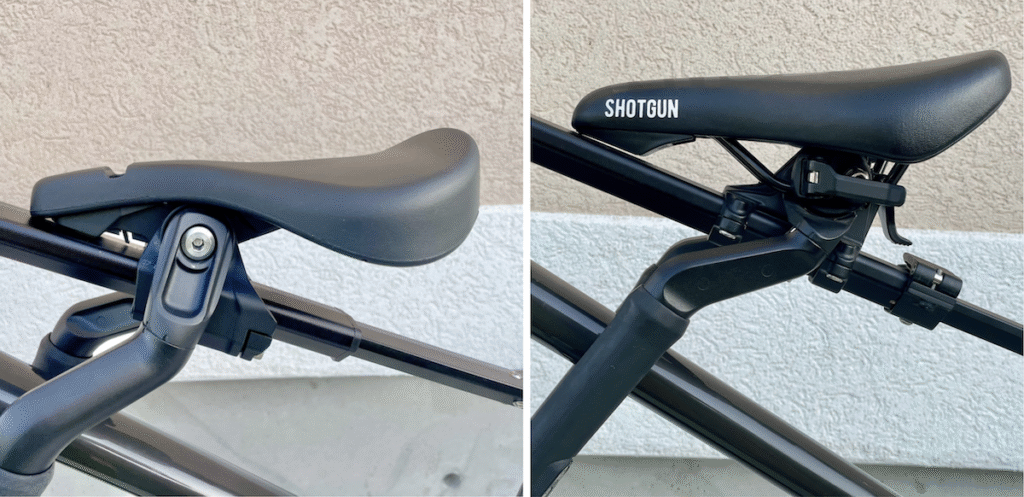
While the change alone may not justify upgrading from a GEN 1 if you already own one, it’s a noticeable improvement. For buyers on the used market, the GEN 2 will be worth seeking out if you want more flexibility and room in your cockpit.
Importantly, only GEN 2 Pro seats will be compatible with the bucket seat add-on, which will be available for purchase separately in the future. Keep in mind, though, that due to the bucket seat’s size, shipping costs will be high. If you think you’ll need it, you’re better off buying the Pro EVO upfront rather than piecing it together later.
Shotgun Pro vs. Shotgun Original & 2.0
The Shotgun Pro is a completely different design from the Shotgun Original and Original 2.0. While the Original seats attach directly to the bike frame using a compression fit, the Pro mounts via the headset spacer and seatpost—making it entirely frame-contact-free and compatible with more modern MTB setups.
Because the Original models sit directly on the top tube, they position the child lower on the bike—about 1 inch lower than the Shotgun Pro GEN 2. This lower position gives the adult rider more room to move and a bit more cockpit clearance. For reference, the new Pro GEN 2 actually sits about ½ inch lower than the GEN 1 Pro shown below.
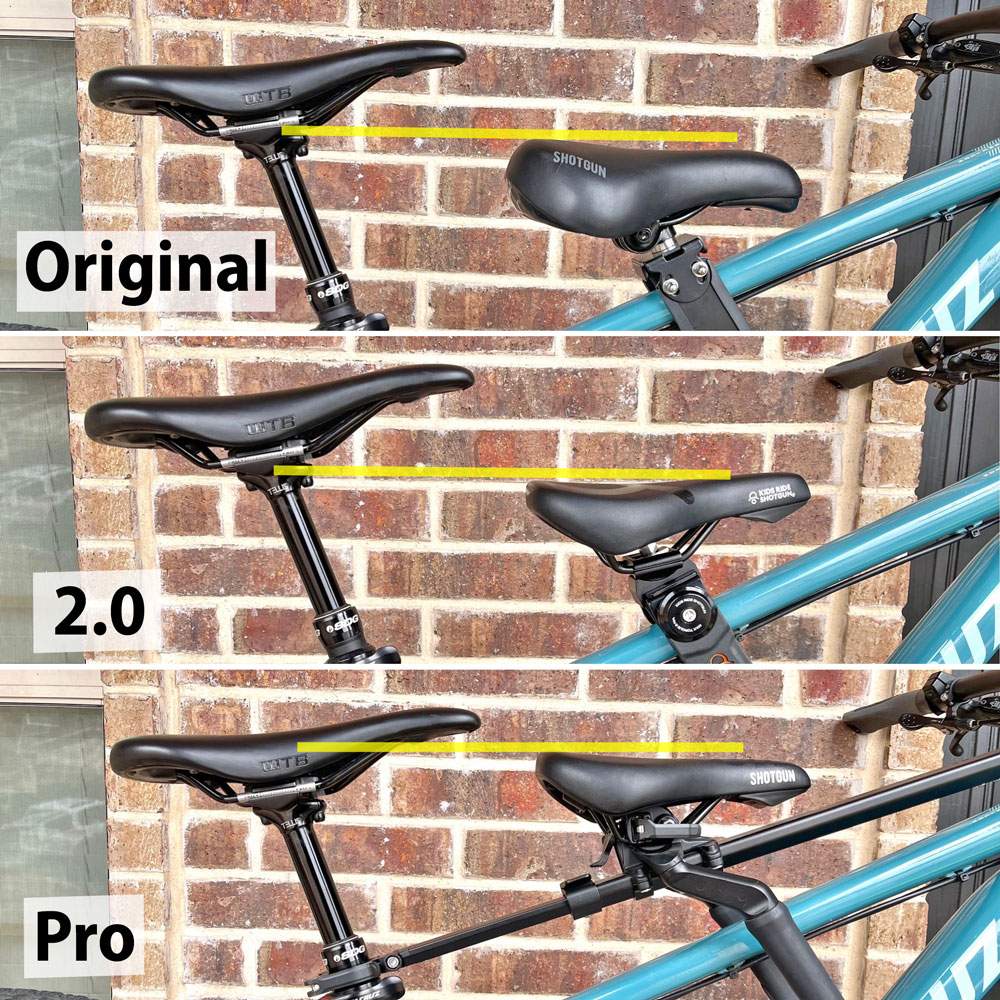
The biggest upgrade in the Original 2.0 is its e-bike compatibility, like the Pro. However, both Original versions still require frame contact, offer less adjustability, and take more time to install and remove compared to the Pro.The Pro also offers a higher weight limit (60 lbs vs. 48 lbs) and can be swapped between bikes in seconds, thanks to its headset-mounted design. That makes it a better long-term option for growing kids, families with multiple bikes, and parents who want the flexibility to quickly gear up and go.
Shotgun Pro vs. Mac Ride
Both the Shotgun Pro and Mac Ride are excellent front-mounted MTB seats, and they attach to bikes in nearly identical ways. We’ve tested both extensively, and while there are pros and cons to each, some differences stood out.
We prefer the slightly saddle height and curved seat shape on the Mac Ride, which helps keep kids more securely planted.
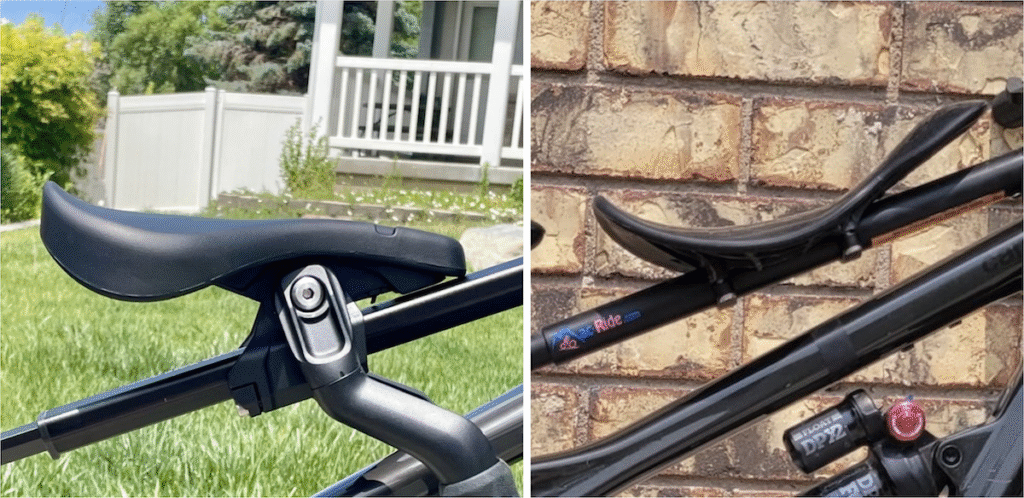
However, the footrests on the Shotgun Pro are a clear win for us. They’re wider, have a sturdier base, and stay in place better than the Mac Ride’s narrower pegs, which tend to spin over time.
It’s also worth noting that while Mac Ride is currently developing a bucket seat option, the standard Mac Ride seat is only suitable for kids aged 3 to 5, whereas the Shotgun Pro EVO can be used with kids as young as 9 months thanks to its harnessed bucket seat.
Shotgun Pro and Shotgun 2.0 Handlebars
The Shotgun Pro EVO comes standard with the Pro handlebars in order to meet ASTM certification for front-mounted seats. With the standard Shotgun Pro, though, you get a choice—you can buy the seat on its own or as a combo with the Pro handlebars, which saves a bit compared to buying separately.
So, do you need the handlebars? And if so, should you go for the upgraded Pro bars or the more affordable Shotgun 2.0 handlebars? Here’s a quick breakdown to help you decide.

Shotgun 2.0 vs. Shotgun Pro Handlebars
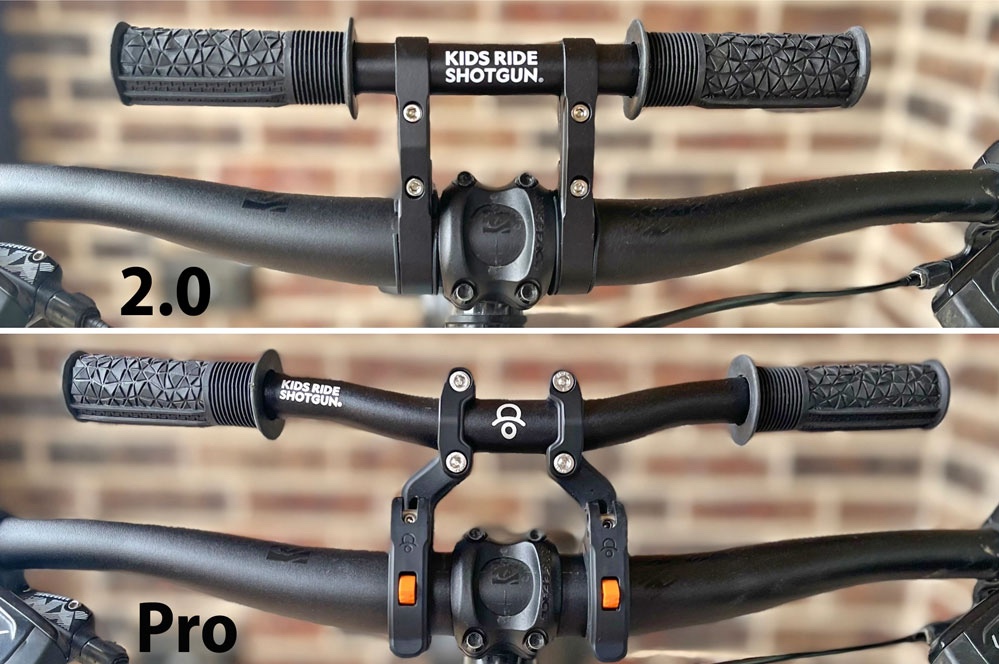
The Shotgun 2.0 handlebars attach using a couple of Allen bolts and cost around $55. They’re sturdy, straightforward, and take about 60 seconds to install or remove with a tool. If you’re looking to save a little money and don’t mind using an Allen key, they work just fine.
The Shotgun Pro handlebars, on the other hand, come in at $85 and offer a few smart upgrades:
- Quick-release attachment—no tools needed
- Slimmer grips—easier for small hands to hold
- Wider bar width—gives your little rider more of a true MTB stance
Both bars are well made and easy to use, but the quick-release system on the Pro bars is a game changer, especially if you’re swapping between setups or removing the seat between rides. Whether that’s worth the extra $20 comes down to how often you think you’ll be taking them on and off.
How Do the Handlebars Affect Fit?
Using either set of handlebars puts your child in a more upright position than if they were leaning forward to grab your bars. For smaller or younger riders, that upright posture is often more comfortable—they’re not stretching to reach or struggling to hold on.
But as kids get older and taller that upright stance means they’re more in your space. With our testers 5’10” and under, the handlebars caused their kids to sit up just enough to make things feel cramped—helmets bumping chins, less room to maneuver, and limited cockpit clearance. For taller riders (around 6’1″ and up), this might not be an issue.
Our Take
If you’re buying the Shotgun Pro EVO, you’ll already have the Pro bars included—and for younger riders, they’re a great fit. If you’re considering the Pro on its own, we’d only recommend adding handlebars if you’re a taller rider with enough torso length to make the extra height workable.
However, if you’re leaning toward the Original or Original 2.0 seat instead, definitely get the handlebars. That seat sits lower, so even with a taller rider, there’s usually plenty of clearance. Our 42.5″ tester rides comfortably in the upright position without crowding the adult rider’s space.
Shotgun Pro and Pro EVO Bottom Line
If you’re looking to share your stoke on the trails with your little one, the Shotgun Pro and Pro EVO are two of the best front-mounted MTB seats on the market. The Pro features a solid, contact-free design with plenty of adjustability and the convenience of quick swaps between bikes. The Pro EVO builds on that foundation with a removable, harnessed bucket seat—making it the only front-mounted MTB seat suitable for kids as young as 9 months.
Both options ride impressively well and let your child experience the magic of mountain biking from the best seat in the house—right between your arms. Yes, cockpit space is limited and dialing in the perfect fit takes some trial and error, but the mid-ride chatter, laughs, and whoops from your tiny passenger make it all more than worth it.
FTC Disclosure: Affiliate links are included in this review. No monetary compensation was provided for this review, however, the reviewed product was supplied by the manufacturer or distributor to help facilitate this review. All opinions and images are that of Two Wheeling Tots LLC. All content and images are copyrighted and should not be used or replicated in any way. View our Terms of Use.