Early Rider Belter 20 Auto Kids Bike Review – It Auto Shifts!
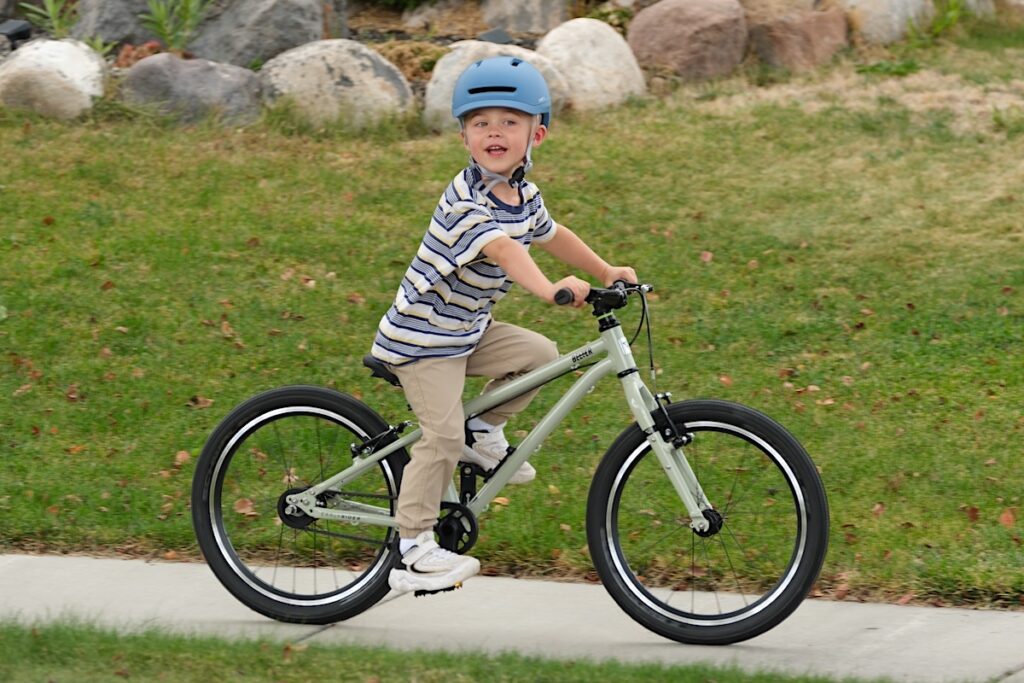
The age-old question for 20-inch bikes: to gear or not to gear? Many parents struggle with this dilemma, but the Early Rider Belter 20 Auto offers a ‘just right’ solution. Thanks to its autoshift hub, this bike delivers the performance benefits of a geared system without the complication of a derailleur or manual shifter.
Built with Early Rider’s meticulous attention to detail, the Belter 20 Auto doesn’t just simplify shifting; it dramatically reduces maintenance. This exceptional quality, combined with a maintenance-free carbon belt drive (in place of a traditional chain) and the absence of a low-lying derailleur (which is highly susceptible to damage on 20-inch bikes), means more time on the trail and less time at the repair stand.
From performance metrics to sizing guides, our review will cover everything you need to know about the Early Rider Belter 20 Auto.
Early Rider Belter 20 Auto
OUR SCORE: 90.4/100 – Exceptional
MSRP: $799
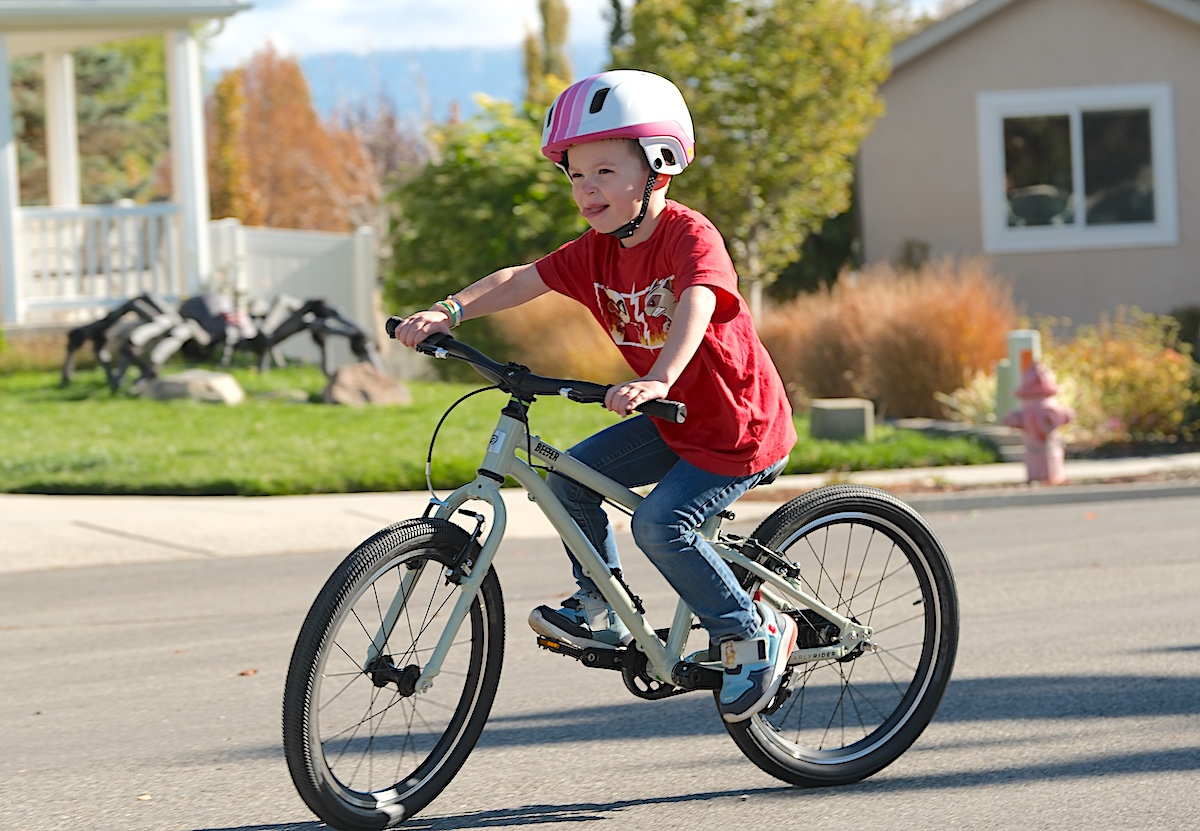
BEST FOR: Playful riders riding on pavement or compact dirt trails who aren’t tackling aggressive hills
SEAT HEIGHT: 22.5” – 27.5″
WEIGHT: 17.75 lb. (with pedals)
ADDITIONAL SPECIFICATIONS
BRAKES: Tektro Dual Hand (no coaster brake)
GAIN RATIO: 3.15 and 4.32
TIRES: Schwalbe Billy Bonkers 20”x2.0”
FRAME: Aluminum Alloy
What We Love about the Early Rider Belter 20 Auto
- Exceptional build quality. Every component, right down to the bearings, is premium and designed to last for years with minimal maintenance.
- Clean, thoughtful design. The internally geared rear hub replaces a traditional derailleur, eliminating tuning hassles and protecting the drivetrain from damage.
- Highly efficient pedaling. The Belter is engineered to maximize efficiency, helping young riders go farther with less effort.
- Truly no-shifter riding. Many kids won’t even realize the bike has two gears, keeping their focus entirely on riding rather than shifting.
- Available in three color options to suit different style preferences.
What You Should Know About the Early Rider Before you Buy
- Presta-only rims. The rims are compatible only with Presta valves, which can make finding replacement tubes locally more difficult. We recommend ordering an extra tube online and keeping it on hand.
- No sealant option for 20” tubes. The 20-inch Presta tubes do not have removable valve cores, so tire sealant (such as Slime) can’t be added. To reduce flats, we recommend installing tire liners, such as Mr. Tuffy’s liners.
- Two-speed automatic hub limitations. The Belter 20 Auto features two gears and automatically shifts up to prevent spinning out on flats and downhills. The bike starts in its lower gear, but the system isn’t designed to actively downshift under load when climbing, making it less ideal for steep hills.
Our 20″ Bike Rubric Score
We score 20″ bikes on a 100-point scale across eight categories. The Early Rider Belter Auto scored 90.4 as the only 20″ bike with automatic shifting—a unique 2-speed system that shifts based on pedal cadence. Important context: This bike’s build quality and performance are exceptional—it’s impeccably constructed with premium components throughout.
However, our rubric categorizes it as “single speed” (since you can’t manually control gears), which limits its scoring potential compared to geared bikes. The auto-shift mechanism also adds weight (17.8 lbs vs. 15-16 lbs for comparable bikes), costing points in the weight category. Despite these rubric limitations, this bike earned extra credit points for belt drive and internal hub, and remains the ultimate low-maintenance option for kids who struggle with manual shifting. The score reflects rubric constraints, not the bike’s actual quality—which is outstanding. See all 20″ bike scores.
How the Early Rider Belter Auto 20 Scored
Score Breakdown ▼
Frame Design 15.0 / 15 ▼
What we evaluate: Frame design focuses on weight reduction, geometry, and accessibility. Points reward aluminum construction, low bottom bracket for stability, low minimum seat height for younger riders, step-through frames for easy mounting, and threaded bottom brackets for easier maintenance.
- ✅ Aluminum Frame (4 pts)
- ✅ Low Bottom Bracket (3 pts)
- ✅ Low Min Seat Height ≤ 23″ (3 pts)
- ✅ Low Step-Through Frame (3 pts)
- ✅ Threaded Bottom Bracket (2 pts)
Components 20.0 / 20 ▼
What we evaluate: Component quality directly affects ride quality and durability. We score based on narrow Q-factor (better for kids’ hip width), sealed components (lower maintenance), 3-piece cranks (stronger and replaceable), quality tires, and adjustability features.
- ✅ Narrow Q-factor (3 pts)
- ✅ 3-Piece Crank (3 pts)
- ✅ Quality/Sealed Hubs (2 pts)
- ✅ Quality Seat Post Quick Release (2 pts)
- ✅ Comfortable Padded Saddle (2 pts)
- ✅ Sealed/Cartridge Bottom Bracket (2 pts)
- ✅ Adjustable Handlebar (2 pts)
- ✅ Quality Headset (2 pts)
- ✅ Brand Name Tires (2 pts)
Gearing & Brakes (Single Speed) 28.0 / 30 ▼
What we evaluate: Single speed bikes are scored on optimal gain ratio (3.4-4.6 for flat terrain), brake quality and safety features. No coaster brake is preferred for better control, and short-reach levers ensure small hands can brake effectively.
- ✅ Optimal Gain Ratio 4.36 (5 pts)
- ✅ No Coaster Brake (4 pts)
- ✅ Brake Duplicity (4 pts)
- ✅ V-Brakes (4 pts)
- ✅ Short Reach Brake Levers (4 pts)
- ✅ Quality Wheels Axles (2 pts)
- ✅ Rattle-free Chain Guard (2 pts)
- ✅ Smooth Rolling Tires (2 pts)
- ❌ Kickstand Included (1 pt)
- ❌ Reflective Sidewall Tires (1 pt)
Gain Ratio: 4.36
Weight 11.0 / 15 ▼
How it’s scored: Weight is scored proportionally within bike category. The lightest bike in the category receives 15 points, the heaviest receives 0 points. This ensures fair comparison—single speeds are compared to single speeds, city bikes to city bikes, etc.
Bike Weight: 17.8 lbs
Category: Single Speed
Useable Fit Range 5.0 / 10 ▼
How it’s scored: Bikes with wider useable seat height ranges score higher on a proportional scale across all 20″ bikes. The widest range scores 10 points, the narrowest scores 0 points. A wider range means the bike grows with your child longer, providing better long-term value.
Useable Range: 5.0″
Seat Height: 22.50″ – 27.50″
Scored against all 20″ bikes regardless of category
Ease of Assembly 5.0 / 6 ▼
What we evaluate: Assembly scoring measures the out-of-box experience. Points are awarded for clear instructions, minimal assembly requirements, and pre-tuned components that work properly without adjustment.
- ✅ Clear Written Instructions (2 pts)
- ❌ Video Instructions (1 pt)
- ✅ Easy Assembly / Mostly Assembled (1 pt)
- ✅ Pre-tuned Brakes (2 pts)
Warranty & Customer Service 4.0 / 4 ▼
What we evaluate: Post-purchase support matters for long-term satisfaction. Points are awarded for responsive customer service with real people (not just chatbots), frame warranties, and component coverage.
- ✅ Customer Service with Real Person (2 pts)
- ✅ Frame Warranty (1 pt)
- ✅ Partial Component Warranty (1 pt)
Extra Credit +2.0 ▼
What earns extra credit: Bonus points for innovative features that enhance durability, reduce maintenance, or add exceptional value beyond standard expectations.
- ✅ Belt Drive (+1 pt)
- ❌ Tubeless Compatible Rims (+2 pts)
- ✅ Internal Hub Gearing (+1 pt)
What size and age of child fits on the Belter 20?
The seat height on the Belter 20 Auto ranges from 22.5” to 27.5”, making it suitable for kids with inseams ranging from about 20.5” to 25.5”. Depending on their height and inseam, the Belter 20 typically fits riders around the ages 4 to 8.
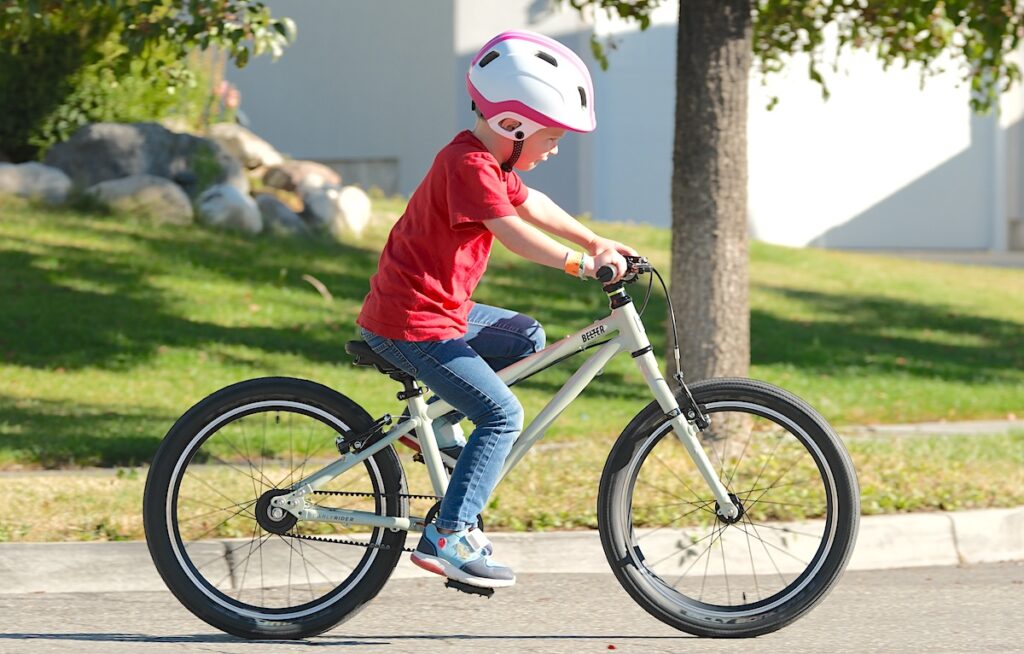
Early Rider suggests a slightly lower inseam fit of at least 19.7”, but based on our tests with our 4-year-old with a 19.5” inseam, the Belter 20 was slightly too big for him. While he could certainly ride it, he couldn’t quite touch the ground with both of his toes while on the saddle and much preferred the smaller Belter 16.
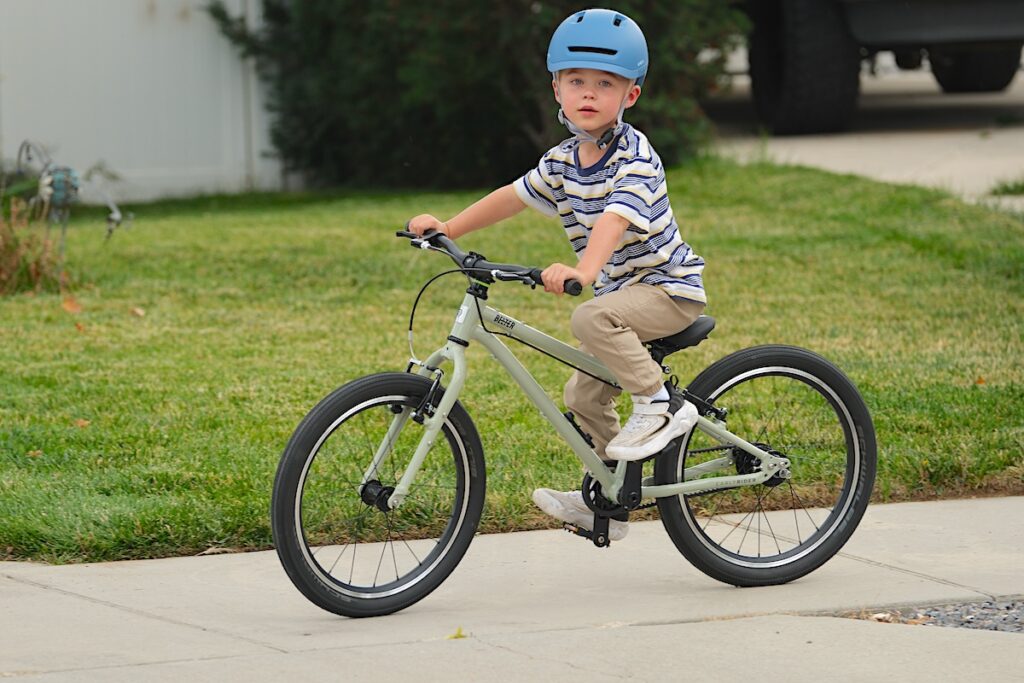
Our taller 5-year-old, with an inseam around 20.5”, comfortably fit the Belter 20 without any issues and was able to touch the ground with both feet while on the saddle.
Real-World Testing: Why Kids (and Parents) Love It
For many children, moving up to a 20-inch bike and its gears can feel like a significant leap. The difficulty is twofold: it’s not just the physical act of shifting (which can be hard with small hands or stiff shifters), but the sophisticated skill of knowing when to shift which is challenging even for experienced adult riders.
The Belter 20 Auto is unique because it removes the steep learning curve of a geared bike without sacrificing the performance benefits. The autoshift hub is the game-changer, automatically shifting the bike into the higher gear once the rider achieves a set pedaling speed (cadence).
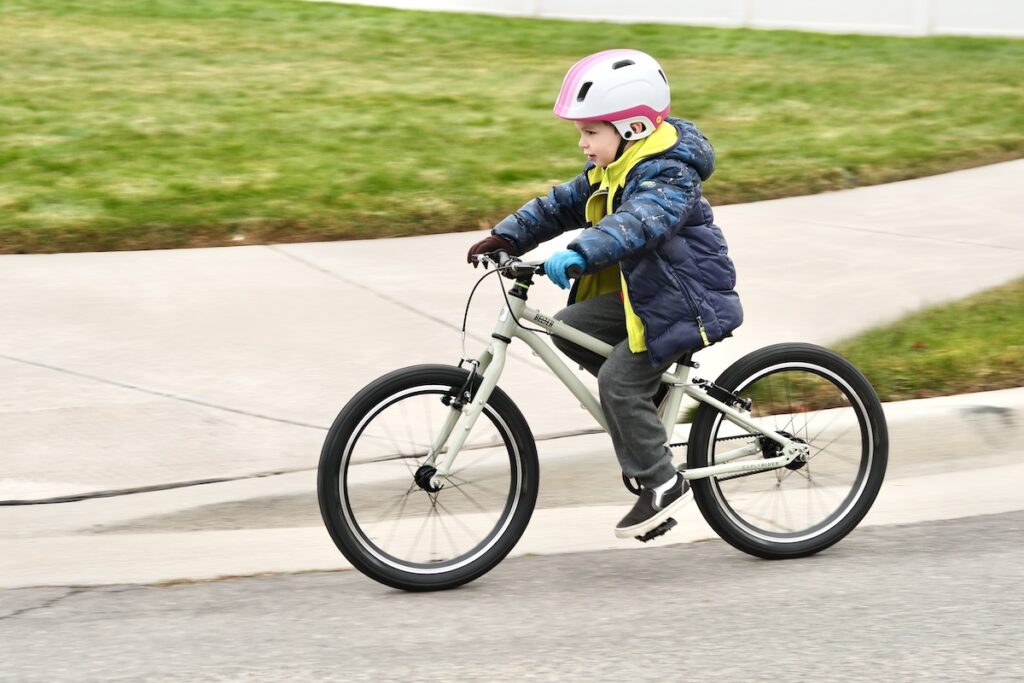
While the 2-speed autoshift hub offers only two gears (compared to the 6 or 7 found on traditional derailleurs), these two gears are precisely the ones young riders use most often.
Our 5-year-old tester, accustomed to the geared woom GO 4, genuinely loved the Belter 20 Auto. Its more leaned-in, aggressive geometry, compared to the relaxed upright GO 4, allowed him to be more playful, carving in and out of turns with confidence.
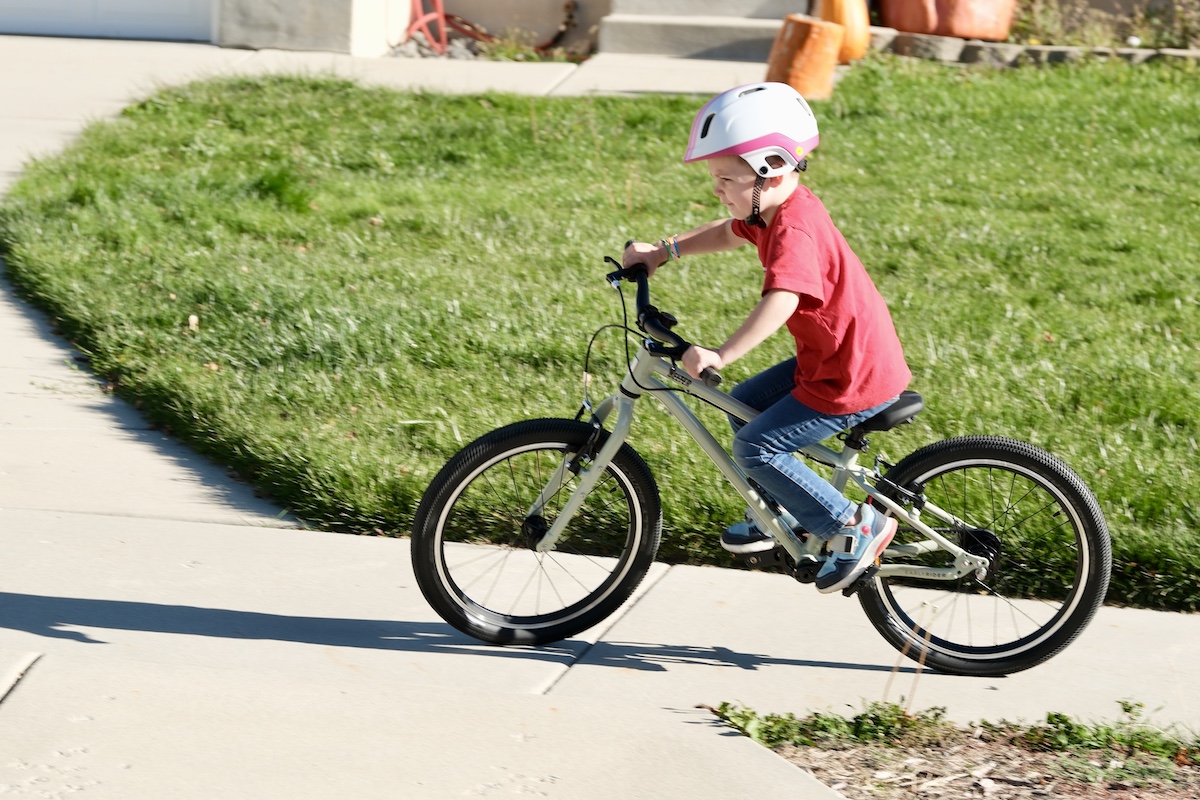
Without the distraction of having to shift, he maintained a more steady and optimal cadence and no longer had to wait for adult cues when he began “spinning out.” While the woom GO 4’s wider gear range is better suited for steeper climbs or maintaining speed on long straightaways, our tester rarely encounters those situations. For the vast majority of his riding, the two gears on the Belter are more than suffice.
For long-term durability, the internally geared hub is certainly an advantage. It is safely tucked away inside the rear wheel, providing superior protection from damage compared to a low-lying derailleur that is prone to being hit by curbs, rocks, or when the bike falls over.
All in all, our testers and parents both loved the simplicity and durability of the Belter 20 Auto paired with exceptional quality and performance. For playful riders seeking an exceptional, high-quality bike perfect for neighborhood cruising or family rides on flat to rolling terrain, the Belter 20 Auto is an absolute top recommendation!
Belter’s Components and Exceptional Craftsmanship
Internally Geared Rear Hub
The heart of the bike is its 2-speed Sturmey Archer internally geared rear hub. This hub is safely housed in the center of the rear wheel.
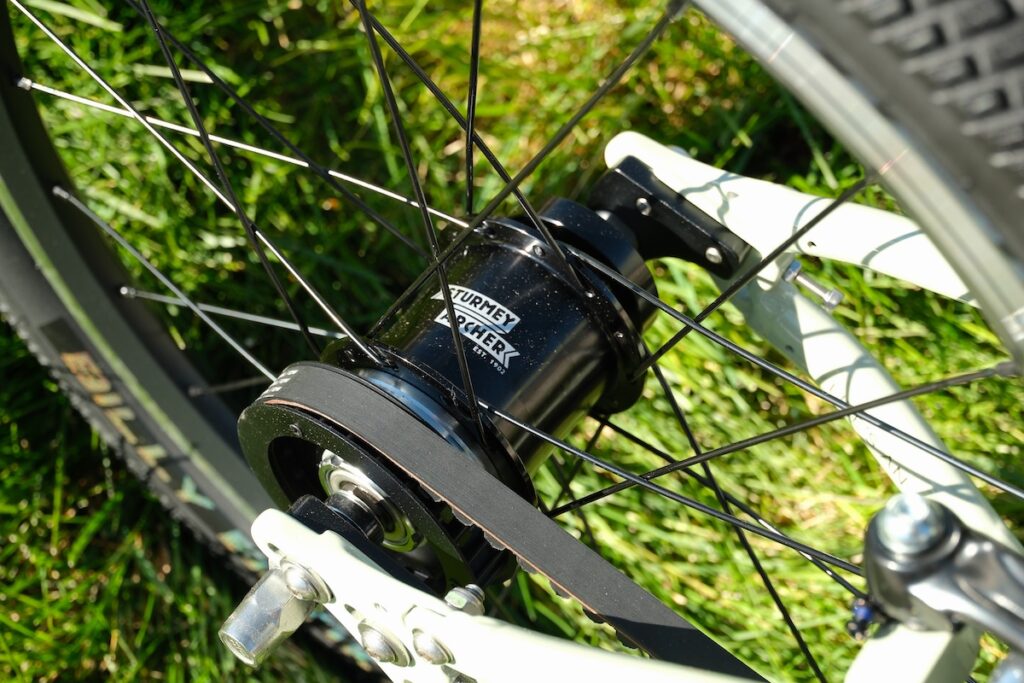
The bike starts in the lower gear (a 3.15 gain ratio) and then automatically shifts to the higher gear (4.32 gain ratio) once the child achieves a high pedaling speed (cadence).
These smooth, automatic shifts allow the bike to cover more distance with each pedal stroke, eliminating the need for kids to pedal frantically to gain speed. Furthermore, starting with a lower gain ratio makes it much easier for young riders to get the bike moving, as it requires less initial effort to turn the pedals.
To put this gear jump into perspective, the shift on the Belter is roughly equivalent to moving one to one-and-a-half gears on a bike with a standard derailleur system. For comparison, the woom GO 4 has a gain-ratio range of 2.30 to 5.90 spread across seven gears, resulting in a total range of 3.60. The Belter 20 Auto, by contrast, has just two gears with a difference of 1.17 between them. While that gap may seem small on paper, it’s enough to meaningfully improve pedaling efficiency without feeling abrupt, sloppy, or overly restrictive for young riders.
How does the Belter do on hills?
The Belter 20’s low starting gear is suitable for everyday riding and mild, rolling hills, but it isn’t built for sustained or steep climbs. While the automatic hub reliably shifts up as speed increases, it doesn’t always downshift when a rider slows on an incline.
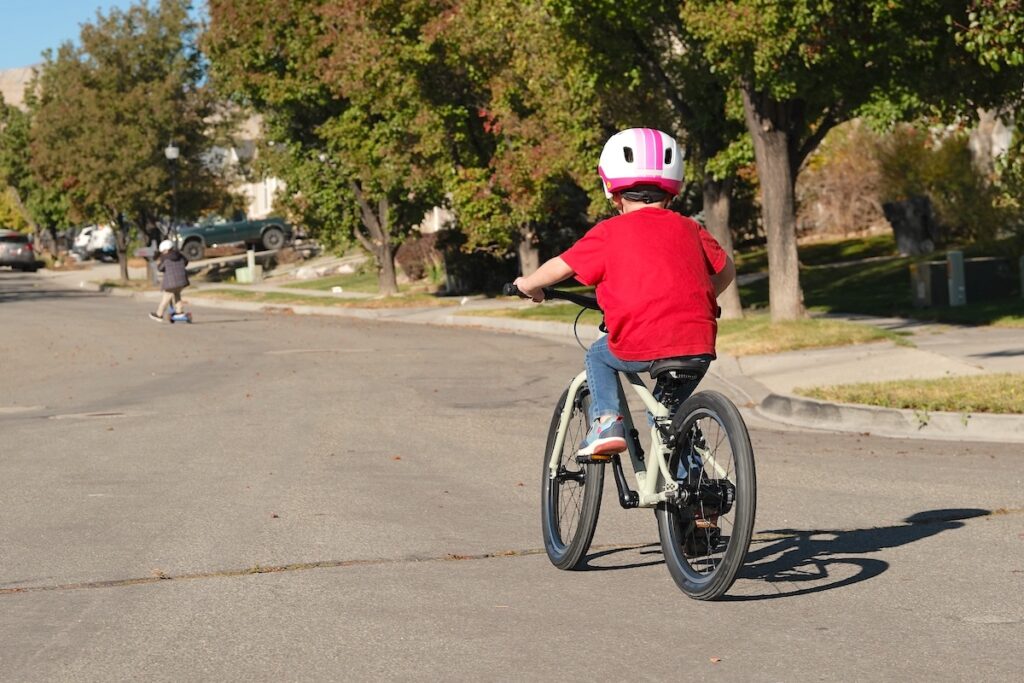
In theory, the hub should drop into the lower gear as cadence decreases. In practice, we found this can be a bit finicky. Some kids instinctively pedal faster when a climb gets tough, which can unintentionally keep the hub in the higher gear rather than triggering a downshift.
If tackling hills is a top priority, the Belter 20 Auto is likely not the best fit. For comparison, the Early Rider Seeker 20 offers an 8-speed drivetrain with a much lower climbing gear (1.92 versus the Belter’s 3.15), with significantly more climbing power.
Carbon Belt Drive
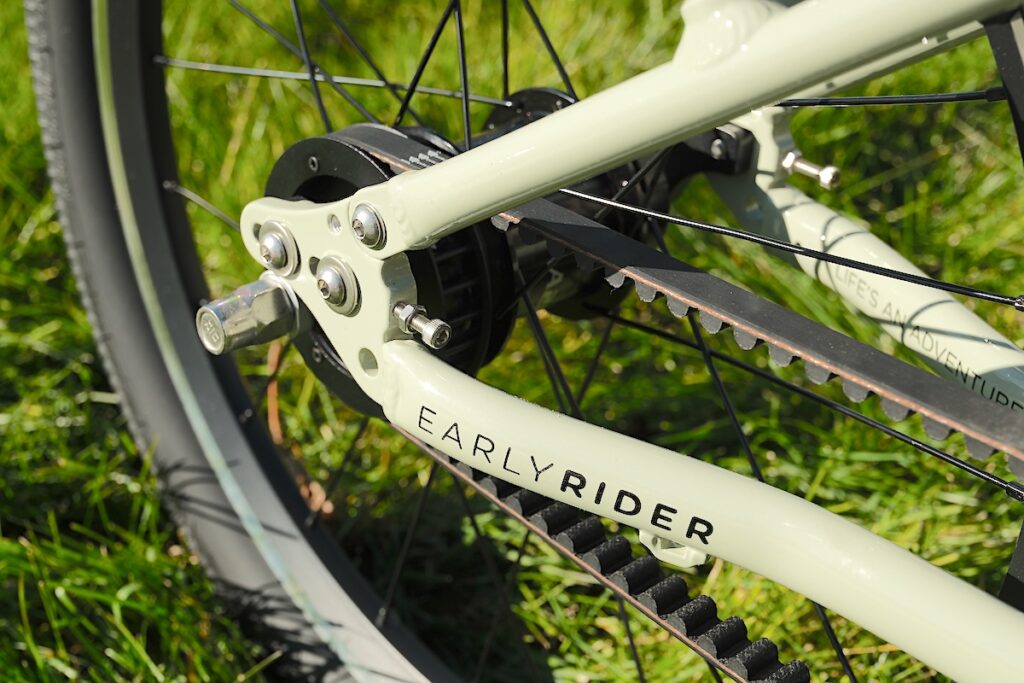
In addition to not having to worry about often finicky derailleurs, the Belter 20 Auto features a carbon belt drive instead of a chain. The belt drive is grease-free, exceptionally quiet, and requires minimal maintenance. The frame includes a built-in tensioner, though based on our experience, adjustments are rarely, if ever, needed.
Tektro V-pull brakes
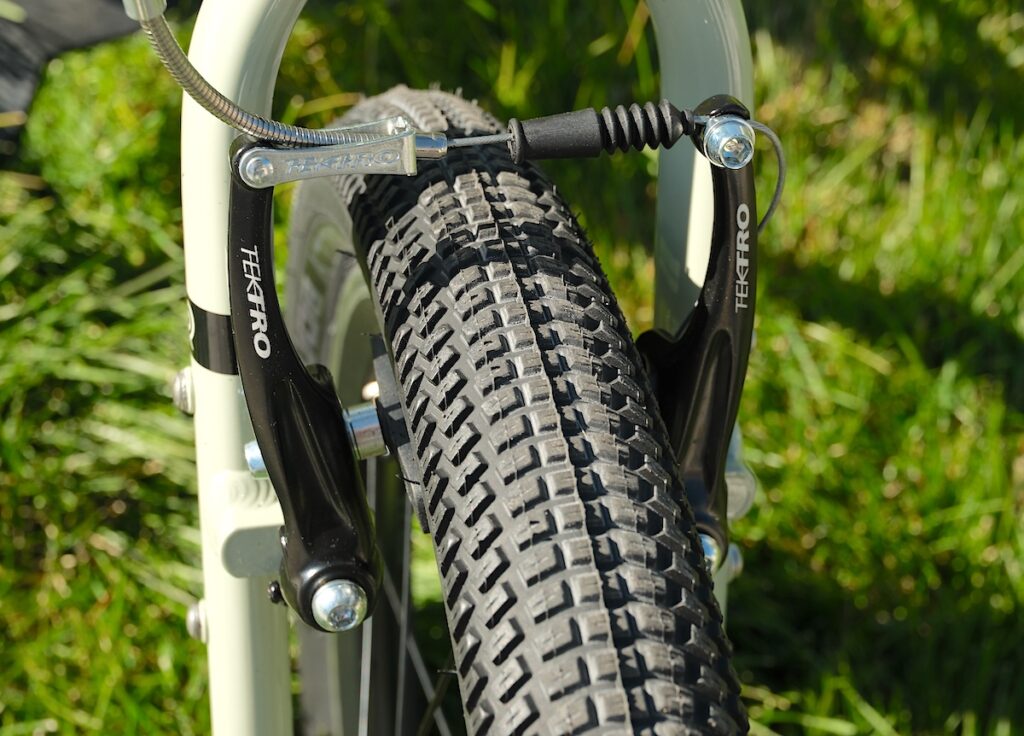
Providing plenty of dependable stopping power, the Belter 20 Auto is equipped with easy-reach, easy-pull Tektro V-pull brakes.
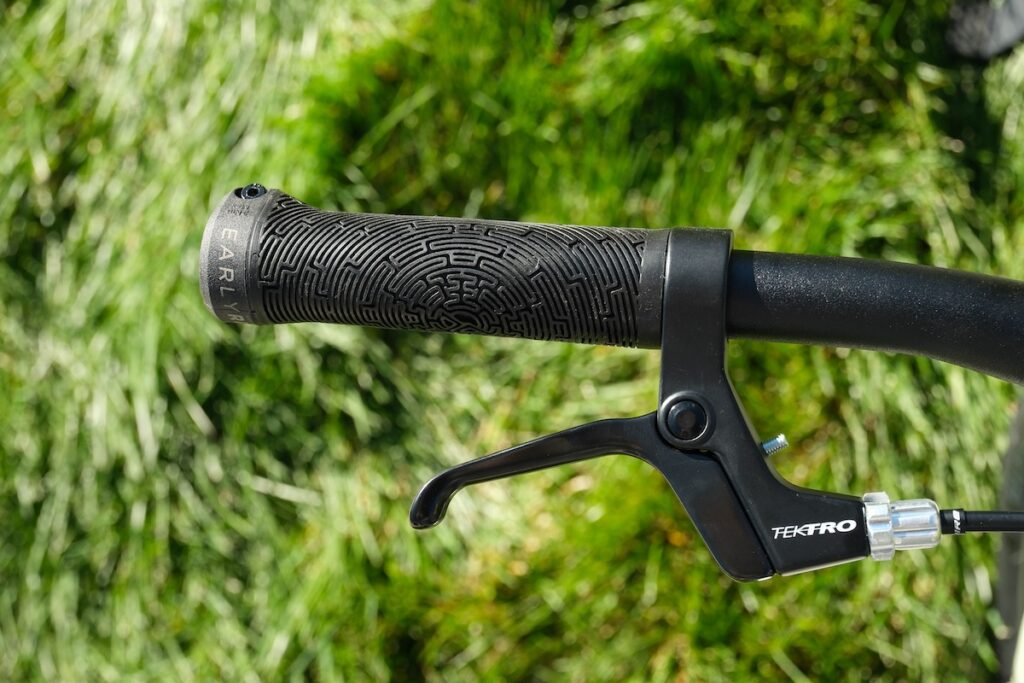
Compared to other brands on the market, Tektro consistently provides reliable stopping power, especially for kids with smaller hands who typically don’t have a lot of grip strength.
Four Sets of Bosses
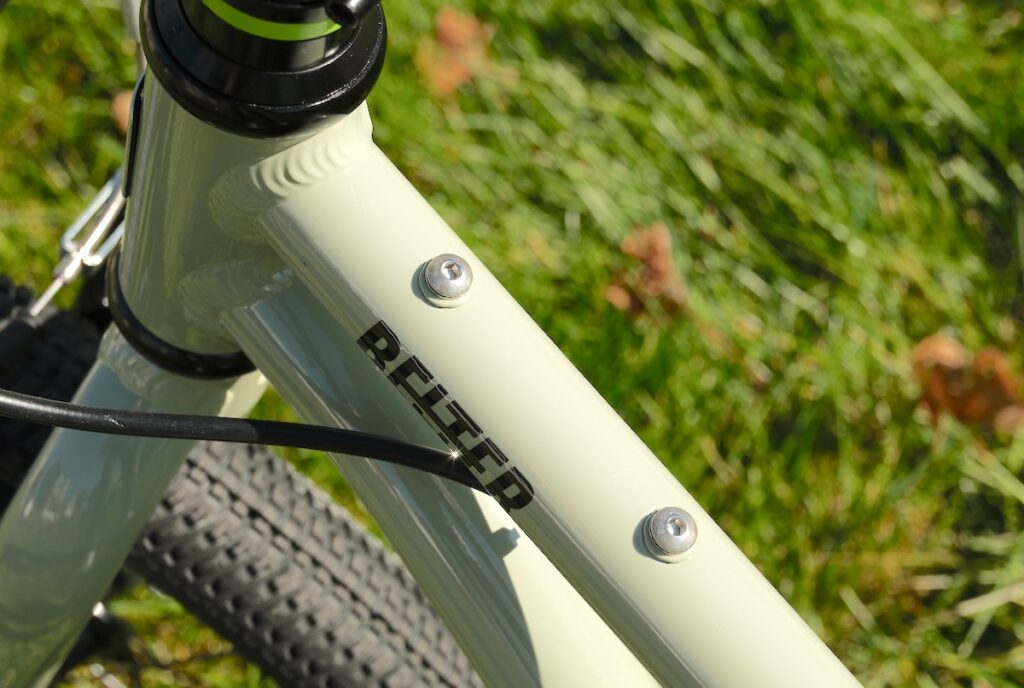
Whether you want to add a water bottle cage, a tool kit, or a small pouch for snacks, the Belter’s frame is equipped with 4 sets of bosses. These include one on the top tube, one on the downtube, and one on each side of the fork, offering great versatility for accessories.
Schwalbe All-Terrain Tires and Rims
Designed for all-terrain use, the Belter is equipped with 2.0” wide Schwalbe Billy Bonkers tires. The tire tread is designed to roll smoothly on pavement while still providing ample traction for compact dirt or gravel trails.
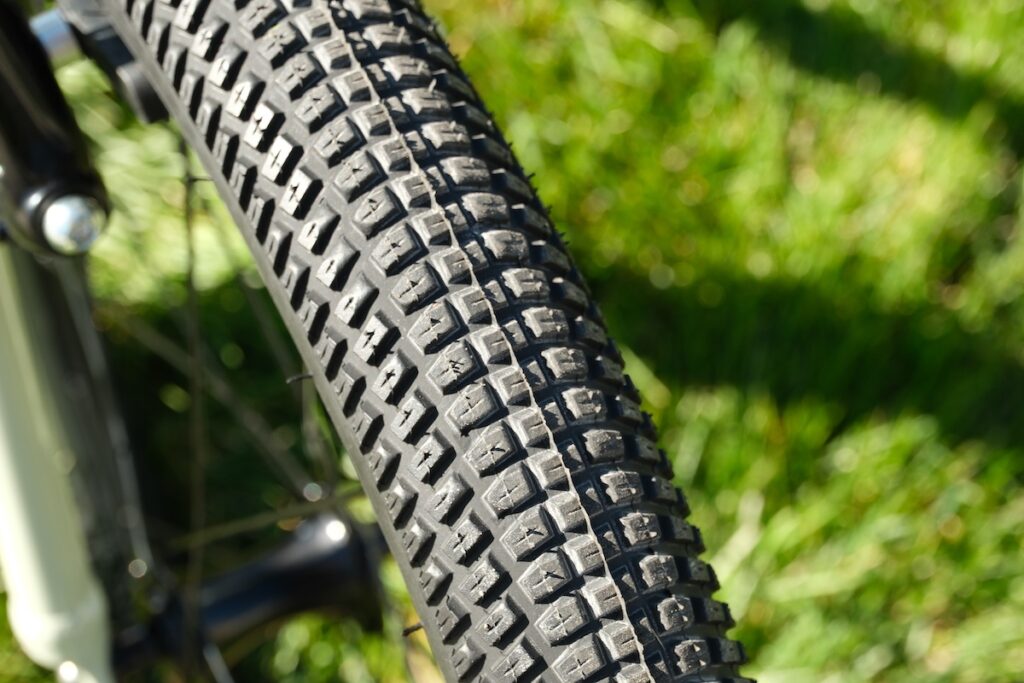
The 2.0” width allows for running a slightly lower PSI, which adds cushioning on rougher terrain. However, a key compatibility note: the Belter’s Rims only accept Presta valves. Since the tubes valves lack removable cores, you cannot easily add tire sealant for flat prevention. In areas with thorns or “goat heads,” we highly recommend installing tire liners.
Comfortable Lock-on Grips with Bumper
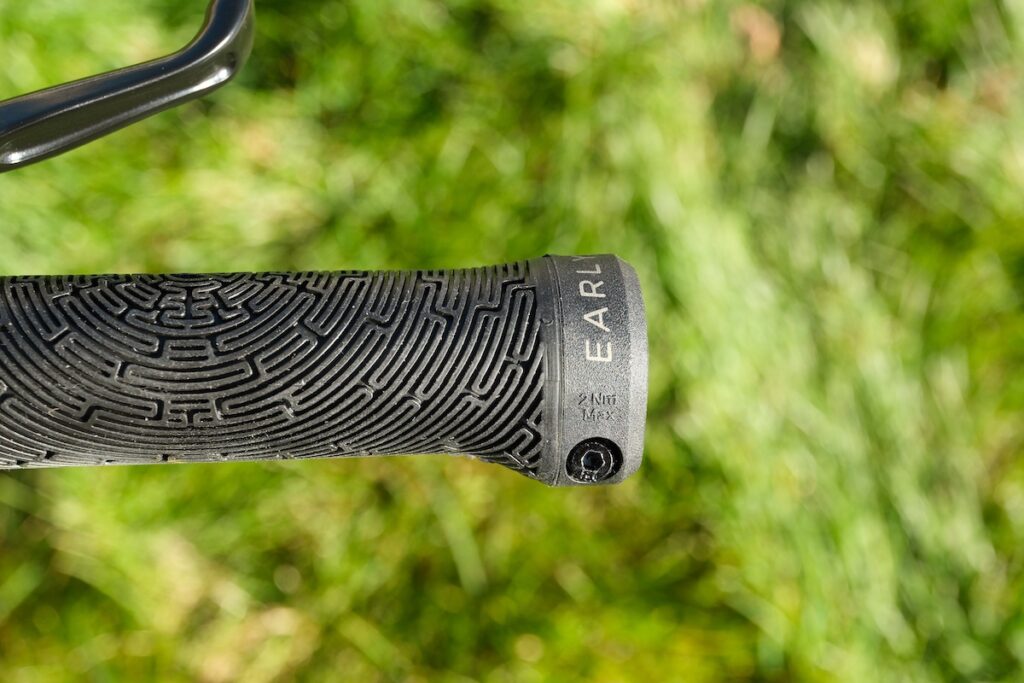
While many manufacturers overlook grip quality, Early Rider does not. Their commitment to quality extends from the smallest bearing to major rider touch points. The Belter’s grips are soft, comfortable, and ribbed to prevent sweaty hands from slipping. They also securely lock in place and have a protective bumper on the end to keep hands safe and prevent them from sliding off the bars.
Excellent Stock Pedals
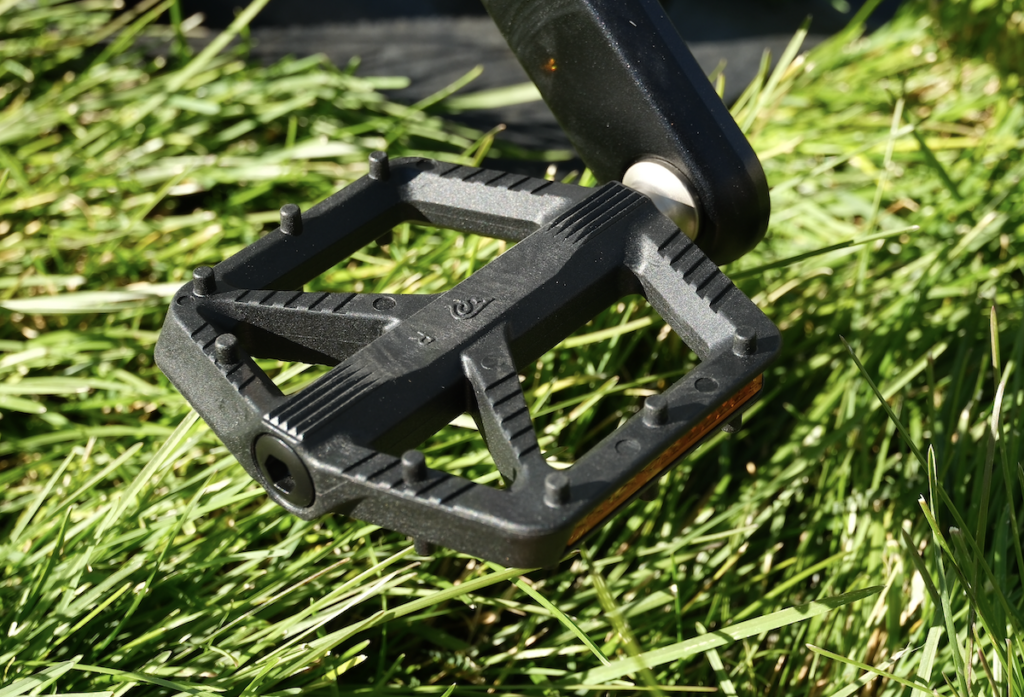
Most pedals on kids bikes are fine, but rarely are they ever truly great. Early Rider’s are exceptional. In addition to having bearings that allow them to spin freely for days, the pedals offer plenty of grip and are durably constructed.
Early Rider vs. Priority Start 20
The only other 20-inch bike currently on the market that we’ve tested with an internally geared hub is the Priority Start 20. While the Start’s internally geared hub shares the same durability benefits as the Belter’s, it does not automatically shift. The Start instead features 3 gears that must be manually shifted by the child.
The shifter on the Start is a grip shift that has a large viewing window, but it still requires kids to manually shift themselves. The Start’s internally geared hub, however, does allow you to shift gear while the bike is stopped, making it much easier for helping kids get into the correct starting gear.
The Start does have a lower minimum seat height than the Belter and a lower climbing gear, but it is almost 2 lb. heavier.
| Belter | Start | |
| Seat Height | 22.5” – 27.5” | 20.5” – 27” |
| Weight | 17.75 lb. | 19.5 lb. |
| Gears | 2 | 3 |
| Gain Ratio | 3.15, 4.32 | 2.39 – 4.45 |
Differences in Geometry
Designed with more playful and aggressive riders in mind, the Early Rider Belter 20 places the rider in a slightly more forward-leaning position compared to the Priority Start. This stance makes it easier for riders to shift their weight around on the bike, which is especially helpful when carving faster turns or navigating curbs, rollers, and small jumps.
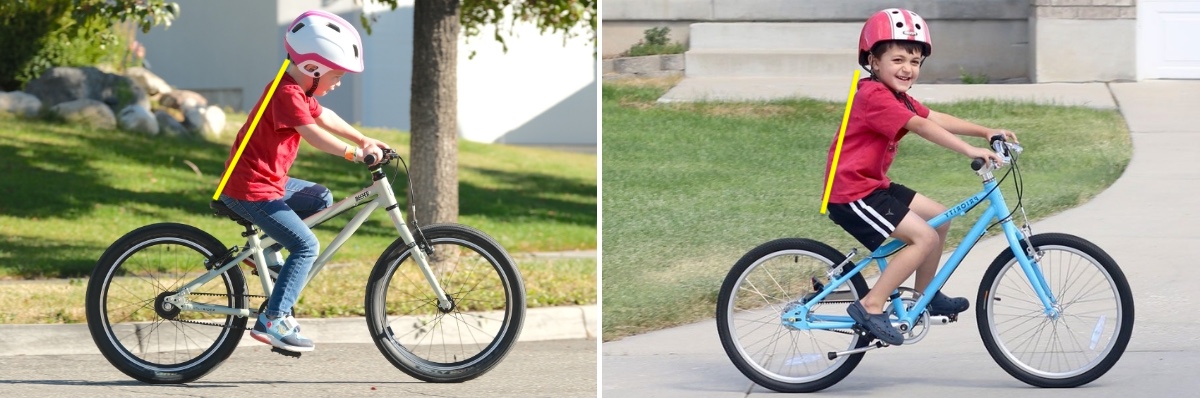
The Priority Start, by contrast, positions riders more upright. This geometry tends to feel more comfortable and confidence-inspiring for timid or cautious riders who prefer to sit taller on the bike, with more of their weight centered over their hips rather than slightly forward.
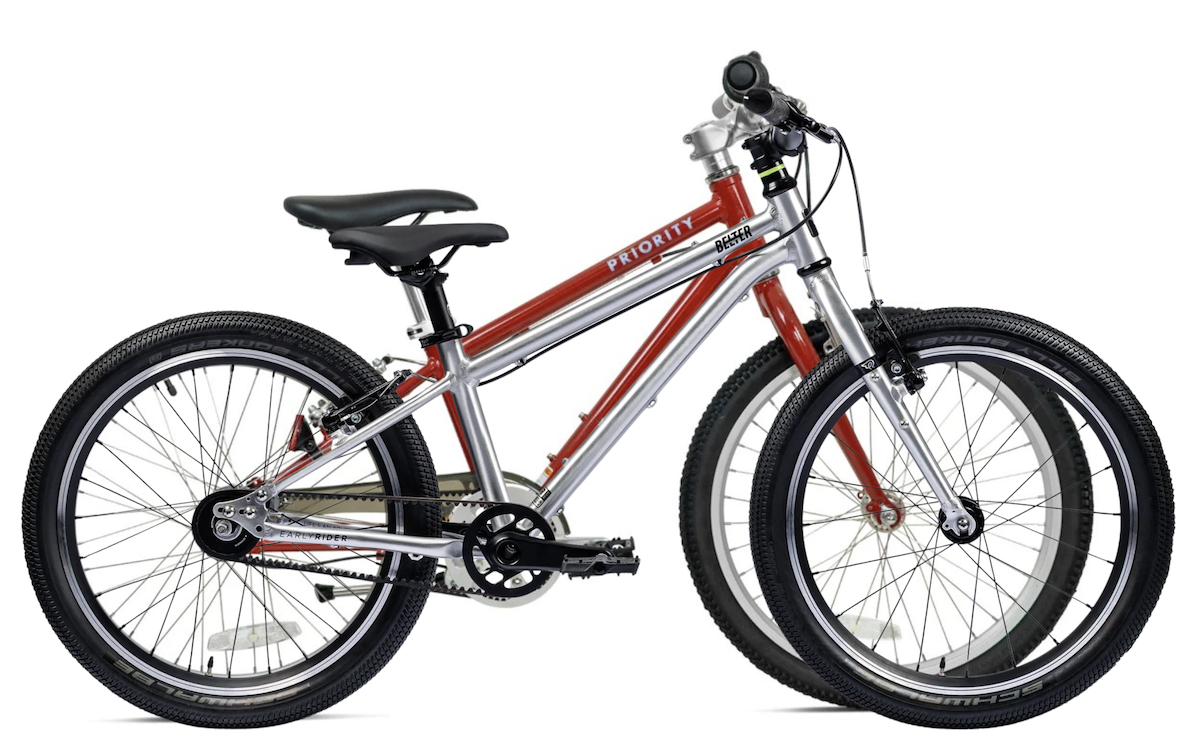
These differences in rider positioning come from several geometry factors, but mainly the Start’s shorter wheelbase, as shown in the image below.
Early Rider Belter 20 Auto: Bottom Line
With its unique design, innovative concept, and exceptional build quality, the Early Rider Belter 20 Auto is a perfect match for young riders seeking a fast, fun, and virtually maintenance-free bike. The autoshift hub provides the performance benefit of two gears without the complexity of manual shifting.
Its more aggressive, leaned-in geometry makes the Belter 20 Auto ideally suited for playful and confident riders exploring their local neighborhoods. For families tackling especially steep terrain, the Early Rider Seeker 20’s wider gear range is a better fit. However, for those sticking to parks and neighborhoods with small rolling hills, the Belter’s gearing is the perfect, simple companion.
FTC Disclosure: Affiliate links are included in this review. No monetary compensation was provided for this review, however, the reviewed product was supplied by the manufacturer or distributor to help facilitate this review. All opinions and images are that of Two Wheeling Tots LLC. All content and images are copyrighted and should not be used or replicated in any way. View our Terms of Use.