Huffy GRM Kids Bike Review
Huffy’s new GRM line, short for Grow, Ride, Move, is exactly what the kids’ bike industry needs more of: a budget-friendly bike with genuinely good geometry and performance. While the number of quality kids’ bikes has never been better, options for families on a tighter budget have remained limited. The GRM line helps fill that void.
The GRM bikes aren’t perfect, and there’s certainly room for refinement. But they are significantly better than the vast majority of budget bikes found online and at big-box stores. In this review, we’ll break down what sets the GRM line apart, what it gets right, where it falls short, and how it stacks up against popular alternatives including Guardian, Retrospec, and Huffy’s own notoriously cheap (and frankly terrible) Rock It line.
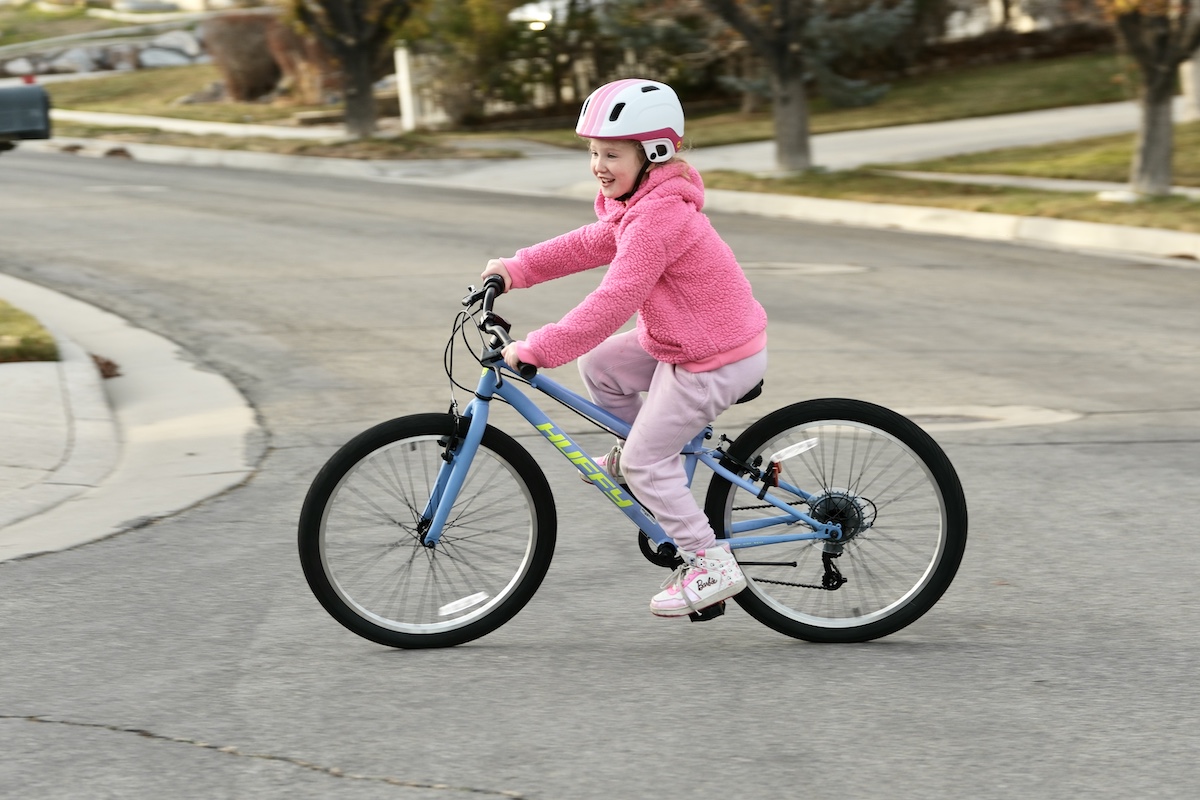
Huffy GRM Kids Bikes
MSRP: $149 – $299
BEST FOR: Families seeking an easier to ride budget bike for neighborhood riding
WHEEL SIZES: 12″, 16″, 20″ and 24″
SUGGESTED AGES: 3 – 10 years
ADDITIONAL SPECIFICATIONS
FRAME: Steel
BRAKES: Dual Hand Brakes (12″ and 16″ also have coaster brakes)
TRAINING WHEELS: Included and compatible with 12” and 16” models
Cons:
What Type of Rider Is the GRM Best For?
The GRM line is built for everyday neighborhood riding. It’s not designed for technical terrain, but for kids riding on pavement and bike paths, it performs great. It’s also an especially strong choice for budget-conscious families looking to step up from the cheapest options on the market like the Huffy Rock It and Royalbaby FreeStyle, whose poor frame geometry makes riding a challenge for kids of all skill levels (more on that below).
Who Should Pass on the GRM
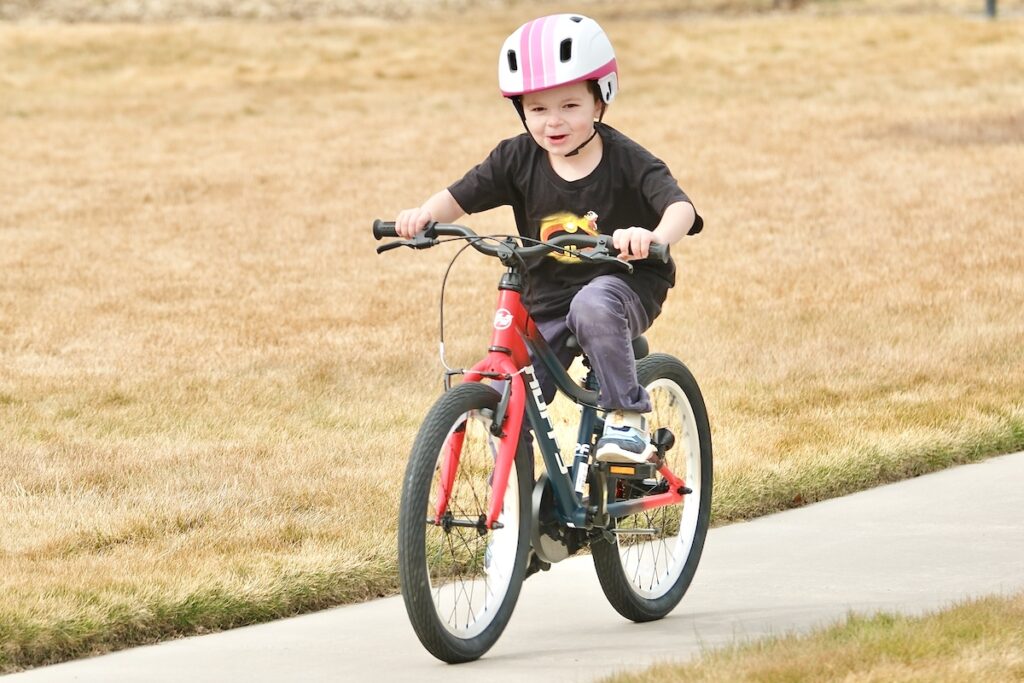
Due to their heavier weight, the GRM bikes are likely not ideal for hesitant or petite riders, especially those just learning to ride. For those riders, we recommend skipping a 12” or 16” pedal bike altogether in favor of a lighter and often cheaper balance bike, or opting for a lighter, similarly priced option like the Retrospec Koda line.
It’s also worth noting that the 12″ and 16″ models include both hand brakes and coaster brakes. Coaster brakes can make the transition from balance bike to pedal bike more challenging (linked article has tips to help!), but most kids do adjust with time.
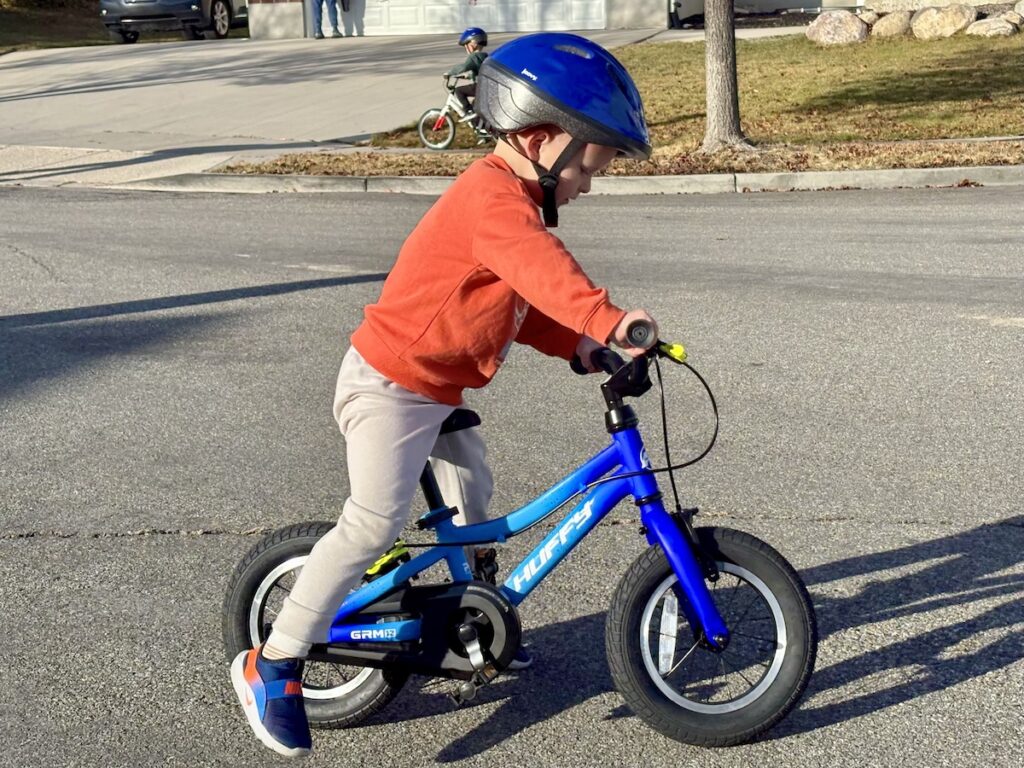
If you plan to use training wheels, the GRM is a solid choice. They’re included and install without tools. However, the limited seat height range on the 12″ and 16″ models means some kids may outgrow the bike before they’re ready to ride without training wheels. This is common across many kids’ bikes, not unique to the GRM.
The same concern applies if you’re planning to use the GRM as a balance bike by removing the pedals. It’s possible, but the short seat posts on the 12″ and 16″ means most kids will outgrow the bike before they’re ready for pedaling. If your child is already nearly confident on a balance bike and would only use it in that mode briefly, it can work. Otherwise, a dedicated balance bike is a better choice as they are lighter, easier to learn on, and typically less expensive.
GRM Bike Review: Results of Our Test Rides
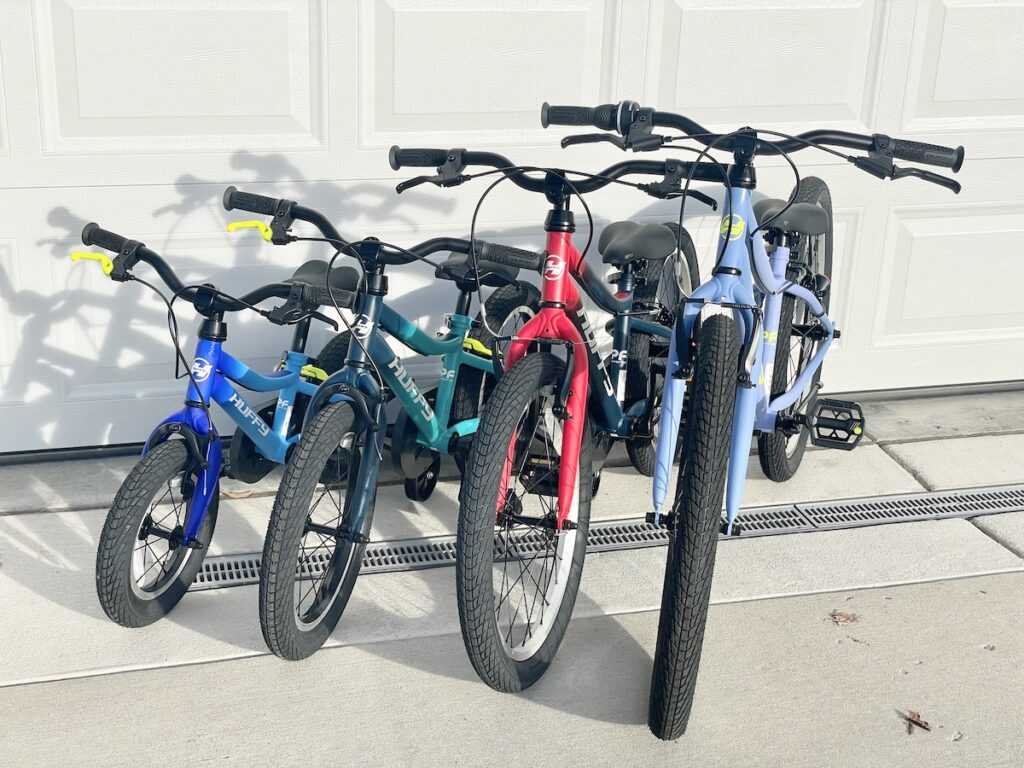
We tested all four GRM sizes: 12″, 16″, 20″, and 24″. Our overall takeaway: the larger the wheel size, the more we liked the bike. The 12″ and 16″ are still solid for the price, but the 20″ and 24″ are standout values that genuinely compete with higher-priced alternatives.
Why the Huffy GRM?
he GRM line brings features typically reserved for higher-end kids’ bikes down to a more accessible price point. The quality and performance don’t come close to premium brands like Prevelo or woom, but it borrows some of the design principles that make those bikes easier and more enjoyable to ride. Three features make the biggest difference:
- Confidence-Building Frame Design
- Functional Hand Brakes
- Quality Paint and Graphics
- Free Shipping and MoveUp Program
1. Confidence-Building Frame Design
By far the most important feature of the GRM is its frame geometry. The GRM bikes are dramatically easier to ride than most budget bikes, and that comes down almost entirely to frame design.
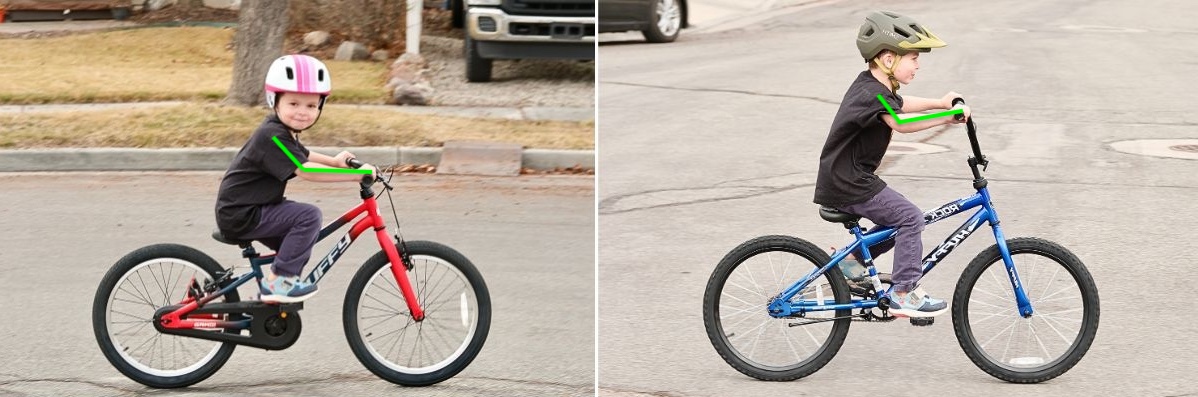
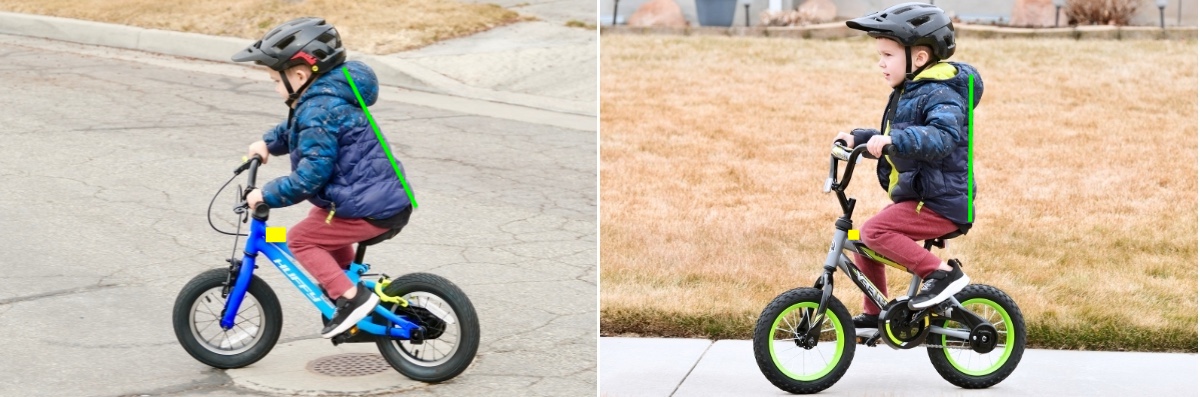
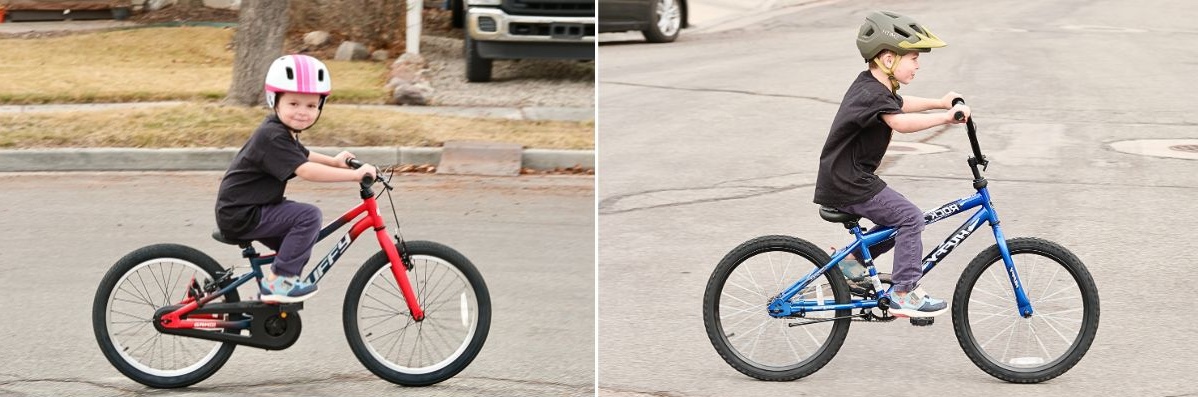
The difference is most obvious when you put a GRM next to Huffy’s super-budget Rock It line. The GRM’s frame is significantly longer, which distributes the rider’s weight more evenly between the front and rear tires. The longer wheelbase also lowers the center of gravity, making the bike more stable at slow speeds where young riders need it most.
That longer wheelbase creates more room in the cockpit (the space between the saddle and handlebars), which lets riders sit in a more natural, forward-leaning position rather than being perched awkwardly upright.
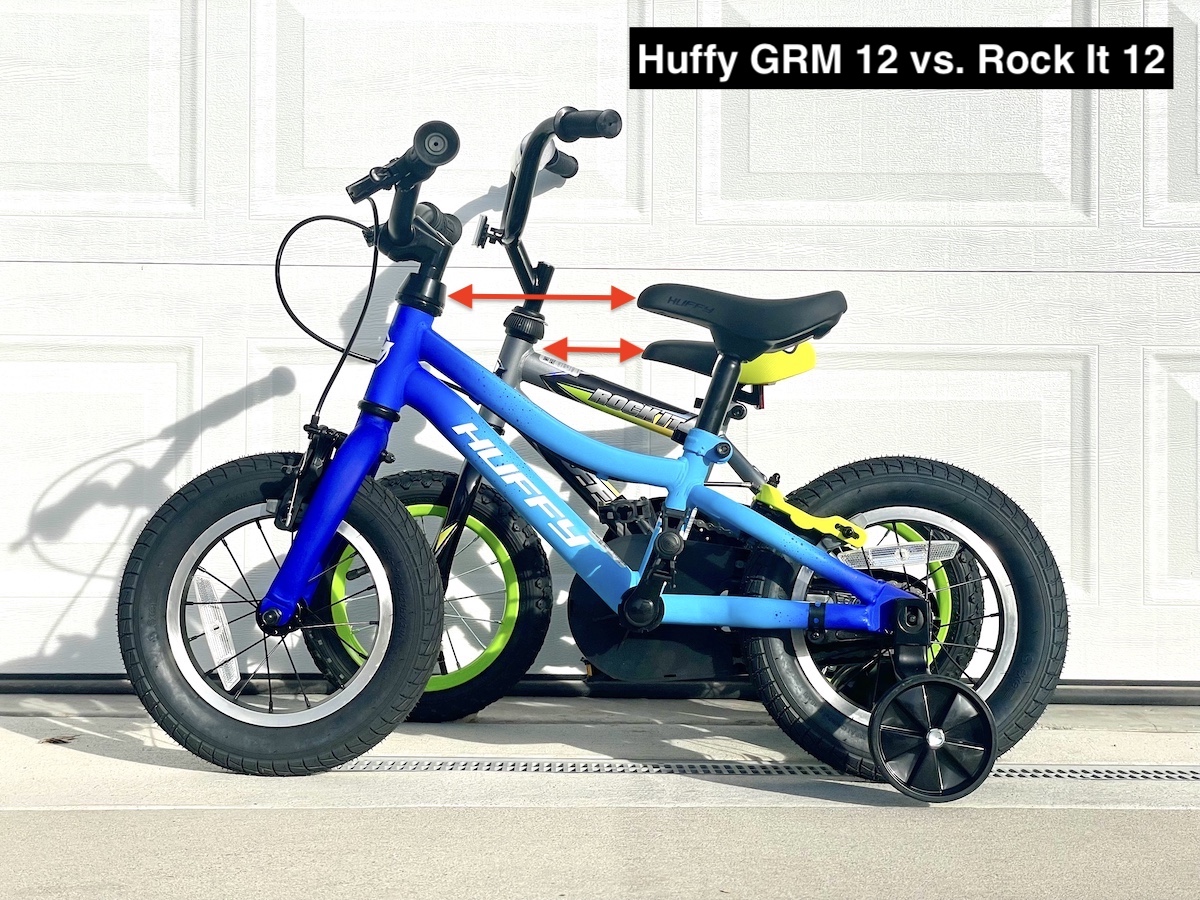
On the Rock It, the handlebars are excessively high and the cockpit is cramped, making steering feel twitchy and difficult. On the GRM, the handlebars are lower and the rider can extend their arms naturally, which improves both steering control and stability. Every tester who struggled on the Rock It was able to ride the GRM.
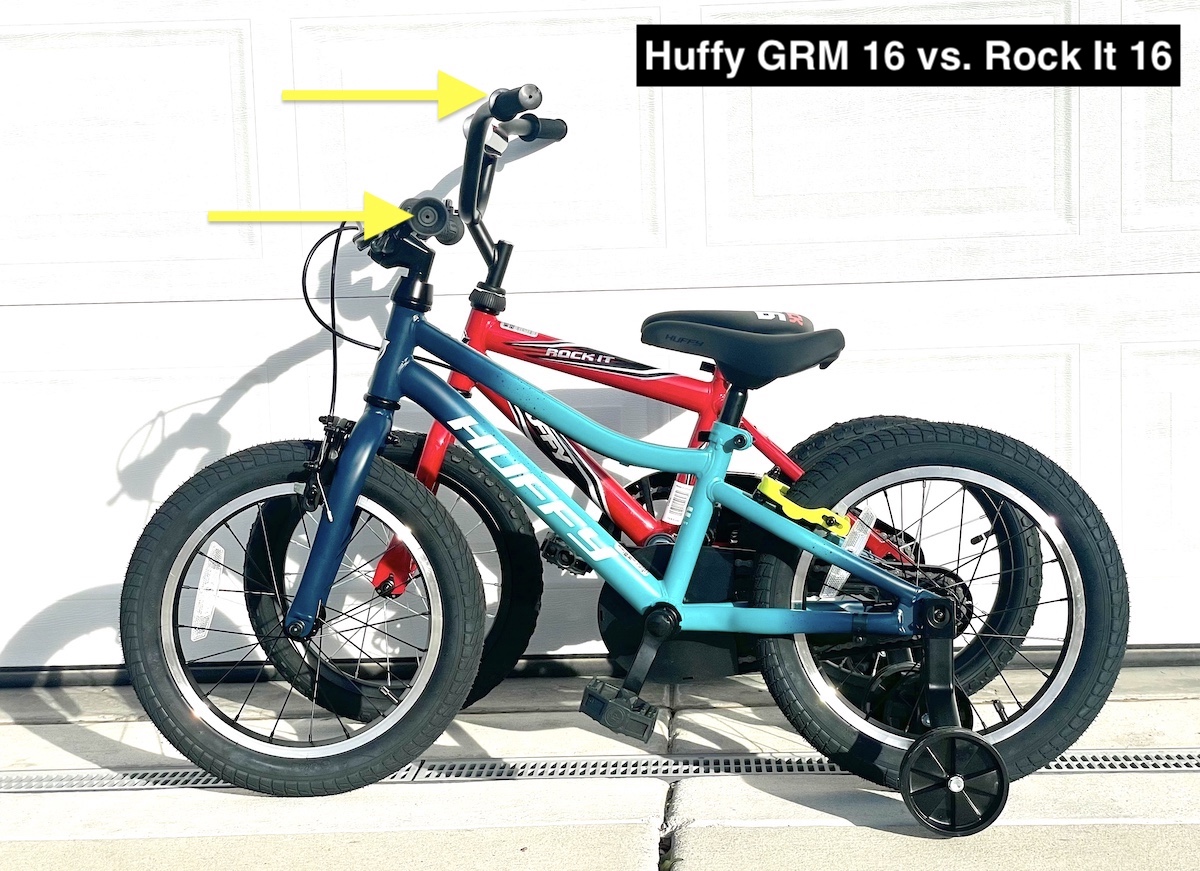
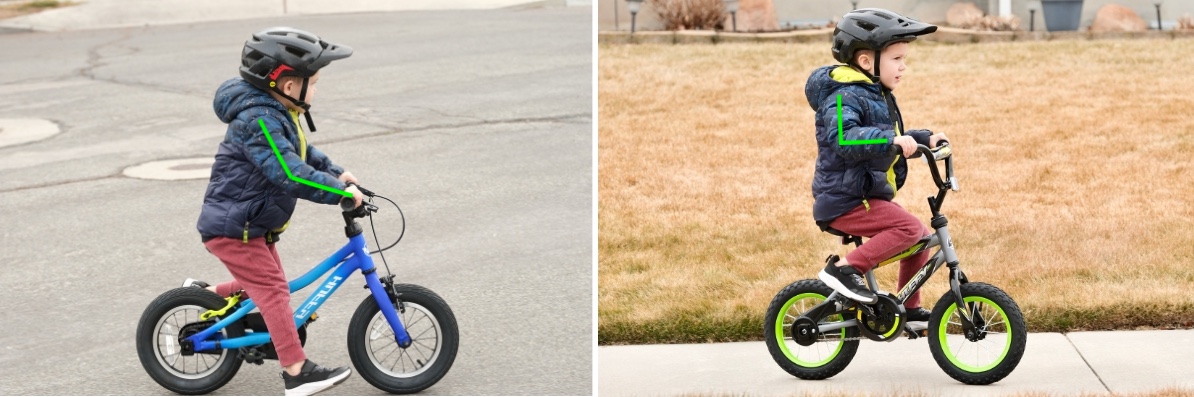
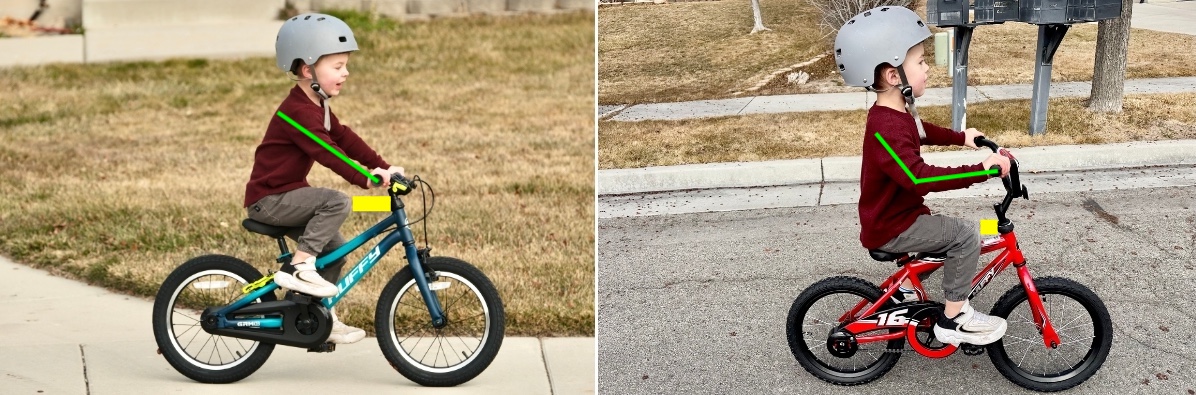
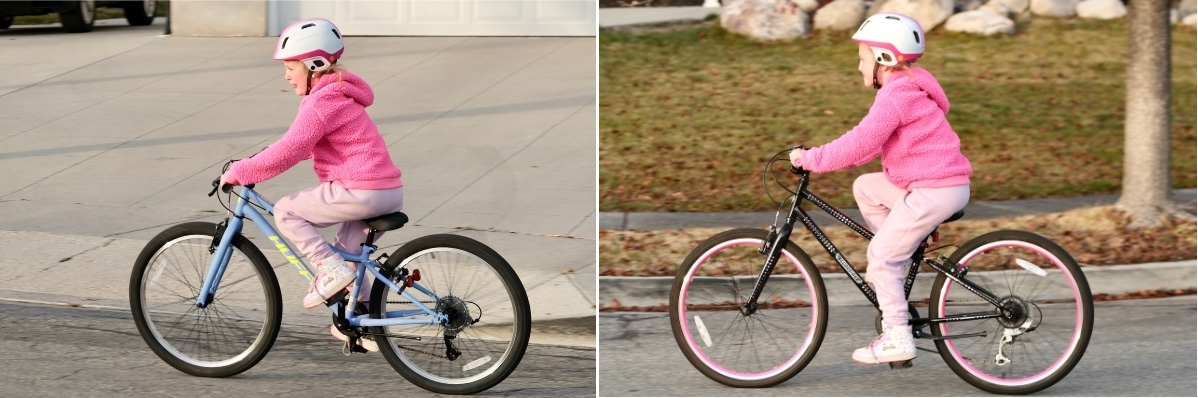
The comparison images below tell the story clearly. On the Rock It, the short wheelbase and tall handlebars push riders into a cramped, upright position across all three wheel sizes. On the GRM, the longer wheelbase and lower handlebars work together to let riders extend their arms and lean slightly forward, distributing their weight more evenly between both wheels. The green line drawn along each rider’s arms makes that difference easy to spot.
GRM 12″ vs. Huffy Rock It – 4-year-old rider
GRM 16″ vs. Huffy Rock It – tall 4-year-old rider
20″ GRM vs. Huffy Rock It – 6-year-old rider
2. Functional Hand Brakes
Most super-budget bikes skip hand brakes entirely and rely solely on coaster brakes. While coaster brakes are reliable, they can be difficult for some kids to use confidently. The GRM includes quality hand brakes across all sizes which is rare at this price point.
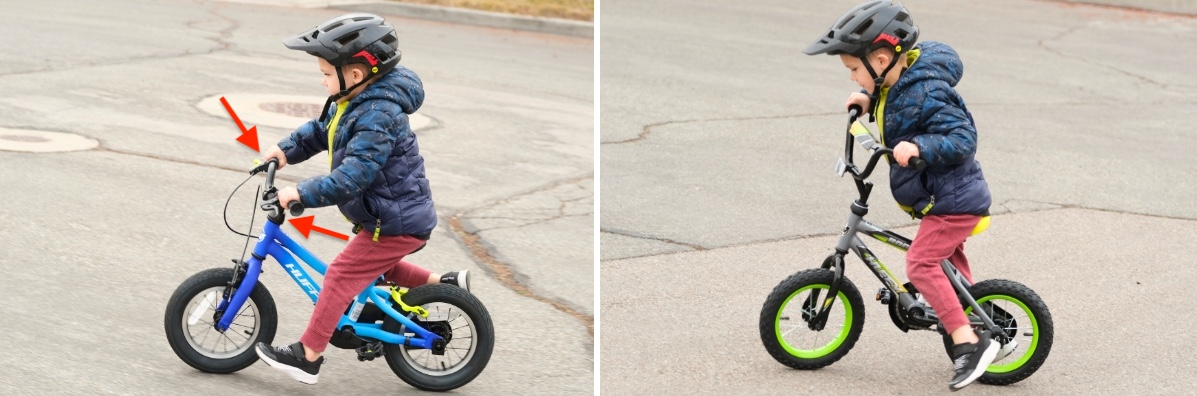
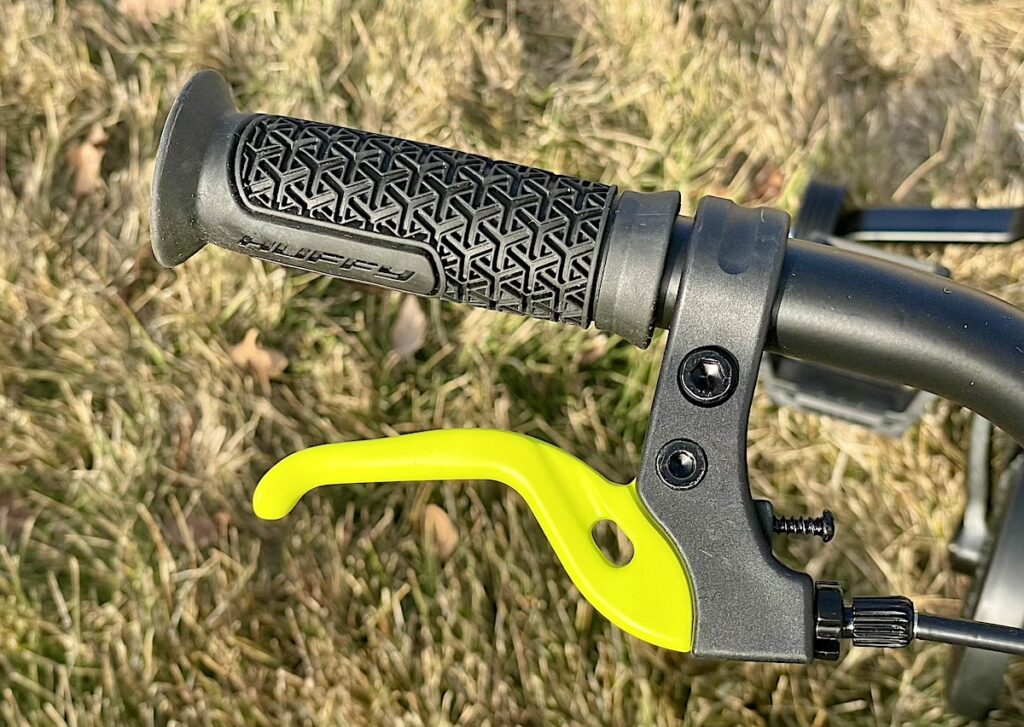
When budget bikes do include hand brakes, they’re often too stiff or poorly adjusted to be useful. The GRM’s brakes do require some assembly and tuning out of the box, but once set up properly, they provide consistent stopping power. On the 12″ and 16″, the rear brake lever is color-coded yellow to remind kids to brake with the rear wheel first, a nice touch that helps prevent front-wheel lockups.
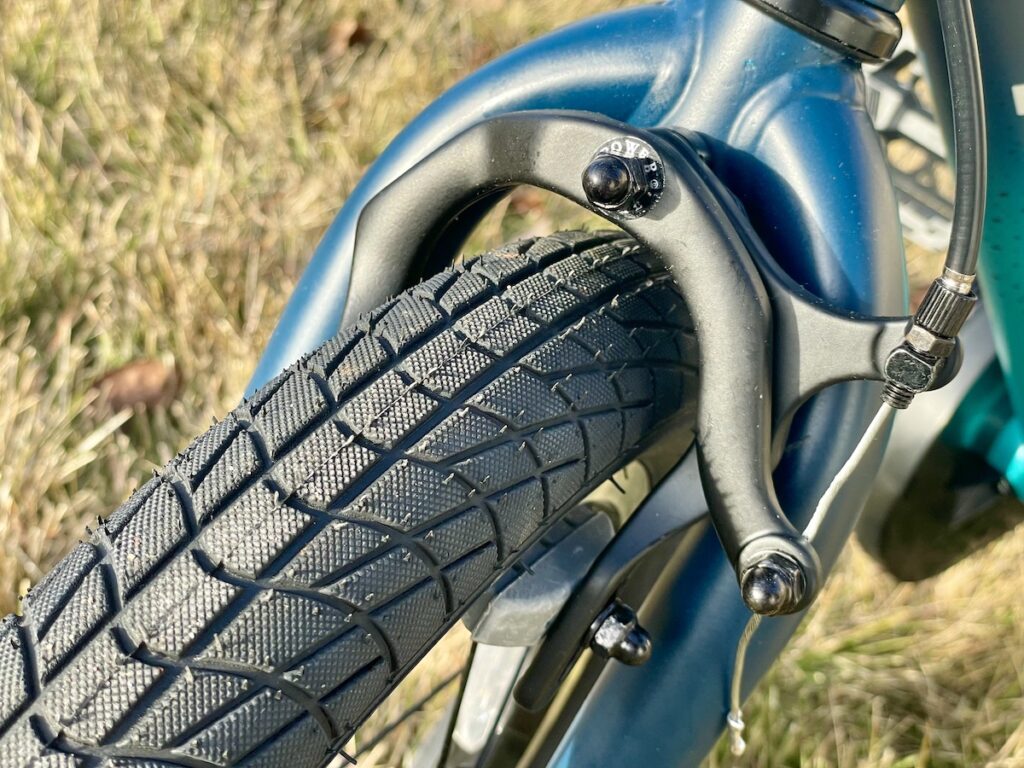
The 12″ and 16″ models use single-pivot brake arms rather than V-brakes, not our preference, but they’re made from cast aluminum rather than stamped steel, and we found them to be reliable in testing. The 20″ and 24″ models come with quality V-brakes.
3. Quality Paint and Graphics
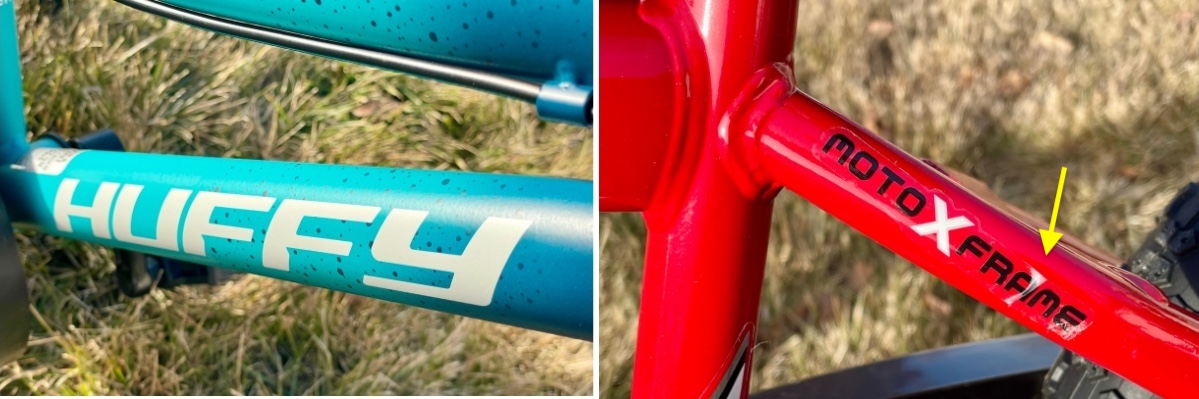
It doesn’t affect how the bike rides, but the GRM line uses quality paint with embedded graphics rather than cheap stickers that peel. A small thing, but one that makes the bike feel noticeably more premium than its price suggests.
4. Free Shipping and MoveUp Program
Performance aside, the GRM line comes with a couple of practical perks worth knowing about. GRM bikes ship free when purchased directly through Huffy.com. They’re also eligible for Huffy’s MoveUp program. Simply register your bike on Huffy.com within 365 days of purchase and you’ll receive 25% off the next wheel size up when your child is ready to grow into it. No trade-in required.
How Does the Huffy GRM Compare to Other Brands?
The closest competitors to the GRM are the Retrospec Koda and Guardian. The GRM is less expensive than Guardian and roughly comparable in price to the Retrospec Koda, though it is heavier. For most budget-minded families shopping for a 12″ or 16″ the Retrospec Koda will be the stronger choice. That said, the GRM 20″ and 24″ are among the best budget bikes in their respective wheel sizes.
If you have more room in the budget, the 14″ Guardian (simliar is size to the GRM 12″) and 16″ Guardian are worth considering. They are lighter than the GRM line and do not have coaster brakes.
Huffy GRM Bike Reviews by Size
All four GRM bikes share the same core strengths: good frame geometry, dual hand brakes, and quality paint. But each size has its own set of trade-offs. Here’s our breakdown.
GRM 12 inch Review
OUR SCORE: 40/100
MSRP: $149
SEAT HEIGHT: 16.5” – 19”
WEIGHT: 18.14 lb.
BRAKES: Dual Hand Brakes and Coaster Brake
TRAINING WHEELS: Included and compatible (tool-free install)
Our 12″ and 14″ Bikes Rubric Score
How the Huffy GRM Scored
Score Breakdown ▼
Weight 0.0 / 20 ▼
How it’s scored: Weight score is calculated proportionally, with the lightest bike in the comparison set receiving 20 points and the heaviest receiving 0 points.
Bike Weight: 18.14 lbs (heaviest in class)
Frame Design 12 / 20 ▼
What we evaluate: Evaluates the bike’s structural foundation and geometry. Points are awarded for features that reduce weight, lower the center of gravity, improve stability, and make the bike easier for young riders to mount and control.
- ❌ Aluminum Frame (4 pts)
- ✅ Low Bottom Bracket (3 pts)
- ✅ Low Min Seat Height < 17" (3 pts)
- ✅ Confidence Building Geometry (3 pts)
- ✅ Low Step-Through Frame (3 pts)
- ❌ 14″ Wheels vs 12″ Wheels (2 pts)
- ❌ Threaded Bottom Bracket (2 pts)
Components 10 / 20 ▼
What we evaluate: Assesses the quality and appropriateness of parts that directly affect ride quality and durability. Gain ratio (3.5–4.0) and crank arm length (81-90mm = 4pts, 75-80mm = 3pts, 70-74mm = 2pts) are scored based on optimal ranges for 14″ bikes.
- ❌ Crank Arm Length — 0 of 4 pts (outside optimal range)
- ✅ Narrow Q-factor (3 pts)
- ✅ Gain Ratio 3.5-4.0 (2 pts)
- ❌ Quality Seat Post Quick Release (2 pts)
- ✅ Adjustable Handlebar (2 pts)
- ❌ Sealed/Cartridge Bottom Bracket (2 pts)
- ❌ Rattle-free Chain Guard (1 pt)
- ✅ Kickstand Included (1 pt)
- ❌ Grips with Protective Bumper End (1 pt)
- ✅ Schrader-Compatible Rim (1 pt)
- ✅ Comfortable Padded Saddle (1 pt)
Brakes 11 / 20 ▼
What we evaluate: Focuses on stopping power and safety. Prioritizes hand brakes over coaster brakes, rewards features that make brakes easier for small hands to operate, and values brake system redundancy.
- ❌ No Coaster Brake OR Removable Option (4 pts)
- ✅ Short Reach Brake Levers (4 pts)
- ❌ V-Brakes (4 pts)
- ✅ Easy Pull Levers (3 pts)
- ✅ Alloy Brake Levers (2 pts)
- ✅ Brake Duplicity (2 pts)
- ❌ Tool-Free Adjustable Reach Levers (1 pt)
Useable Fit Range 3.0 / 10 ▼
How it’s scored: Bikes with wider useable seat height ranges score higher on a proportional scale, where the widest range scores 10 points and the narrowest scores 0 points. Useable range is calculated as the lesser of (handlebar height – 2.5″) or max seat height, minus minimum seat height.
Useable Range: 3.0″
Ease of Assembly 2 / 6 ▼
What we evaluate: Measures how parent-friendly the out-of-box setup is. Points are given for clear instructions, minimal assembly requirements, and pre-tuned brakes.
- ❌ Clear Written Instructions (2 pts)
- ❌ Video Instructions (1 pt)
- ✅ Easy Assembly (1 pt)
- ❌ Pre-tuned Brakes (2 pts)
Customer Service 1 / 4 ▼
What we evaluate: Evaluates the manufacturer’s post-purchase support. Bikes earn points for responsive customer service, frame warranties, and component coverage.
- ❌ Customer Service with Real Person (2 pts)
- ❌ Frame Warranty (1 pt)
- ✅ Partial Component Warranty (1 pt)
Extra Credit +1 ▼
What earns extra credit: Bonus points for innovative features that enhance versatility or usability beyond standard expectations.
- ❌ Easily Converts to Balance Bike (+1 pt)
- ✅ Tool-Free Training Wheel Compatibility (+1 pt)
- ❌ Color Coded Levers/Cables (+1 pt)
- ❌ Rear Placed Kickstand (+1 pt)
Huffy GRM 12 – Pros and Cons
To be fair, all 12″ pedal bikes are notoriously difficult to ride. The tiny wheel size requires very short crank arms, which makes pedaling inefficient and awkward, regardless of what the bike costs. For this reason, we almost always recommend a balance bike over any 12″ pedal bike.
If you do have a small balance bike graduate ready to move up, a 14″ bike is usually a better option than a 12″. They have similar minimum seat heights, but are easier to pedal to ride. Unfortunately, we haven’t yet found a true budget-priced 14″ bike we’d confidently recommend.
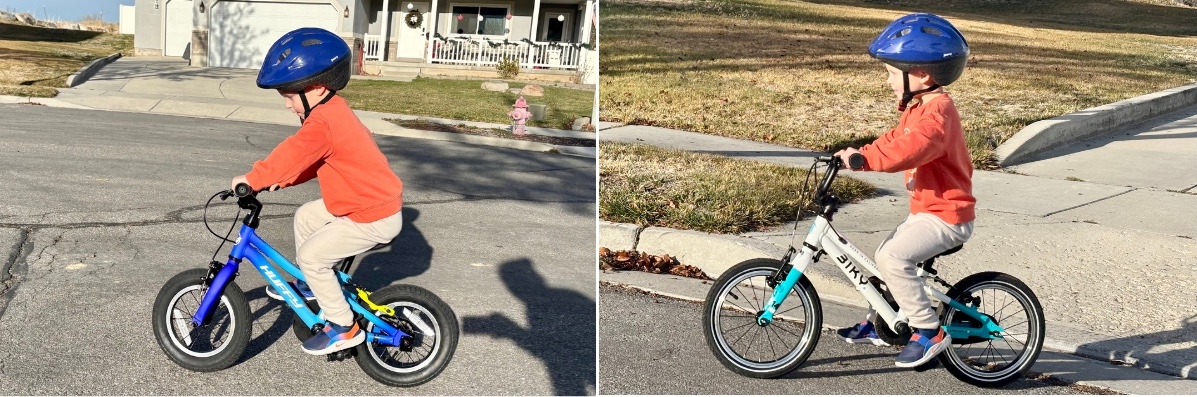
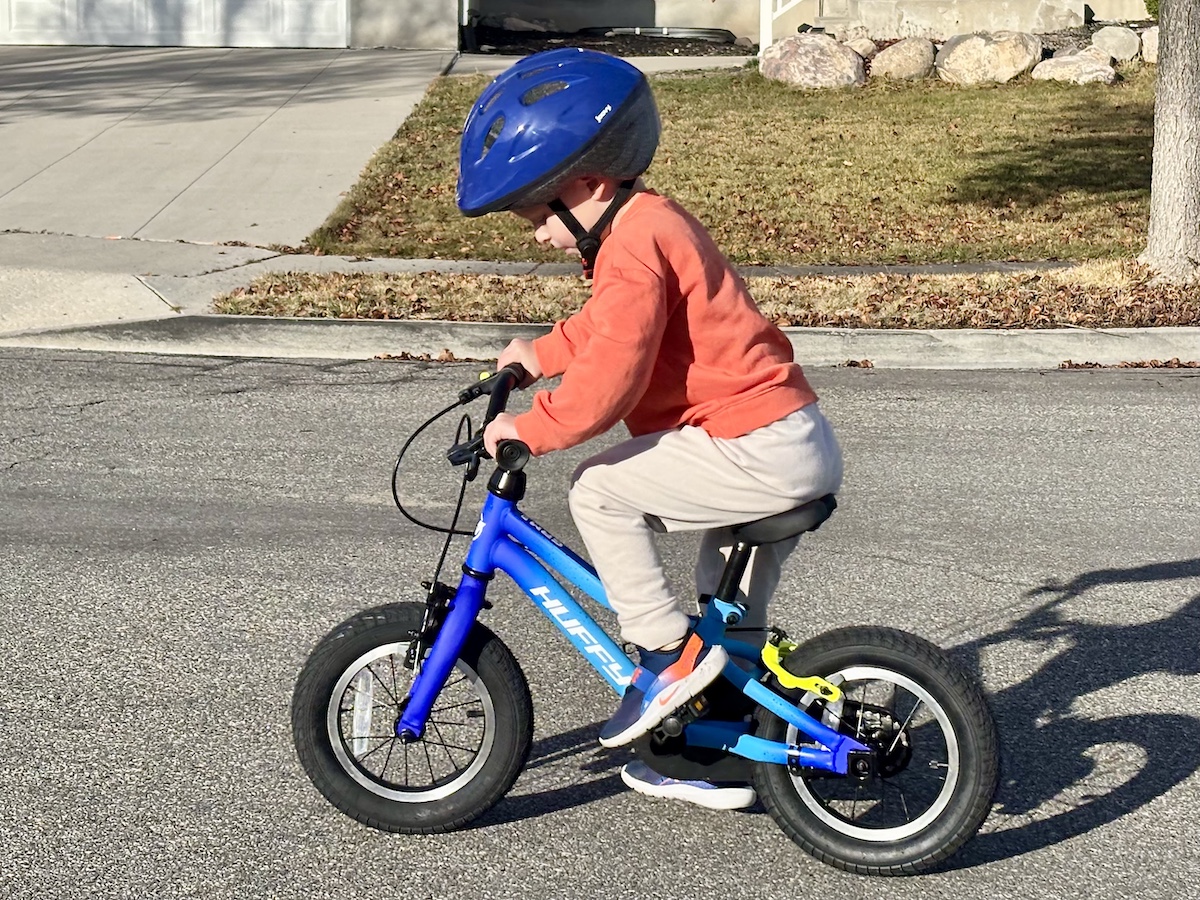
Among 12″ pedal bikes, though, the GRM has one of the best frame designs available. Its longer wheelbase gives riders more room between the saddle and handlebars, making the bike feel less cramped and easier to steer. Compared to the Huffy Rock It 12″, the GRM is absolutely worth the price difference. While it’s technically possible for a child to ride the Rock It without training wheels, it’s very difficult.
The Rock It’s pedals aren’t removable, so it also can’t serve as a balance bike. Even if they were, the frame is so short that there’s almost no room for a child to lean forward to help them get started when pedaling or gliding.
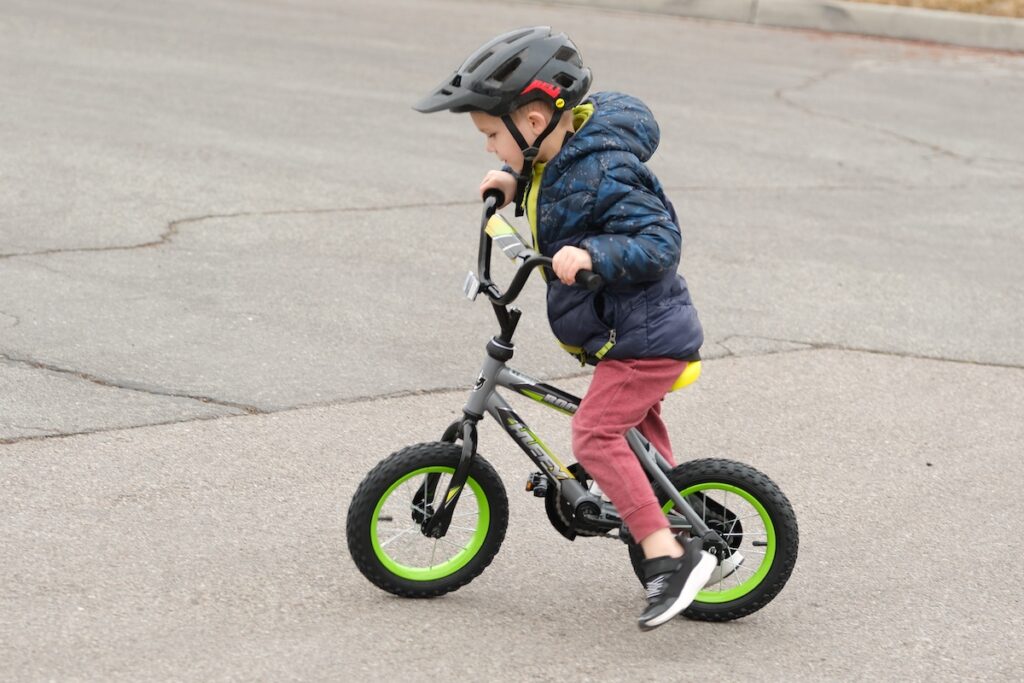
One more thing to watch: seat height. For kids to get on and off independently and to use their feet for stabilization while they’re learning hand brakes, their inseam should be close to the bike’s minimum seat height. The 12″ GRM requires at least a 16.5″ inseam. The Rock It requires closer to 18″. That gap can be the difference between a manageable learning experience and a frustrating one.
Compared to the similarly priced Retrospec Koda, however, the GRM is about 2.5 pounds heavier and will feel more difficult for younger or smaller riders. That said, the Koda only has a single hand brake and requires tools to install its training wheels. The GRM offers dual hand brakes and tool-free training wheel installation, which is a genuine advantage for families who plan to use them.
12″ and 14″ Bike Comparison Chart
| Bike | MSRP | Weight | Seat Height | Brakes |
|---|---|---|---|---|
| Huffy Rock It | $72 | 14.2 lb. | 18” – 19” | Coaster Only |
| Retrospec Koda | $149 | 16.1 lb. | 15.5” – 18.5” | Coaster, Rear Hand |
| Huffy GRM | $149 | 18.1 lb. | 16.5” – 19” | Coaster, Dual Hand |
| Retrospec Koda Plus | $219 | 15 lb. | 16” – 19” | Coaster, Dual Hand |
| Guardian 14 | $249 | 16 lb. | 16” – 20.8” | SureStop, One Hand |
GRM 16 Inch Review
OUR SCORE: 42.5/100
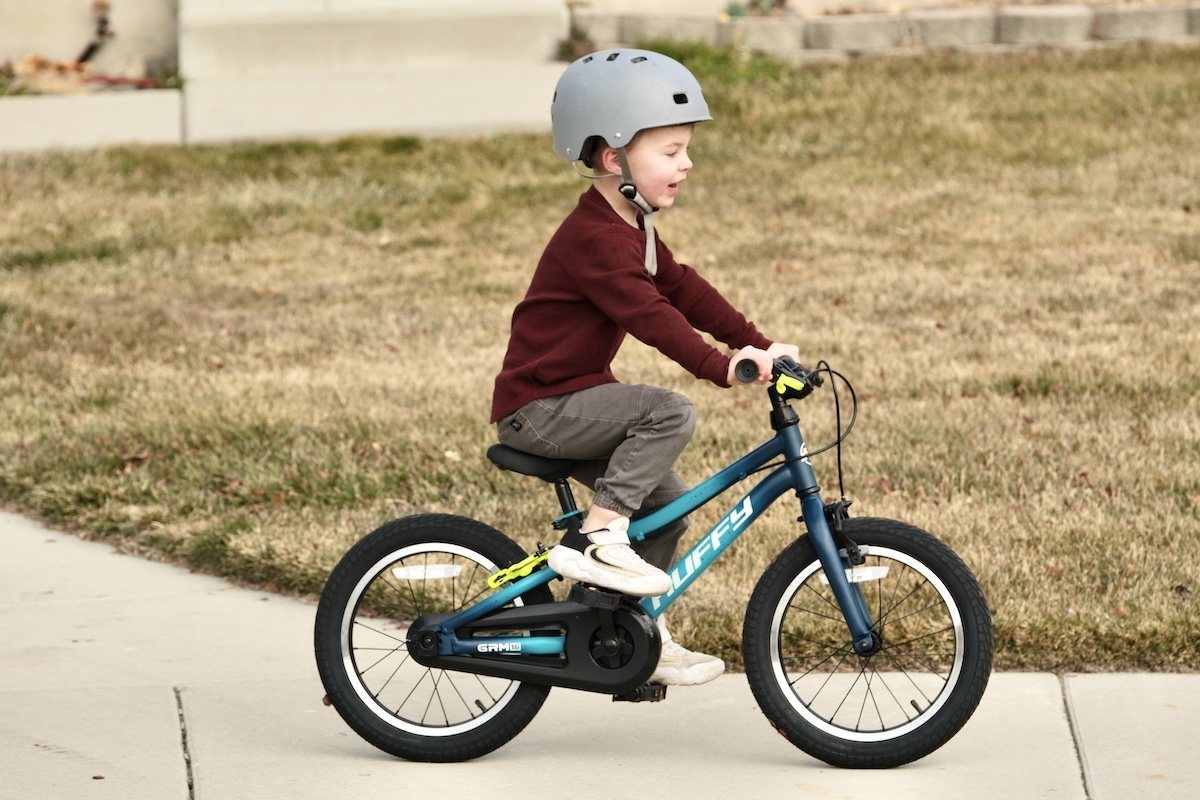
MSRP: $179
SEAT HEIGHT: 19” – 21”
WEIGHT: 21.45 lb
BRAKES: Dual Hand and Coaster
TRAINING WHEELS: Included and compatible
Our 16 Inch Bike Rubric Score
We score each 16″ bike on a 100-point scale across seven areas. Most criteria are based on whether the bike has a given feature or not, while Weight and Fit Range are scored by comparing bikes across our dataset. The Huffy GRM’s biggest losses came in weight as it was the heaviest bike in our dataset. See how other 16″ bikes scored on our Best 16″ Bikes page.
How the Huffy GRM 16 Scored
Score Breakdown ▼
Weight 0.0 / 20 ▼
How it’s scored: Weight score is calculated proportionally, with the lightest bike in the comparison set receiving 20 points and the heaviest receiving 0 points.
Bike Weight: 21.75 lbs
Frame Design 11 / 20 ▼
What we evaluate: Evaluates the bike’s structural foundation and geometry. Points are awarded for features that reduce weight, lower the center of gravity, improve stability, and make the bike easier for young riders to mount and control.
- ❌ Aluminum Frame (4 pts)
- ✅ Low Bottom Bracket (3 pts)
- ❌ Low Min Seat Height (3 pts)
- ✅ Confidence Building Geometry (3 pts)
- ✅ Low Step-Through Frame (3 pts)
- ✅ Quality Paint & Graphics (2 pts)
- ❌ Threaded Bottom Bracket (2 pts)
Components 15 / 20 ▼
What we evaluate: Assesses the quality and appropriateness of parts that directly affect ride quality and durability. This includes drivetrain components (gear ratio, crank arm length, Q-factor), wheel quality, handlebar and saddle comfort, and practical features.
- ✅ Narrow Q-factor (3 pts)
- ✅ Schrader Tubes (2 pts)
- ❌ Quality Seat Post Quick Release (2 pts)
- ✅ Padded Kid Saddle (2 pts)
- ✅ Adjustable Handlebar (2 pts)
- ✅ Gain Ratio (2 pts)
- ✅ Crank Arm Length (2 pts)
- ❌ Sealed Bottom Bracket (2 pts)
- ✅ Rattle-free Chain Guard (1 pt)
- ✅ Kickstand Included (1 pt)
- ❌ Grips with Protective Bumper End (1 pt)
Brakes 11 / 20 ▼
What we evaluate: Focuses on stopping power and safety. Prioritizes hand brakes over coaster brakes, rewards features that make brakes easier for small hands to operate, and values brake system redundancy.
- ❌ No Coaster Brake (4 pts)
- ✅ Short Reach Brake Levers (4 pts)
- ❌ V-Pull Brakes (4 pts)
- ✅ Easy Pull Levers (3 pts)
- ✅ Alloy Brake Levers (2 pts)
- ✅ Brake Duplicity (2 pts)
- ❌ Tool Free Adjustable Reach Levers (1 pt)
Fit Range 1.5 / 10 ▼
How it’s scored: Bikes with wider seat height ranges score higher on a proportional scale, where the widest range scores 10 points and the narrowest scores 0 points.
Minimum Seat Height: 19.0″
Maximum Seat Height: 21.0″
Total Range: 2.0″
Ease of Assembly 2 / 6 ▼
What we evaluate: Measures how parent-friendly the out-of-box setup is. Points are given for clear instructions, minimal assembly requirements, and pre-tuned brakes.
- ✅ Clear Written Instructions (2 pts)
- ❌ Video Instructions (2 pts)
- ❌ Easy Assembly (1 pt)
- ❌ Pre-tuned Brakes (1 pt)
Customer Service 1 / 4 ▼
What we evaluate: Evaluates the manufacturer’s post-purchase support. Bikes earn points for responsive customer service, frame warranties, and component coverage.
- ❌ Customer Service with Phone Number (2 pts)
- ✅ Frame Warranty (1 pt)
- ❌ Partial Component Warranty (1 pt)
Extra Credit +1 ▼
What earns extra credit: Bonus points for innovative features that enhance versatility or usability beyond standard expectations.
- ❌ Easily Converts to Balance Bike (+1 pt)
- ❌ Belt Drive (+1 pt)
- ✅ Color Coded Levers/Cables (+1 pt)
- ❌ Rear Placed Kickstand (+1 pt)
Huffy GRM 16 Pros and Cons
Most kids begin their real pedal bike journey on a 16″ bike. It’s on this size that children typically learn to ride independently and start to feel genuinely at home on two wheels.
So is the GRM worth nearly twice the price of the Rock It? Yes, without question. Our 4-year-old tester, an exceptionally confident rider who has tested more than 15 different bikes for us, couldn’t ride the 16″ Rock It independently. It was the first time in a very long time I’ve had to run alongside a tester just to keep him upright. On the 16″ GRM, he rode away without help.
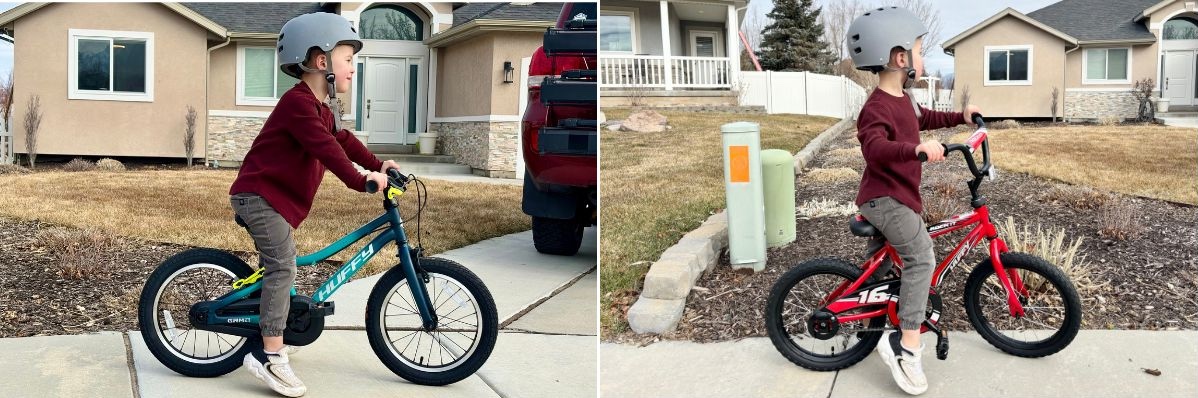
The difference, again, is the frame. The GRM’s longer wheelbase and lower minimum seat height position the rider inside the bike rather than perched awkwardly on top of it. That lower center of gravity makes balancing significantly easier, especially at slow speeds. The extra cockpit space also allows riders to lean slightly forward, which helps them get started from a stop and improves overall control.
That said, the GRM’s biggest weakness is obvious the moment kids start riding it: it’s heavy. At 21.45 lb., it’s a real workout for a young rider. The Retrospec Koda is about two pounds lighter and was noticeably easier for our testers to maneuver. The Koda only includes a single hand brake rather than two, but for most riders, the lighter weight will be worth that tradeoff.
16″ Bike Comparison Chart
| Bike | MSRP | Weight | Seat Height | Brakes |
|---|---|---|---|---|
| Huffy Rock It | $82 | 17.75 lb. | 21.5” – 22.5” | Coaster Only |
| Retrospec Koda | $169 | 19.1 lb. | 18.5” – 23” | Coaster, Rear Hand |
| Huffy GRM | $179 | 21.45 lb. | 19” – 21” | Coaster, Dual Hand |
| Retrospec Koda Plus | $249 | 17.7 lb. | 19” – 24” | Coaster, Dual Hand |
| Guardian 16 | $249 | 17.5 lb. | 16.3” – 22.6” | SureStop, One Hand |
GRM 20 Inch Review
OUR SCORE: 47.0/100
MSRP: $199
SEAT HEIGHT: 22.5″ – 26″
WEIGHT: 25.6 lb.
BRAKES: Dual Hand (No coaster brake)
GEARS: Single speed
Our 20″ Bike Rubric Score
We score 20″ bikes on a 100-point scale across eight categories. The Huffy GRM 20 scored 47.0 as the most affordable option in our test group ($199). At 25.6 lbs—the heaviest single speed we tested—and with basic components throughout, this bike is adequate for very occasional use on flat terrain when budget absolutely requires the lowest possible price. Worth noting: While a 47.0 score is low, it’s dramatically better than Huffy’s budget models like the Rock It (18.9/104)—the GRM’s ~$100 premium buys you a bike that’s actually functional versus barely rideable. See all 20″ bike scores.
How the Huffy GRM 20 Scored
Score Breakdown ▼
Frame Design 9.0 / 15 ▼
What we evaluate: Frame design focuses on weight reduction, geometry, and accessibility. Points reward aluminum construction, low bottom bracket for stability, low minimum seat height for younger riders, step-through frames for easy mounting, and threaded bottom brackets for easier maintenance.
- ❌ Aluminum Frame (4 pts)
- ✅ Low Bottom Bracket (3 pts)
- ✅ Low Min Seat Height ≤ 23″ (3 pts)
- ✅ Low Step-Through Frame (3 pts)
- ❌ Threaded Bottom Bracket (2 pts)
Components 9.0 / 20 ▼
What we evaluate: Component quality directly affects ride quality and durability. We score based on narrow Q-factor (better for kids’ hip width), sealed components (lower maintenance), 3-piece cranks (stronger and replaceable), quality tires, and adjustability features.
- ✅ Narrow Q-factor (3 pts)
- ❌ 3-Piece Crank (3 pts)
- ❌ Quality/Sealed Hubs (2 pts)
- ✅ Quality Seat Post Quick Release (2 pts)
- ✅ Comfortable Padded Saddle (2 pts)
- ❌ Sealed/Cartridge Bottom Bracket (2 pts)
- ✅ Adjustable Handlebar (2 pts)
- ❌ Quality Headset (2 pts)
- ❌ Brand Name Tires (2 pts)
Gearing & Brakes (Single Speed) 26.0 / 30 ▼
What we evaluate: Single speed bikes are scored on optimal gain ratio (3.4-4.6 for flat terrain), brake quality and safety features. No coaster brake is preferred for better control, and short-reach levers ensure small hands can brake effectively.
- ✅ Optimal Gain Ratio 4.42 (5 pts)
- ✅ No Coaster Brake (4 pts)
- ✅ Brake Duplicity (4 pts)
- ✅ V-Brakes (4 pts)
- ✅ Short Reach Brake Levers (4 pts)
- ❌ Quick Release Wheels (2 pts)
- ✅ Rattle-free Chain Guard (2 pts)
- ✅ Smooth Rolling Tires (2 pts)
- ✅ Kickstand Included (1 pt)
- ❌ Reflective Sidewall Tires (1 pt)
Gain Ratio: 4.42
Weight 0.0 / 15 ▼
How it’s scored: Weight is scored proportionally within bike category. The lightest bike in the category receives 15 points, the heaviest receives 0 points. This ensures fair comparison—single speeds are compared to single speeds, city bikes to city bikes, etc.
Bike Weight: 25.6 lbs
Category: Single Speed
Useable Fit Range 0.0 / 10 ▼
How it’s scored: Bikes with wider useable seat height ranges score higher on a proportional scale across all 20″ bikes. The widest range scores 10 points, the narrowest scores 0 points. A wider range means the bike grows with your child longer, providing better long-term value.
Useable Range: 3.5″
Seat Height: 22.50″ – 26.00″
Scored against all 20″ bikes regardless of category
Ease of Assembly 2.0 / 6 ▼
What we evaluate: Assembly scoring measures the out-of-box experience. Points are awarded for clear instructions, minimal assembly requirements, and pre-tuned components that work properly without adjustment.
- ✅ Clear Written Instructions (2 pts)
- ❌ Video Instructions (1 pt)
- ❌ Easy Assembly / Mostly Assembled (1 pt)
- ❌ Pre-tuned Brakes (2 pts)
Warranty & Customer Service 1.0 / 4 ▼
What we evaluate: Post-purchase support matters for long-term satisfaction. Points are awarded for responsive customer service with real people (not just chatbots), frame warranties, and component coverage.
- ❌ Customer Service with Real Person (2 pts)
- ✅ Frame Warranty (1 pt)
- ❌ Partial Component Warranty (1 pt)
Extra Credit +0.0 ▼
What earns extra credit: Bonus points for innovative features that enhance durability, reduce maintenance, or add exceptional value beyond standard expectations.
- ❌ Belt Drive (+1 pt)
- ❌ Tubeless Compatible Rims (+2 pts)
- ❌ Internal Hub Gearing (+1 pt)
Testing the GRM 20
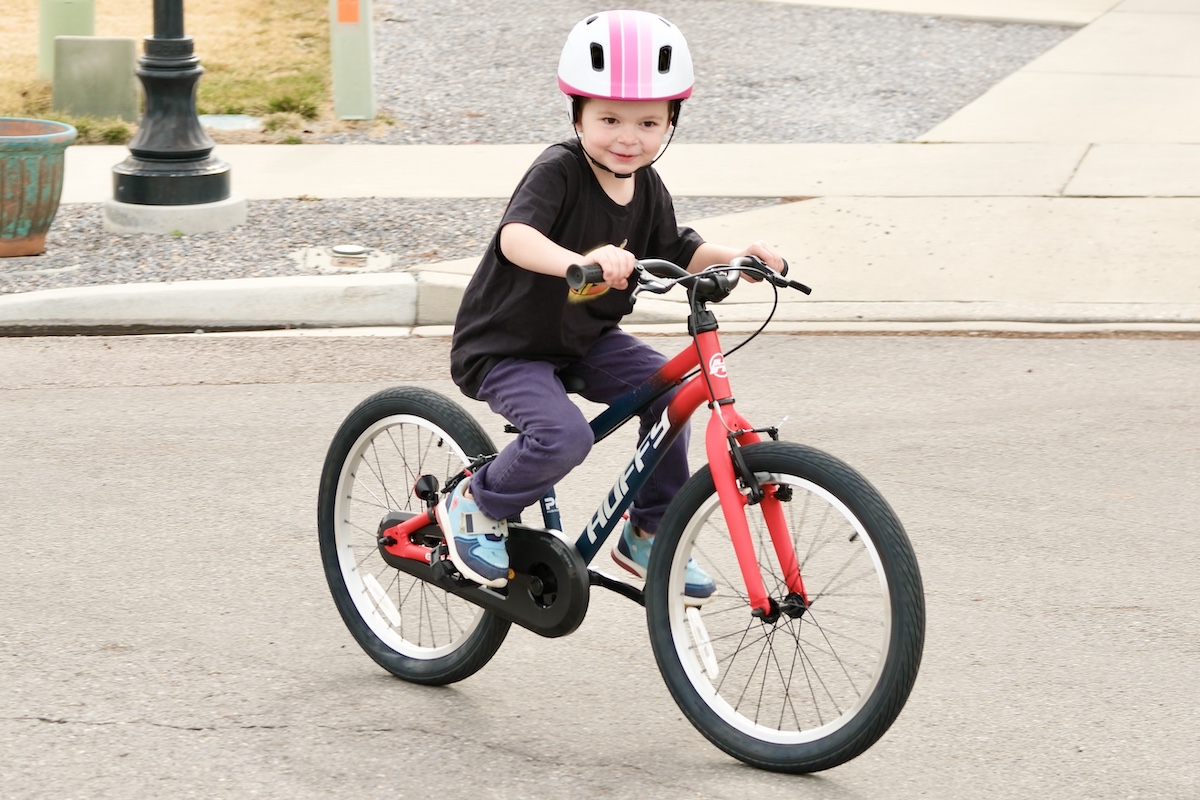
Unlike our younger testers on the smaller sizes, our 6-year-old jumped on the 20″ GRM and rode away without hesitation. Fast, fun, and all smiles. The frame geometry strikes a nice balance: the semi-upright riding position feels comfortable and approachable for timid riders, while still giving more adventurous kids enough freedom to lean into turns or catch a little air over small jumps.
Compared to the Rock It, the GRM offers a much smoother ride and fits a significantly smaller kid. The Rock It 20’s minimum seat height is 3.5″ higher than the GRM’s, meaning our 6-year-old tester technically didn’t even fit on it. He made it work out of sheer determination, but he was far more comfortable and in control on the GRM.
Like the similarly priced Retrospec Koda, the GRM 20″ is a single-speed bike. It’s slightly heavier than the Koda, but it features lower-placed handlebars that more active riders tend to prefer. More timid rider, however, would likely prefer the lighter and more upright Retrospec Koda.
20″ Bike Comparison Chart
| Bike | MSRP | Weight | Seat Height | Brakes |
|---|---|---|---|---|
| Huffy Rock It | $98 | 23.1 lb. | 24” – 28.5” | Coaster Only |
| Retrospec Koda | $199 | 22.9 lb. | 21.5” – 27.5” | Dual Hand |
| Huffy GRM | $199 | 25.6 lb. | 22.5” – 26” | Dual Hand |
| Retrospec Koda Plus | $279 | 19.8 lb. | 22.5” – 28” | Dual Hand |
| Guardian 20 Small | $299 | 20.7 lb. | 21.3” – 26.8” | SureStop, One Hand |
GRM 24 Inch Review
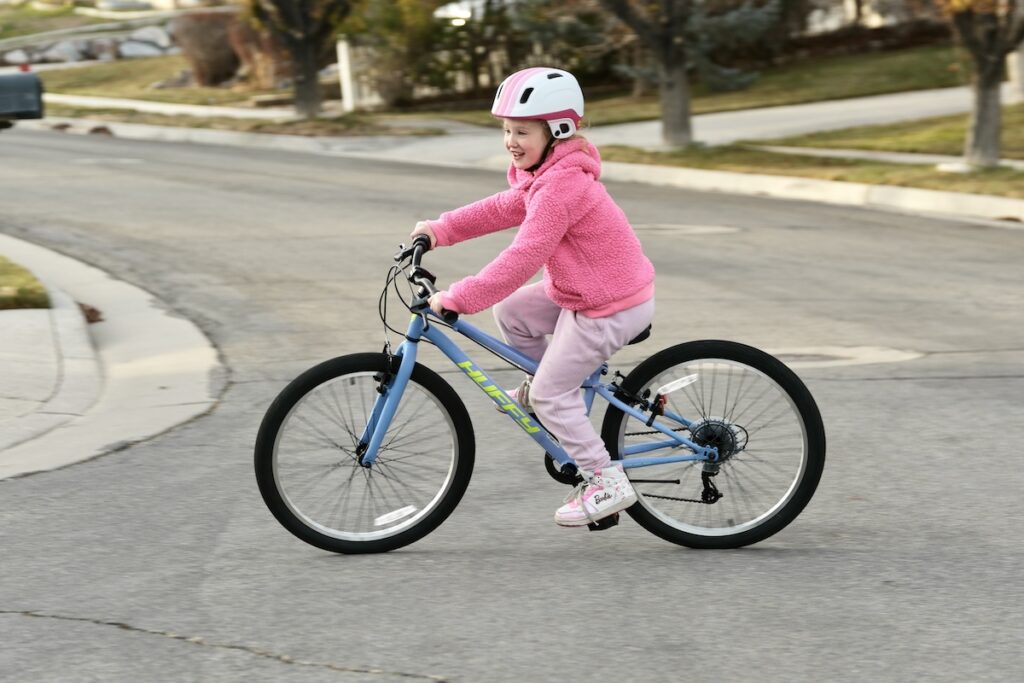
MSRP: $229
SEAT HEIGHT: 25” – 32”
WEIGHT: 29.9 lb.
BRAKES: Dual hand V-brakes (no coaster)
GEARS: 7 speed
The 24″ was our favorite of the four GRM models and it’s the most competitively priced of the bunch. In addition to solid geometry, it offers gearing that rivals or beats bikes at significantly higher price points, and it comes equipped with upgraded dual hand V-pull brakes that are a clear step up from the single-pivot brakes on the smaller sizes.
In back-to-back testing against the Retrospec Dart, Guardian 24, and Kent MTX, the GRM held its own. The Kent MTX was the consistent overall favorite, but it also costs more than $100 more. The GRM offers a compelling value for families who don’t need the lightest option.
The GRM, however, was the heaviest bike in the group, and hesitant riders did notice the extra heft. More confident and experienced riders, however, were largely unfazed. If you plan on longer rides, live in a hilly area, or have a smaller or more cautious rider, the lighter Retrospec Dart or Kent MTX are worth the added investment.
Understanding Gear Range on the Huffy GRM 24”
The GRM 24″ is geared like most 24″ bikes, but its gear range is what stands out. In cycling, the number of gears matters far less than the spread between them, that spread, expressed as a percentage, represents the difference in “power” between the easiest and hardest gear.
A wider range means access to lower gears for climbing hills and higher gears for cruising flat ground, making the bike more versatile across different terrain and riding conditions. For kids tackling a mix of gentle hills, neighborhood loops, and longer paths, that range is a genuine advantage.
For its price, the GRM 24’s 143% gear range really stands out as it offers a better or similar range to more expensive bikes.
24″ Bike Comparison Chart
| Bike | MSRP | Weight | Seat Height | Gear Range |
|---|---|---|---|---|
| Huffy GRM | $229 | 29.9 lb. | 25” – 32” | 143% |
| Retrospec Dart | $259 | 28.5 lb. | 25.5” – 29.8” | 100% |
| Guardian 24 | $349 | 25.5 lb. | 25” – 33” | 129% |
| Kent MTX | $359 | 25.4 lb. | 26” – 33.5” | 146% |
Bottom Line: Is the Huffy GRM Worth It?
The Huffy GRM is a meaningful step forward for budget kids’ bikes. With thoughtful frame geometry, real hand brakes, and solid overall rideability, it’s dramatically easier to ride than ultra-budget options like the Rock It. For families shopping at a lower price point, that difference can determine whether a child enjoys learning to ride or gives up in frustration.
That said, the GRM isn’t lightweight, and it doesn’t approach the refinement or performance of higher-end brands. For smaller or hesitant riders, especially in the 12″ and 16″ sizes, the lighter Retrospec Koda may be the smarter choice.
Where the GRM truly shines is delivering smart design at an accessible price and nowhere more so than in the 20″ and 24″ models. The 20″ is one of the best budget bikes in its wheel size, and the 24″ adds competitive gearing and upgraded braking at a price that’s genuinely hard to beat.
Huffy’s MoveUp program sweetens the deal further, offering 25% off the next wheel size up when your child is ready to grow, no trade-in required. If your budget is limited but you still want a bike that’s thoughtfully designed, functional, and genuinely fun to ride, the Huffy GRM deserves serious consideration.
FTC Disclosure: Affiliate links are included in this review. No monetary compensation was provided for this review and Two Wheeling Tots purchased the REI REV bikes to facilitate this review. All opinions and images are that of Two Wheeling Tots LLC. All content and images are copyrighted and should not be used or replicated in any way. View our Terms of Use.