10 Ways woom Bikes Make a Real Difference for Kids (and Parents)
With every detail fine-tuned and perfected, woom bikes are the gold standard for kids bikes. With their origins in Austria back in 2013 (where woom is still headquartered), their bikes are built upon years of research, experience and the drive to create the best bike for young riders and it shows.
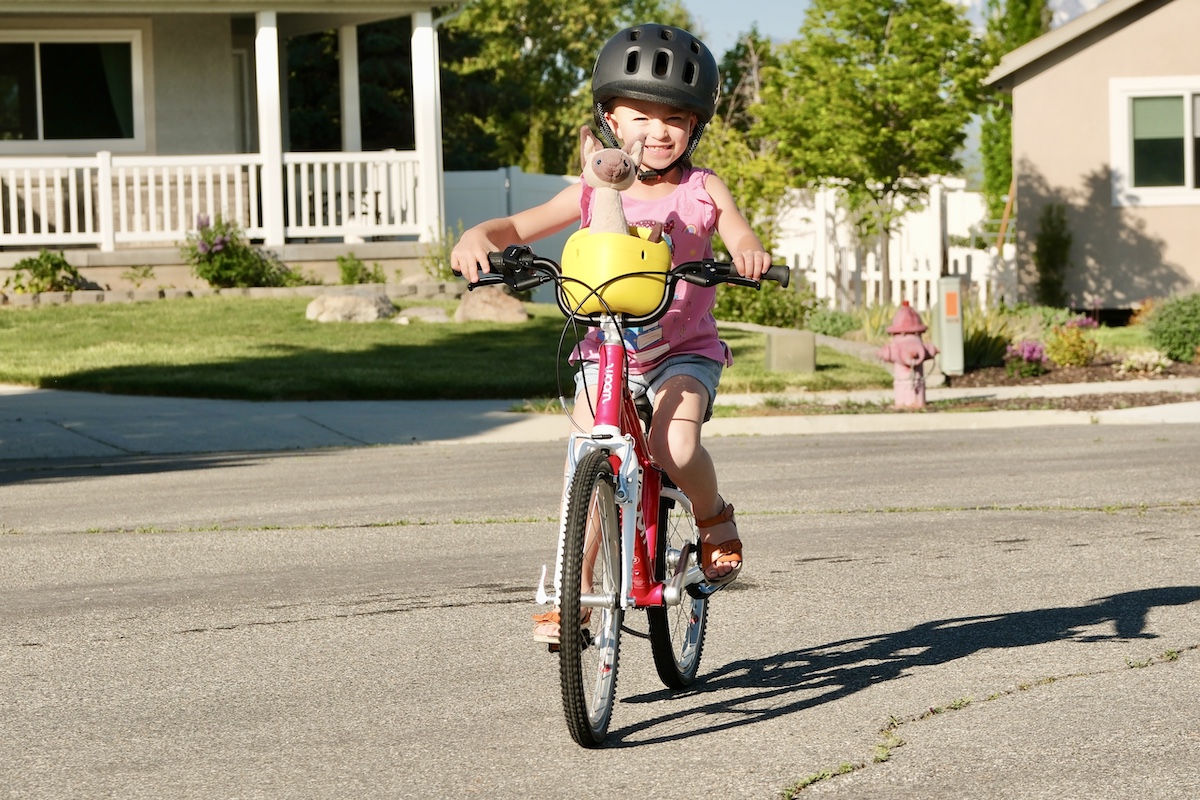
Over the years we’ve lost track of how many testers we’ve had testing out every single model that woom offers, but their smiles say it all. Lightweight, easy to balance, with quick, responsive brakes, these little bikes provide an unmatched riding experience for your little one.
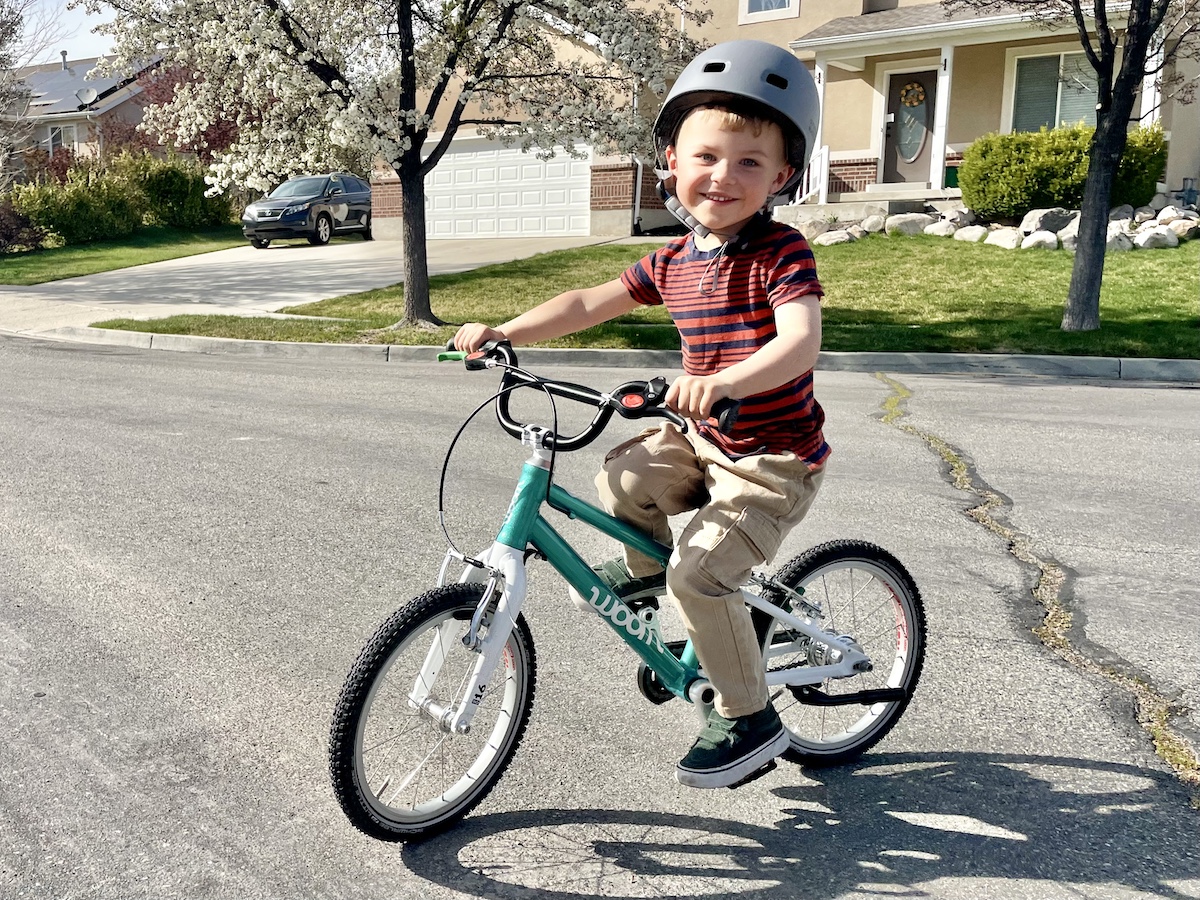
From balance bikes to mountain bikes, woom has something for nearly every young rider. After over a decade of hands-on testing with real kids, we’ve seen firsthand what makes woom bikes stand out—and why they continue to set the bar for the industry.
In this article, we’re breaking down 10 specific ways woom bikes differ from the competition. At the end, you’ll also find links to our in-depth reviews of each woom model, from toddler balance bikes to geared trail machines.
1. True Lightweight Builds
While many kid-specific bike brands are significantly lighter than the bulky bikes found at big box stores, woom bikes take it a step further.
As of May 2025, when we totaled the published weights of each brand’s 12” balance bike, 14” pedal bike, and 16” pedal bike, woom’s trio came out ahead—8.4% lighter than Prevelo, 22.9% lighter than Retrospec’s Koda Plus models, and 24.5% lighter than Guardian’s comparable bikes.
Compared to Guardian, woom bikes are 24.5% lighter on average.
While these are impressive on their own, woom’s 14” and 16” inch bikes in this total include the weight of their kickstand. Prevelo and Retrospec don’t include kickstands (Guardian does).
Biky Bikes are actually lighter weight than woom, BUT their bikes don’t include dual hand brake (only a single rear brake) or a kickstand, so I left them out in attempts to get as fair as a comparison as possible.
2. Useable Seat Heights
The best way to properly fit a child for a bike is to compare the child’s inseam to the bike’s seat height. As a result, knowing a bike’s seat height is essential, especially when purchasing a bike online. Knowing this, many companies provide ridiculously high seat height ranges in order to provide the appearance that their bike provides a better value since it provides more room for growth.
No tricks, no inflated numbers—just honest sizing that fits.
woom, however, refuses to play that game. In order to ensure every child that rides a woom is properly fitted on their bikes, they will only spec their bikes with seat posts that reach heights that are reasonable to the size of the bikes frame. Just because you can put a longer seat post on your balance bike, it doesn’t mean the child will fit on the bike!
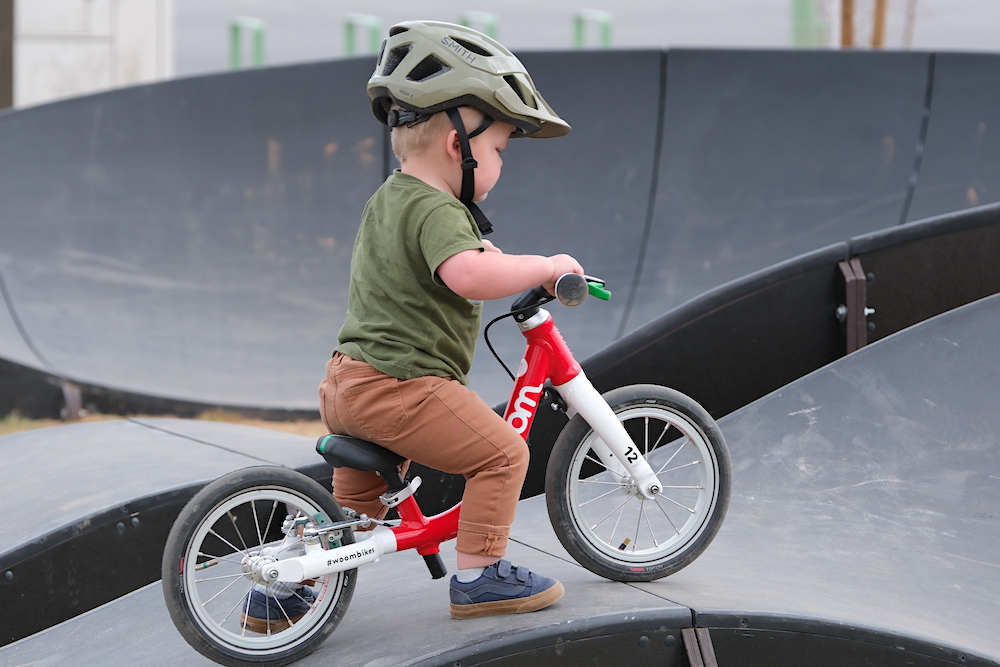
This problem of ridiculously seat post heights is especially problematic with 14” and 16” bikes. In order to get around the CPSC requirement for coaster brakes (which requires all bikes with a maximum seat post height less than 25” to have a coaster brake), most brands ships their bikes with ridiculously long seat posts that are useable on the bike.
To make the bike usable, they provide a second, shorter seat post in the box for you to swap out. While this honestly doesn’t take much time (and is way easier than swapping out the rear wheel of the woom GO 2 with their freewheel kit), it does create confusion about the true size of the bike—because the bike’s listed maximum seat height isn’t its actual usable maximum seat height.
In an attempt to avoid that confusion, some brands don’t list seat heights at all (which is frustrating) and instead just provide “recommended inseams,” making it harder to figure out the real dimensions of the bike.
Wanting to ensure a great fit, woom doesn’t use the long seat post trick (which unfortunately means they do have to offer the freewheel kit). But this also means the seat heights they list are not only provided—they’re truly usable. It ensures you won’t get any surprises in terms of fit and helps prevent kids from being left on bikes that are too small or unsafe for them.
3. Independent Brakes with Color Cues for Learning
woom makes it easier for kids to learn proper braking technique by color-coding the rear brake lever green. That simple visual cue—paired with a matching green rear brake pad—gives kids an easy, intuitive way to remember which brake to use, especially when they’re just starting out.
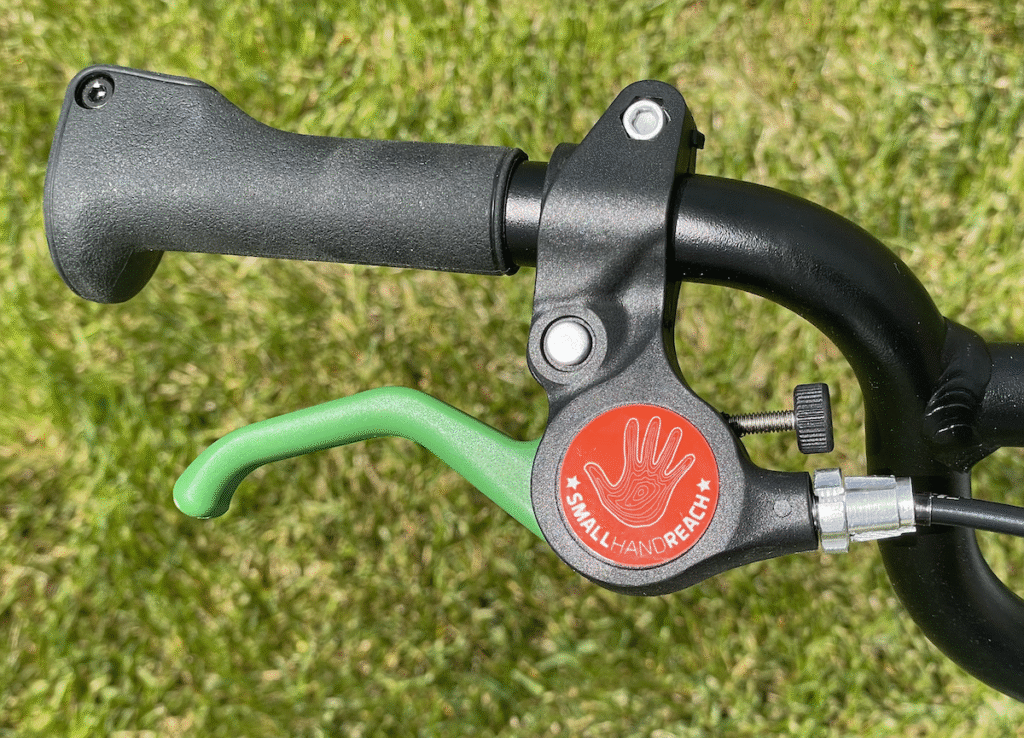
Learning proper technique is especially essential on high-quality kids’ bikes that provide ample stopping power with their hand brakes (these brakes are way more powerful than the ones on cheap kids’ bikes). That extra stopping power, however, can be problematic if used incorrectly. If a child grabs only the front brake while riding downhill or at speed, it can cause the rear wheel to lift—potentially sending them over the handlebars (commonly called an “endo”).
That’s why teaching proper braking technique is so important from the start. But most 3 to 6-year-olds are still learning their left from right, so simply saying “use your right hand” may not be all that helpful. That’s where the green lever comes in. Kids may confuse their hands, but they know their colors—and the green rear brake becomes a safe, easy-to-remember default.
For kids still learning left and right, color-coded brakes just make sense.
Guardian’s SureStop system takes a different approach by linking both brakes to a single lever. It’s simple and effective for avoiding front-brake-only crashes, but it removes brake redundancy. If the rear brake fails, so does the front. While we’ve never had that happen, it’s technically a single point of failure—and it’s part of why SureStop wouldn’t meet Europe’s requirement for two fully independent braking systems on kids’ bikes.
4. The LEGGIE Kickstand: Small Detail, Big Deal
As a parent, you know how frustrating it is to constantly step over or walk around your child’s bike lying on the ground. And when a bike does have a kickstand, it’s often just as annoying—either it tips over too easily, it’s too hard for your child to use, or it gets stuck in the down position and blocks the pedals.
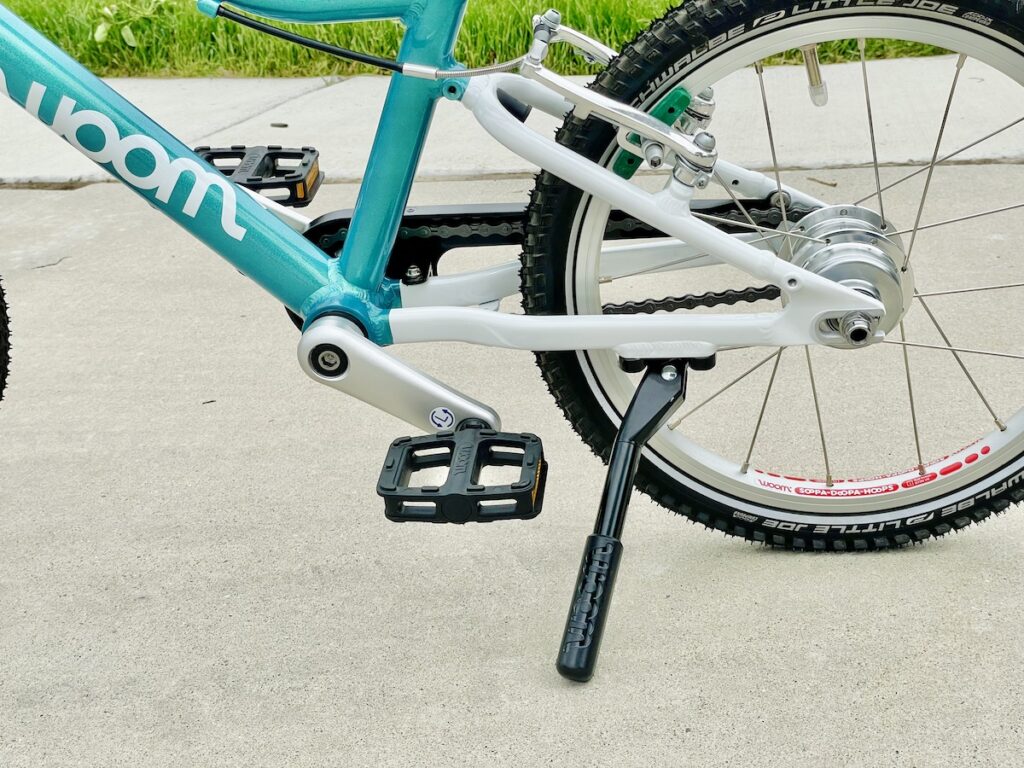
Wanting to make the biking experience better for both kids and parents, woom developed their own solution: the LEGGIE kickstand. It’s stable, easy to use, doesn’t interfere with pedaling, and even springs up on its own if your child forgets to kick it up. As a parent constantly navigating a garage full of bikes, it’s a small feature that makes a big difference.
The kickstand perfected.
The secret to the LEGGIE’s stability lies in its placement. Instead of bolting onto a generic mount, it attaches directly to the chainstay, which means the frame has to be designed and welded specifically to accommodate it. That does add to the manufacturing cost—but for woom, building a better riding experience is worth it.
5. Thoughtful Ergonomic Touchpoints
woom wants your child to love riding their bike so much that they’ve set out to eliminate every possible source of discomfort—especially at the two key contact points: the saddle and the grips.
Every part your child touches is designed for comfort—and safety.
Rather than saving money by using the same saddle across all sizes, woom designs a size-specific saddle for every bike. A 3-year-old’s saddle is narrower and shorter than a 9-year-old’s, because it should be. It’s a small detail that makes a big difference in comfort and confidence.
woom also created their own custom grips, designed with a narrower diameter to better fit smaller hands. But making smaller grips isn’t as simple as swapping them out—it required an entirely new handlebar design with tapered ends to accommodate the slimmer grip size.
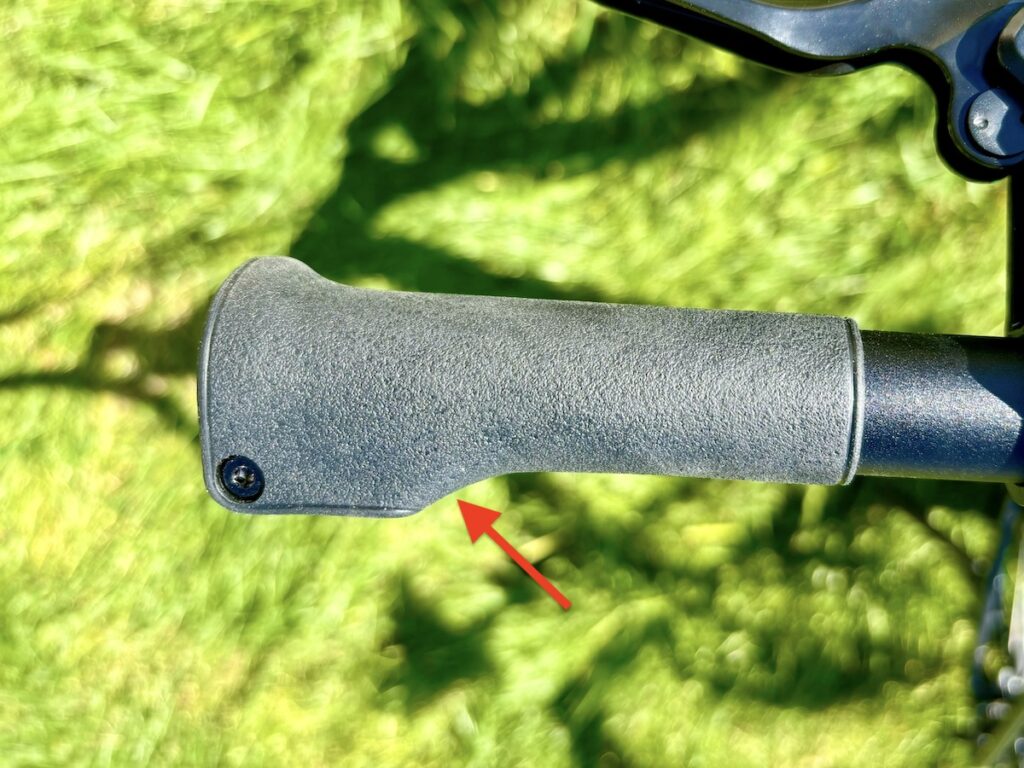
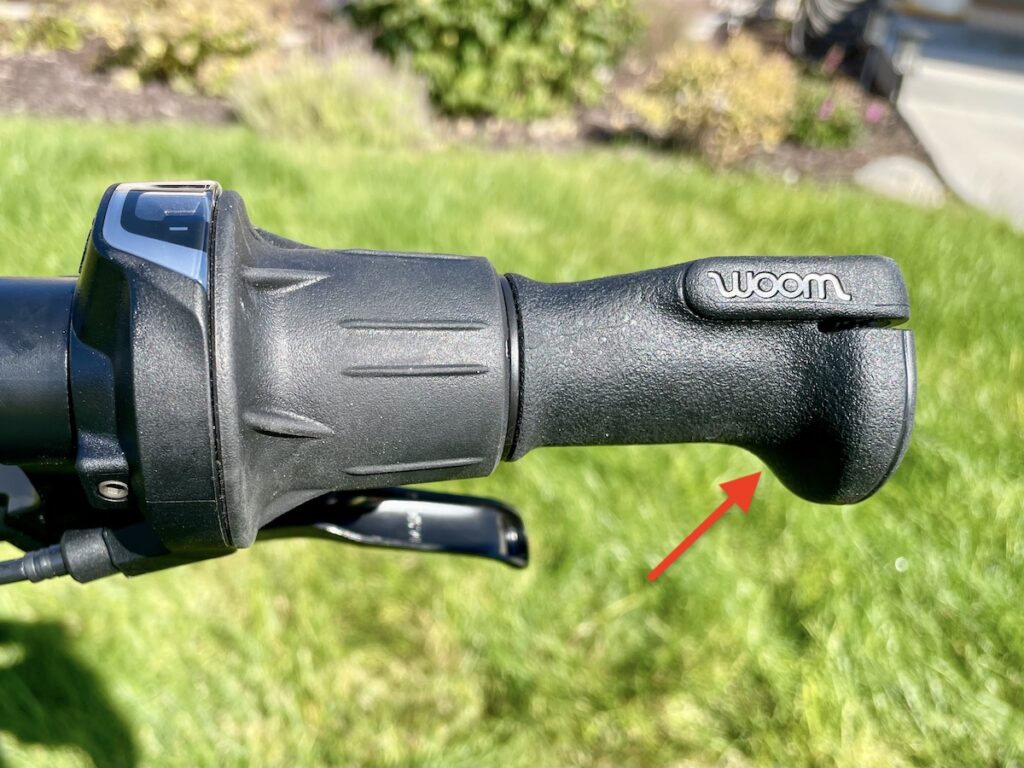
To make things even better, the grips feature an extended palm pad for added comfort and a protective bumper on the end to shield little hands during falls. These aren’t flashy features—but they’re ones your child will feel every time they ride.
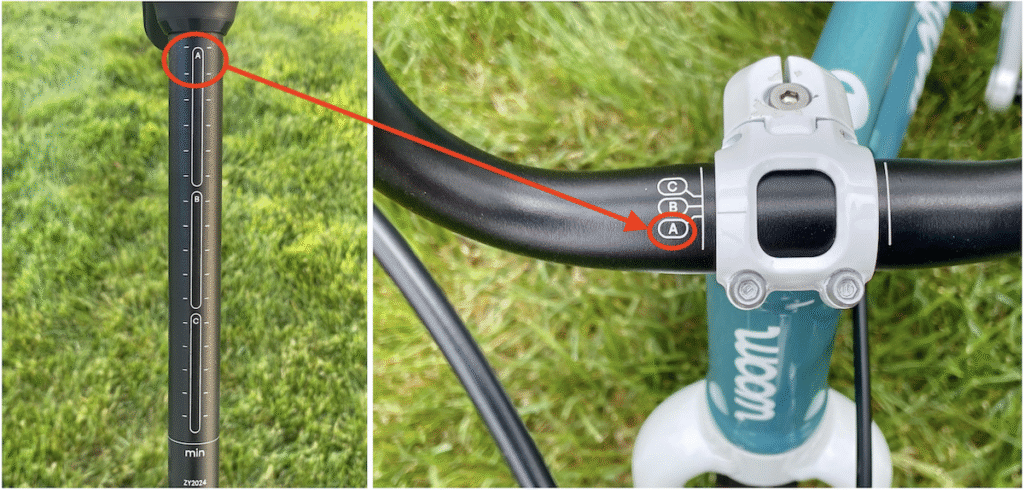
6. Built-In Fit Markings for Easy Adjustments
It’s relatively easy to see when you need to raise your child’s seat (a properly adjusted seat should allow them to come somewhat close, but not obtain, a straight leg at the bottom of the pedal stroke), but how do you adjust the handlebars?
Adjustments simplified.
To make fit adjustments easy, woom includes fit markings on their seat posts and their handlebar stems. When your child’s seat post is set in the “A” section, the handlebars should be tilted to the “A” setting.
7. Easy, Parent-Friendly Assembly
If you are worried about assembling a bike that gets shipped to your home, not to worry, woom makes assembly easy. Even if you’ve never assembled a bike before, you can assemble a woom.
8. Try Before You Buy: Retail Availability
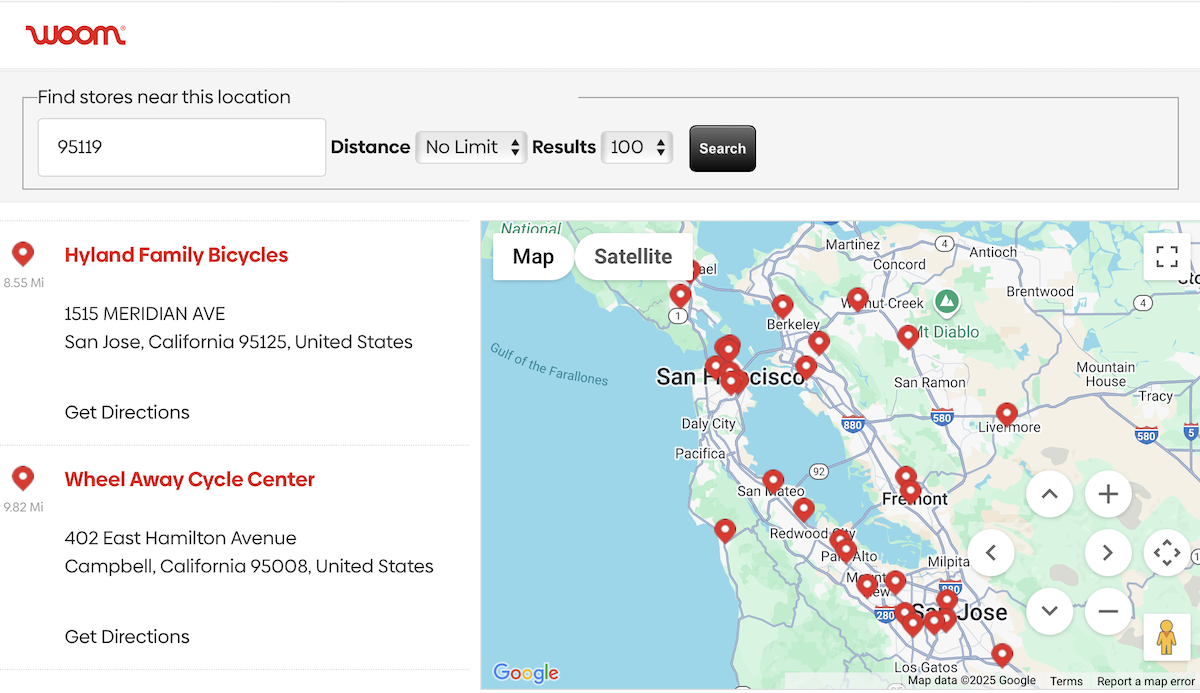
If you’re concerned about fit or want to see a woom in person, they are available in various stores across the US, including many REI stores. Woom retail locater can help you find woom’s locally.
9. High Resale Value & Exchange Program
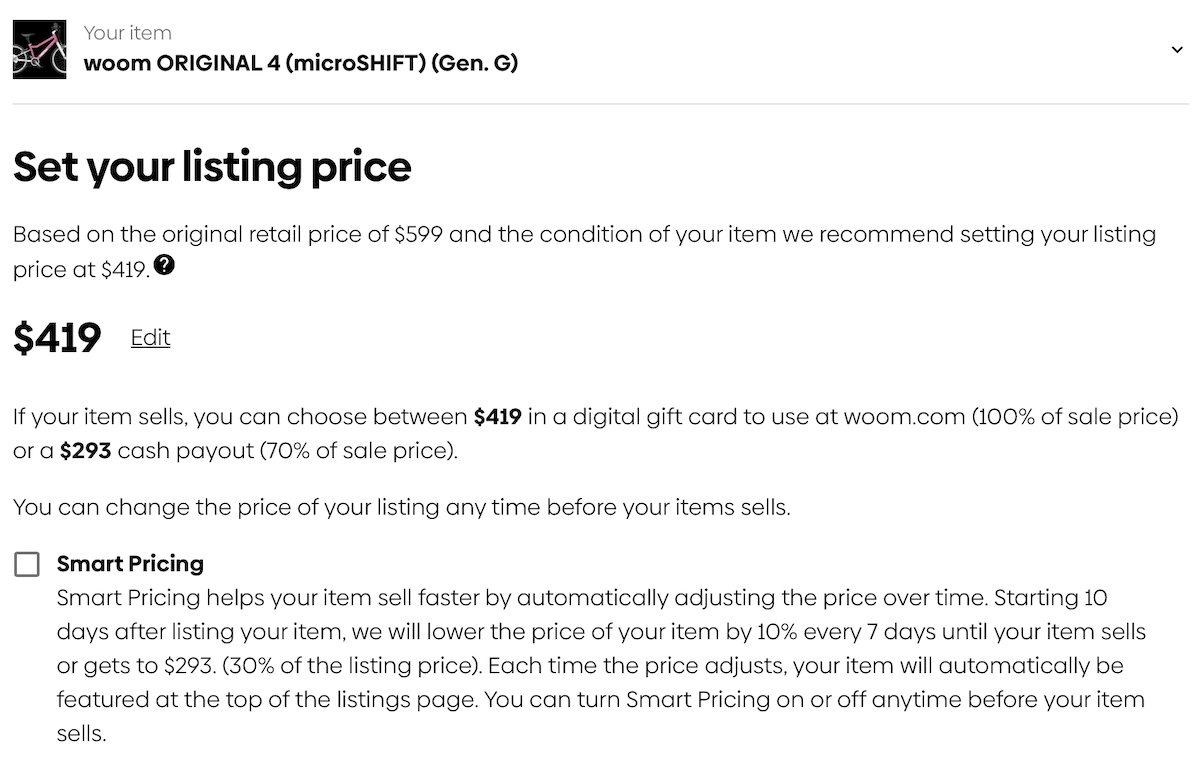
Due to woom’s high quality, they maintain a high resale value. So while they are certainly an investment upfront, you can recoup a large portion of your investment when you child outgrows it. woom’s Exchange program allow you to easily buy or sell a used woom locally. If you sell a bike, you can use the proceed towards a new woom or receive cash payout.
woom also has a referral program that allows you to give your friend $25 off their first woom bike while you earn $50 towards your next woom bike.

10. Great Customer Service
If you ever run into an issue with your woom bike, their customer service team is there to help. Just give them a call—they’re friendly, knowledgeable, and will walk you through whatever you need.
That said, before picking up the phone, it’s worth knowing that flat tires are a normal part of riding bikes, especially for kids. We strongly recommend adding tire sealant before your child’s first ride. Not only can it seal small punctures as they happen, but it also helps prevent future flats—and it’s much easier than changing a bike tube later on.
Frequently Asked Questions About woom bikes
How did woom bikes get its start?
woom bikes hail from Austria and are the brainchild of Christian Bezdeka and Marcus Ihlenfeld who set out with a goal to build bikes that inspire both children and their parents. A family-run business from day one, the US branch of woom bikes is run by Marcus’ brother Mathias Ihlenfeld, and is based out of Austin, TX.
What does “woom” mean?
woom has nothing to do with the English word “womb”. It comes from the German “wuum”, which is like saying “wham”, “bang”, or “pop”, to indicated a swift movement.
How does woom compare to Guardian Bikes?
Both bikes are great, but they certainly have their differences. We outline their differences in our woom vs. Guardian article.
woom Bike Reviews
Interested in a specific model? We have tested every woom bike there is, and have detailed reviews to help you make the right decision for your child.
woom GO
For ages 1.5 to 8 | Balance & first pedal bikes
Formerly known as the woom ORIGINAL, the GO line is ideal for beginners. It includes balance bikes and lightweight pedal bikes with intuitive features like color-coded brakes and optional automatic shifting. These bikes are perfect for learning to ride and building confidence on neighborhood rides and light trails.
woom EXPLORE
For ages 6 to 14 | All-terrain adventure bike
The EXPLORE line (one review for all sizes) is designed for kids ready to venture beyond the pavement. These bikes feature disc brakes, wider tires, and ergonomic components, making them suitable for gravel paths and light off-road adventures. The modern design and customizable frame allow older kids to express their style.
woom OFF & OFF AIR
For ages 6 to 14 | Lightweight mountain bike
These are woom’s performance mountain bikes. The OFF models come with a rigid carbon fork for a lightweight setup, while the OFF AIR models include a suspension fork for added comfort on rough trails. Both versions are equipped with high-quality components tailored for young riders tackling more challenging terrain.
FTC Disclosure: Affiliate links are included in this review. No monetary compensation was provided for this review, however, the reviewed product was supplied by the manufacturer or distributor to help facilitate this review. All opinions and images are that of Two Wheeling Tots LLC. All content and images are copyrighted and should not be used or replicated in any way. View ourTerms of Use.