Best Electric Scooters for Kids (Ages 5 to 13+)
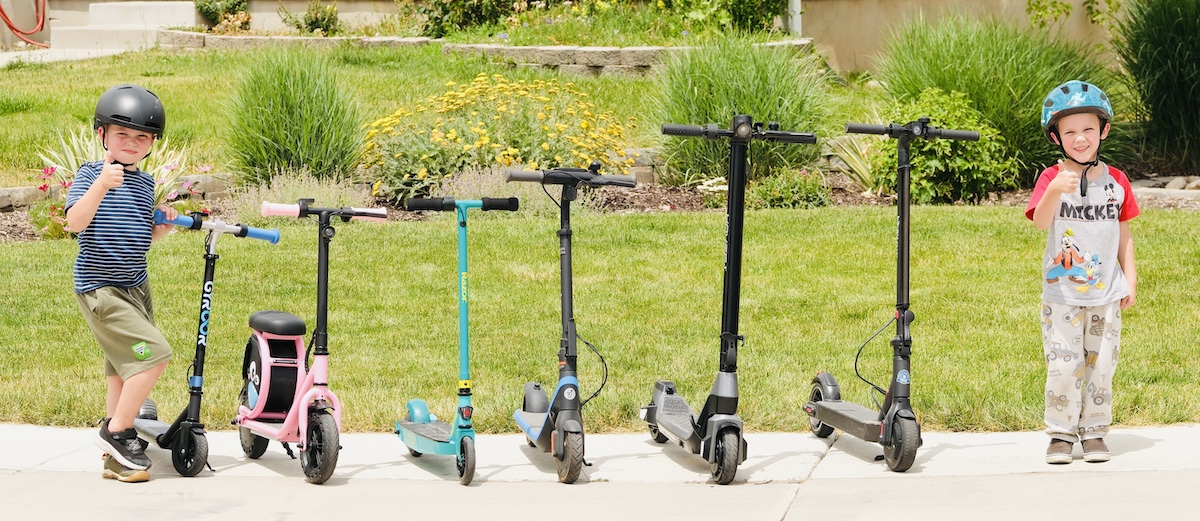
Electric scooters for kids have come a long way. Once bulky and unreliable, they are now sleek, dependable, and a lot of fun to ride. Razor ran the category for years, but it has grown fast, and today some of the best options come from Segway, Hiboy, and Hover-1.
So which scooter is best for your child? We bought and tested models from the top brands, riding them for months with kids from 5 to 13. A handful clearly rose above the rest. We paid the closest attention to whether a scooter lets you set and lock the top speed, because matching speed to your child matters more for safety than any other feature.
From speed limiting and wheel size to brakes and whether a scooter has a seat, we break down what makes each one shine or fall short. Keep reading for our favorites, or skip to our full Electric Scooters for Kids Buying Guide.
The Best Electric Scooter for Kids
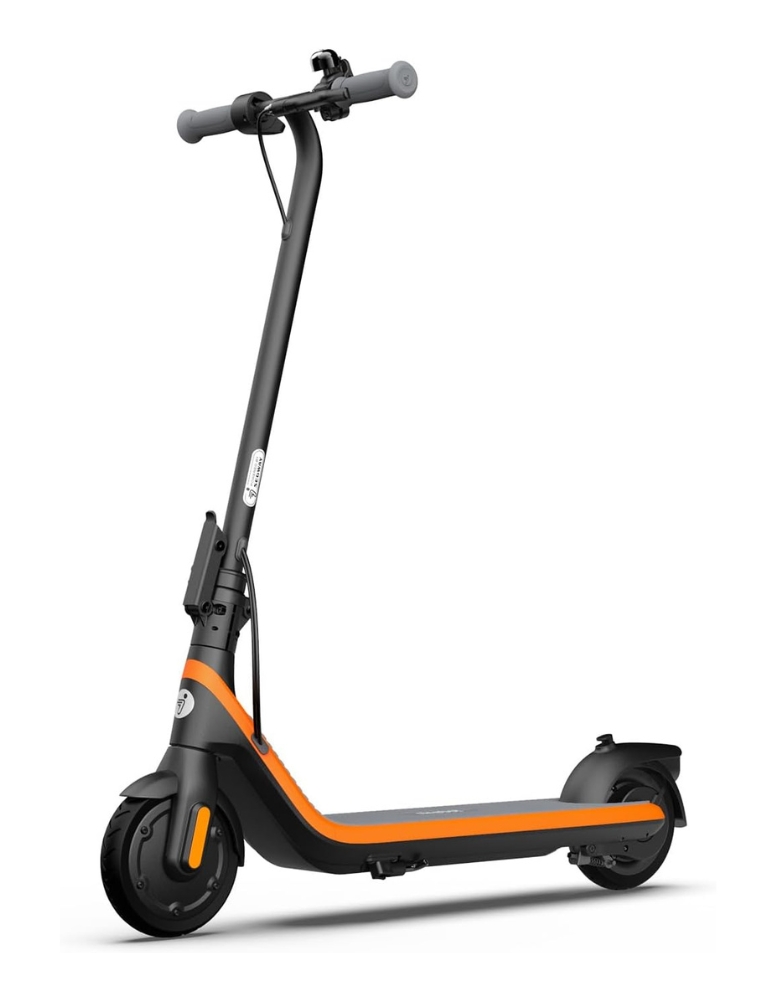
Segway Ninebot C2 Series
$199 (Lite), $249 (Base), $299 (Pro)
AGE RECO: 6–10 (Lite), 6–12 (Base), 9+ (Pro)
WEIGHT LIMIT: 110 lbs (Lite, Base), 132 lbs (Pro)
MAX SPEED: 9.9 mph (Lite, Base), 12.4 mph (Pro)
RIDE TIME: 5.6 mi (Lite), 6.8 mi (Base), 9.3 mi (Pro)
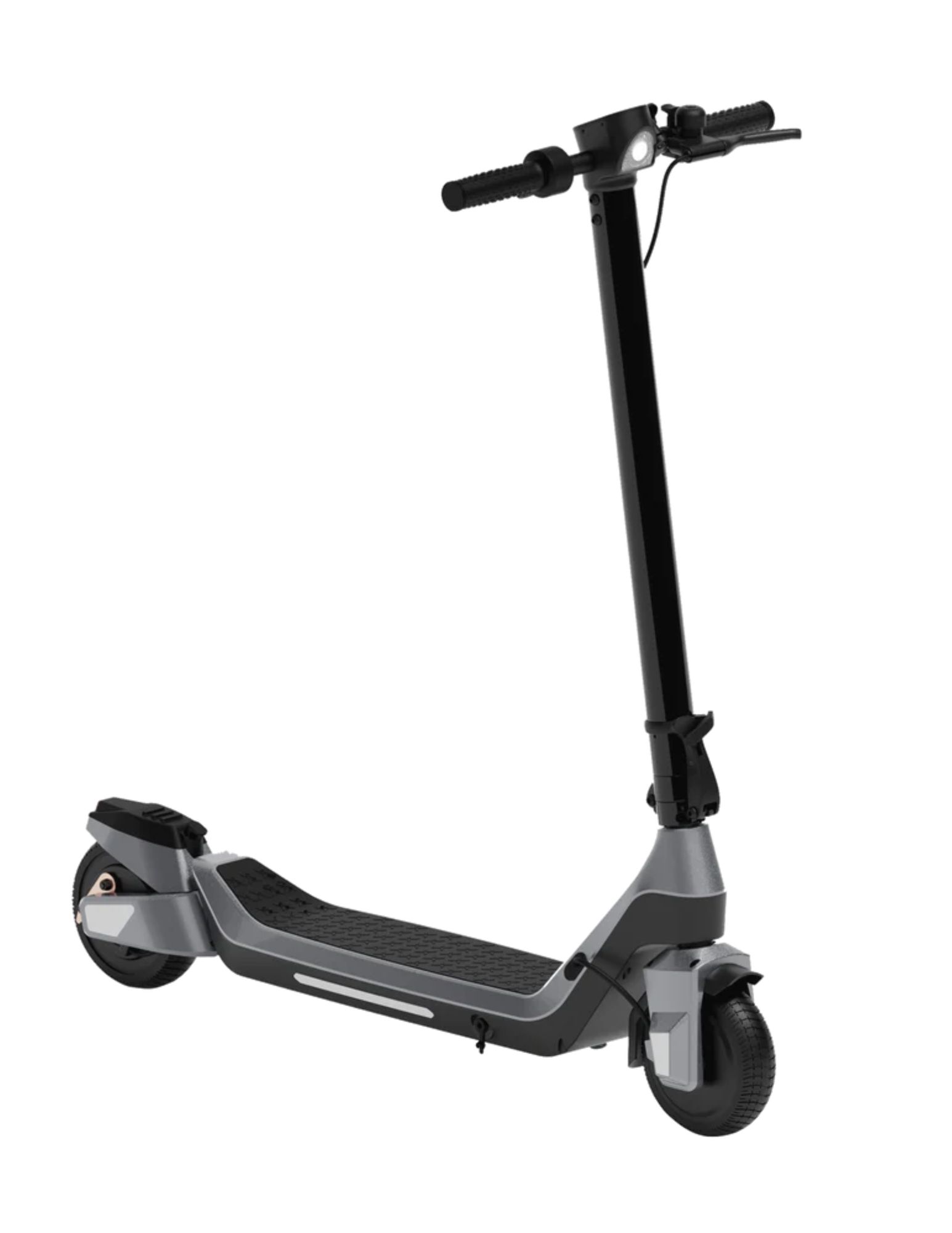
Hover-1 Neo V
$329
AGE RECO: 12+ years old
WEIGHT LIMIT: 220 lbs
MAX SPEED: 14 mph
RIDE TIME: 9 miles
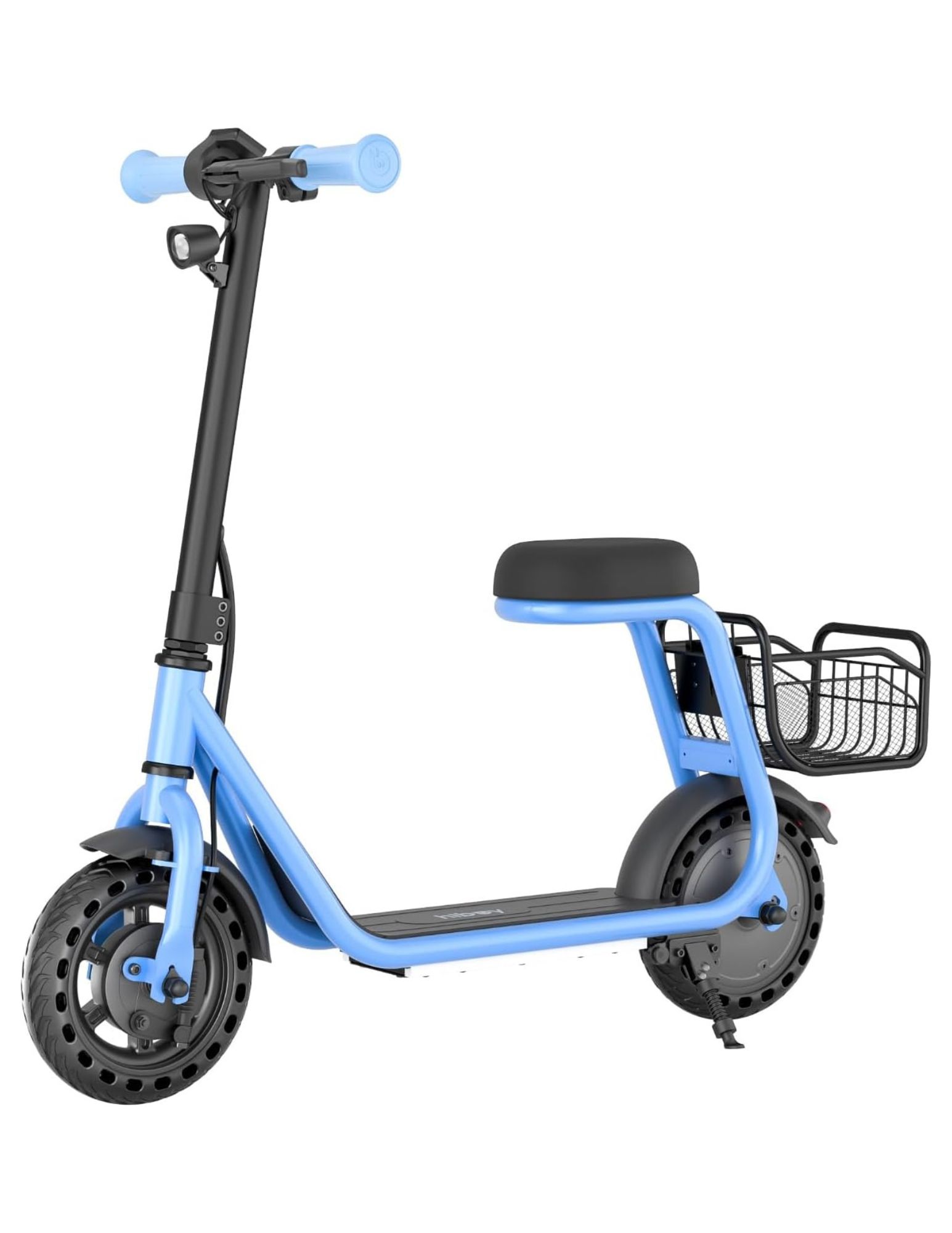
Hiboy Q2 Lite or Joy Haul
$229
AGE RECO: 5 – 8
WEIGHT LIMIT: 110 lbs
MAX SPEED: 9 mph (3/6/9 mph modes)
RIDE TIME: 5 miles
Additional Recommendations
Grouped by the manufacturer’s recommended age, slowest to fastest.
Ages 4–7
· GoTrax Scout Pro, $149 – 6 mph – Best for Beginning Riders
Ages 6+
· Gyroor H30 Max, $178 – 6/8/10 mph – Best battery life for small scooter, speaker, adjustable handlebar
Ages 7+
· Razor Pocket Mod Petite, $319 – 8 mph – Sit-down scooter
Ages 8+
· Razor Power Core XLR90, $167 – 10 mph – Fast, but loud
· Hover-1 Neo I, $279 – 8/12 mph – Foldable
· Razor Pocket Mod, $369 – 15 mph – Sit-down scooter
Ages 12+
· Hiboy S2 Lite, $299 – 13 mph – Large light bar
· Hover-1 Neo X, $379 – 9/16 mph – Cushioning air tires, foldable, best on hills
Ages 13+
· GoTrax GXL V2, $350 – 15.5 mph – Fastest
Electric Scooter Top Picks Mini-Reviews
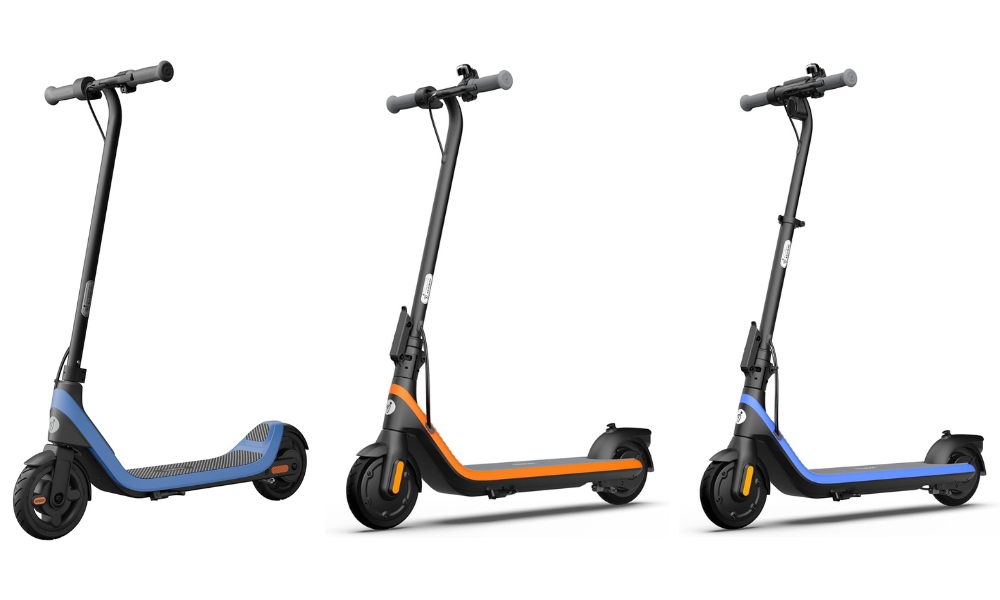
Segway Ninebot C2 Series
$199 (Lite), $249 (Base), $299 (Pro)
AGE RECO: 6–10 (Lite), 6–12 (Base), 9+ (Pro)
WEIGHT LIMIT: 110 lbs (Lite, Base), 132 lbs (Pro)
MAX SPEED: 9.9 mph (Lite, Base), 12.4 mph (Pro)
RIDE TIME: 5.6 mi (Lite), 6.8 mi (Base), 9.3 mi (Pro)
WHEELS: 7″ solid (Lite), 7″ hollow (Base, Pro)
HANDLEBAR: Adjustable on Pro; fixed on Lite and Base
THROTTLE: Push dial, kick-to-start
BRAKE STYLE: Front Electronic, Rear Drum
NOTABLE FEATURES: All three adjust top speed on the scooter, but only the Pro locks it in an app so kids can’t change it. Pro is one of only two scooters we tested with a Bluetooth speaker (the other is the Gyroor H30 Max).
Pros:
Cons:
What We Love About the Segway Ninebot C2 Series
The Segway Ninebot C2 series is the brand’s latest line for kids. It includes three models: the base C2, the Lite, and the Pro. The Lite and Base top out at 9.9 mph, while the Pro steps up to 12.4 mph. Every model has three riding modes set right on the scooter, so parents can control the maximum speed and battery use, but only the Pro lets you lock in the top speed through a phone app so kids can’t change it.
All three roll on larger 7″ rubber wheels, and the Base and Pro use hollow rubber that cushions bumps for a smoother ride. All models have ambient lights under the deck, and the Base and Pro fold for easy storage.
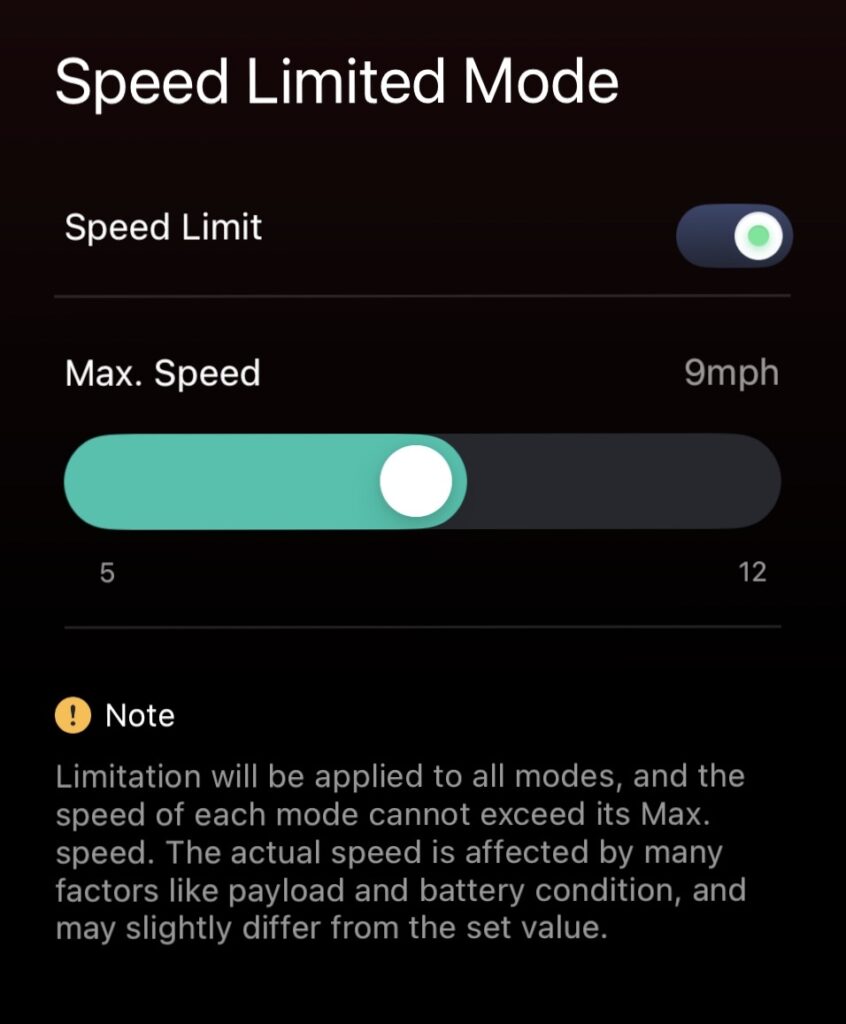
After months of testing with kids aged 6 to 13, the C2 Pro continues to be a hit. Our youngest riders found it the easiest to ride of all the lower-speed standing scooters we tested. Being able to adjust the handlebar height, the top speed, and even the start speed (you can lower the kick-in point from 3 mph to 2.4 or 1.8 mph) through the app lets you tailor the scooter to different heights and skill levels.
The one downside of the C2 Series is its limitation to a 5% grade hill. If you live in a hilly area the Hover-1 Neo Series might be a better option as it can handle 10% to 15% grade depending on the model.
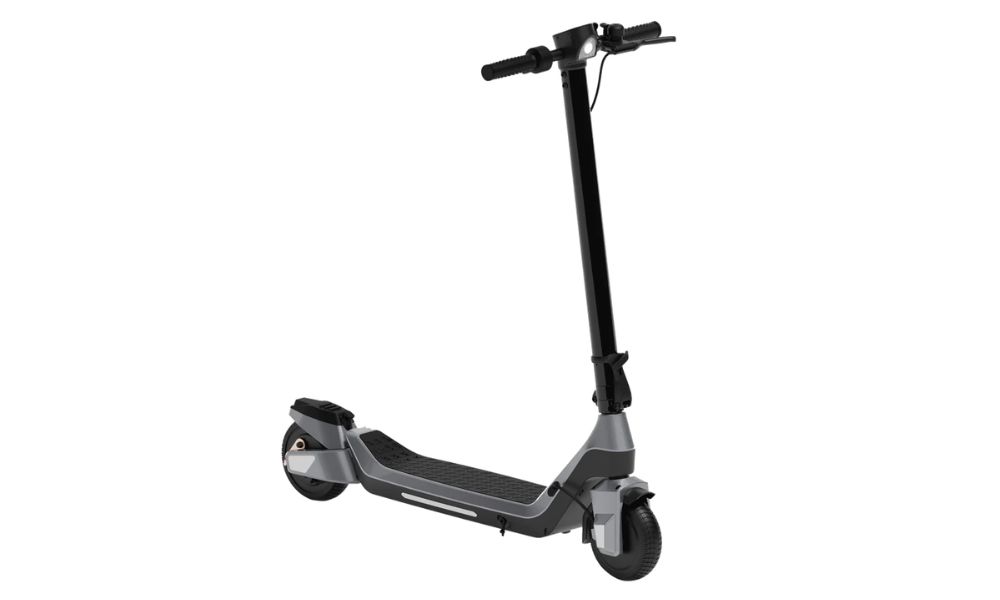
Hover-1 Neo Series
$279 (Neo I), $329 (Neo V), $379 (Neo X)
AGE RECO: 8+ years old (depending on model)
MAX SPEED: 12 mph (Neo I), 14 mph (Neo V), 16 mph (Neo X)
RIDE TIME: 7 miles (Neo I, V), 10 miles (Neo X)
WHEELS: 6.5″ solid; 8.5″ air (Neo X)
HANDLEBAR: Fixed height
THROTTLE: Push dial, kick-to-start
BRAKE STYLE: Front electronic, rear drum
NOTABLE FEATURES: Eco and Sport modes limit the top speed; folds for storage
Pros:
Cons:
What We Love About the Hover-1 Neo Series
The Hover-1 Neo scooters are well built and easy to ride, with responsive brakes and two speed-limiting modes, Eco and Sport. The series has three models: the Neo I, which tops out at 12 mph, the Neo V that reaches 14 mph and Neo X, which tops out at 16 mph. The Neo X adds cushioning air tires and a larger battery than the V.
In Eco mode the Neo I tops out at 8 mph, and the Neo V at 9 mph, and the Neo X at 10mph. In Sport mode the Neo I reaches 12 mph, and the Neo V 14 mph and the Neo X 16 mph. These modes are easy to change on the scooter itself, though, so unlike the Segway you can’t lock out the top speed, and kids can adjust it on their own.
For a confident teen, the Neo scooters are straightforward, fast, no-frills options with a high weight limit. Compared to the Hiboy S2 Lite, our testers preferred the Neo for its faster acceleration and more responsive hand brake. The Neo Series also does better on hills than the Segway C2 series as the Neo I and V can climb 10% grades while the Neo X can take on 15%.
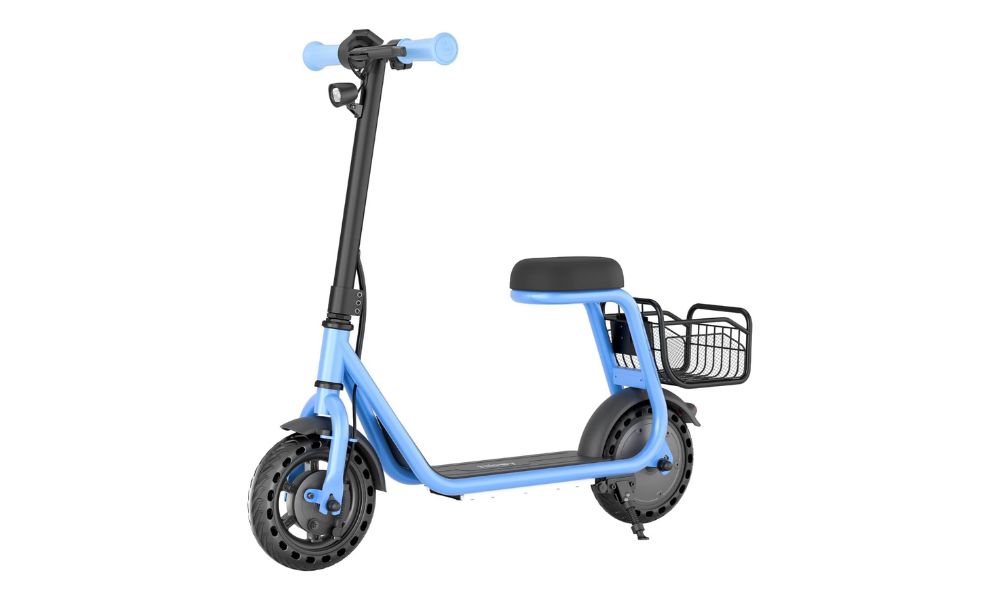
Hiboy Q2 or Joy Haul
$229
AGE RECO: 5–8 years
WEIGHT LIMIT: 110 lbs
MAX SPEED: 9 mph (3/6/9 mph modes)
RIDE TIME: About 5 miles
WHEELS: 8.5″ honeycomb rubber
HANDLEBAR: Fixed height
THROTTLE: Push dial, kick to start
BRAKE STYLE: Electronic and drum
NOTABLE FEATURES: Soft seat (sit or stand), three speed modes, rear storage bag, front and deck lights
Pros:
Cons:
What We Love About the Hiboy Joy Haul
The Joy Haul was our favorite seated scooter for little kids. Sitting down gives new and timid riders a lower, more stable ride, and the low 3 mph starting mode lets them build confidence before working up to the 9 mph top speed. Its big 8.5″ front wheel also smoothed out cracks and sidewalk seams that hung up the smaller-wheeled scooters. Compared to the Gyroor and the Razor Power Core, the sit-down Hiboy was a standout fan favorite, though its popularity showed in its short run time, since it needed recharging after two testing sessions.
Note that the Joy Haul is the same scooter as the Hiboy Q2 Lite and U2 Lite. The only difference is the rear storage: the Joy Haul carries a zippered bag, the Q2 Lite a toy basket, and the U2 Lite is a lower-priced version.
Additional Picks (slowest to fastest)
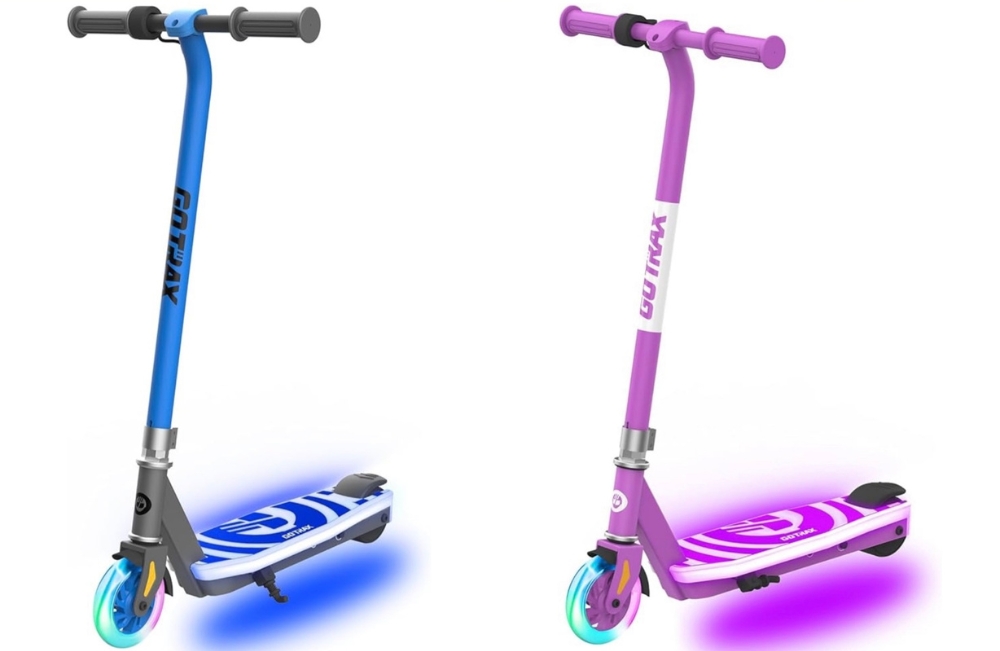
GoTrax Scout Pro
$149
AGE RECO: 4–7 years
WEIGHT LIMIT: 100 lbs
MAX SPEED: 6.2 mph
MAX RIDE TIME: About 3 miles
WHEELS: PU front, solid rubber rear
THROTTLE: Foot pressure activated, kick to start
BRAKE STYLE: Foot brake
NOTABLE FEATURES: Light-up front wheel
Pros:
Cons:
What We Love About the GoTrax Scout
A few mph make a big difference for young kids. With a max speed of just 6 mph, the GoTrax Scout Pro is our slowest pick, which makes it best for less-athletic or less-coordinated kids who are nervous about going fast.
Even at that slower speed, if your child is not already a proficient (non-electric) scooter rider, we recommend practicing on the Scout Pro with the battery empty (no power) first. For a child who does not know how to ride a scooter at all, even 6 mph can feel intimidating.
If your child is confident and athletic, you are better off with a slightly faster scooter. Our daredevil 5-year-old would only ride the Scout Pro in short bursts, since her excitement dwindled quickly when it felt too slow, even though it was her first electric scooter.
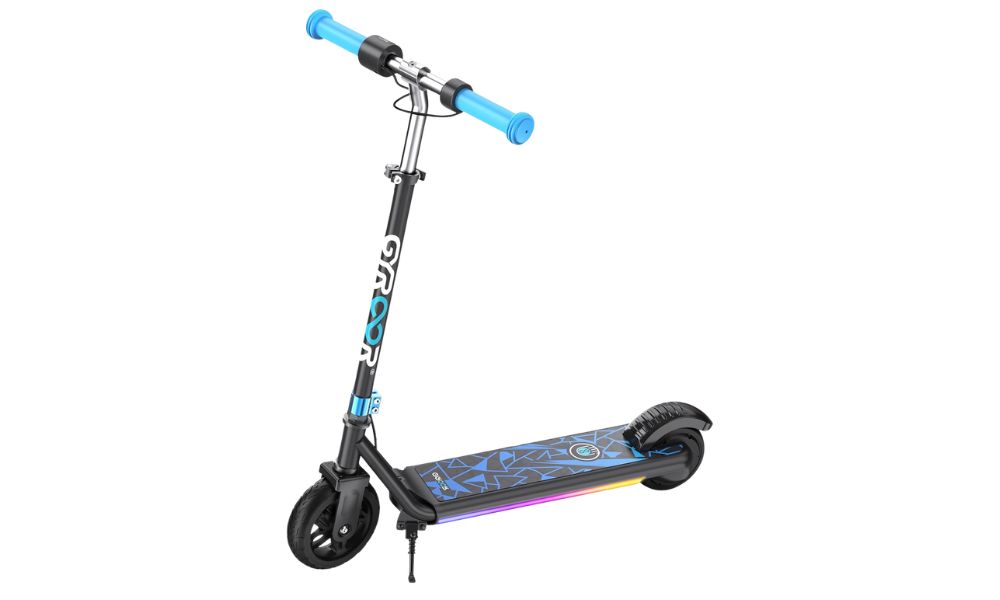
Gyroor H30 Max
$178
AGE RECO: 6–12 years
WEIGHT: ~154 lbs
MAX SPEED: 6/8/10 mph modes
MAX RIDE TIME: About 10 miles
WHEELS: 6″ solid rubber
HANDLEBAR: Adjustable height
THROTTLE: Push dial, kick to start
BRAKE STYLE: Front electronic, rear foot
NOTABLE FEATURES: Three speed modes, adjustable-height handlebar, Bluetooth speaker (one of only two we tested with one, along with the Segway C2 Pro)
Pros:
Cons:
What We Think of the Gyroor H30 Max
The Gyroor H30 Max has a lot going for it on paper: three speeds, an impressive 10-mile range, an adjustable handlebar, a Bluetooth speaker, and a low price. For younger testers who preferred to stand rather than sit (unlike on the Hiboy Q2), the Gyroor was their top pick, behind the pricier Segway C2 Pro. Like the Hiboy, though, its speed modes can be changed by the child at the scooter, so if you have a daredevil who pushes limits, plan on checking the speed setting often or step up to the Segway.
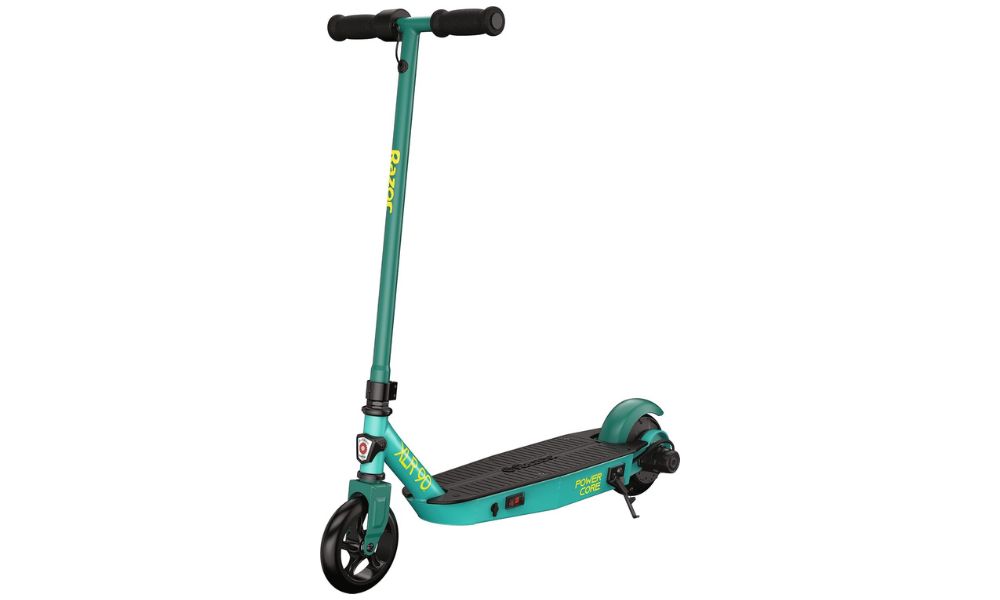
Razor Power Core XLR90
$167
AGE RECO: 8+ years
WEIGHT LIMIT: 120 lbs
MAX SPEED: 10 mph
MAX RIDE TIME: About 40 minutes
WHEELS: Front urethane, rear rubber-coated airless
HANDLEBAR: Fixed height
THROTTLE: Push button, kick-to-start
BRAKE STYLE: Rear foot brake
NOTABLE FEATURES: Rides as a kick scooter with the battery off
Pros:
Cons:
What We Think of the Razor Power Core XLR90
The Power Core XLR90 is a good step up for kids 8 and older who have outgrown the slowest scooters and want a bit more speed. Its 10 mph top end felt quicker than the Hiboy Joy Haul and Gyroor to our testers. The trade-off is refinement: it ran louder and clunkier than the Segway and Hiboy, and its small urethane front wheel made for a rougher ride over uneven pavement. If speed for an older, confident kid is the priority, it delivers. If you want a smoother, quieter ride, the Segway is the nicer scooter.
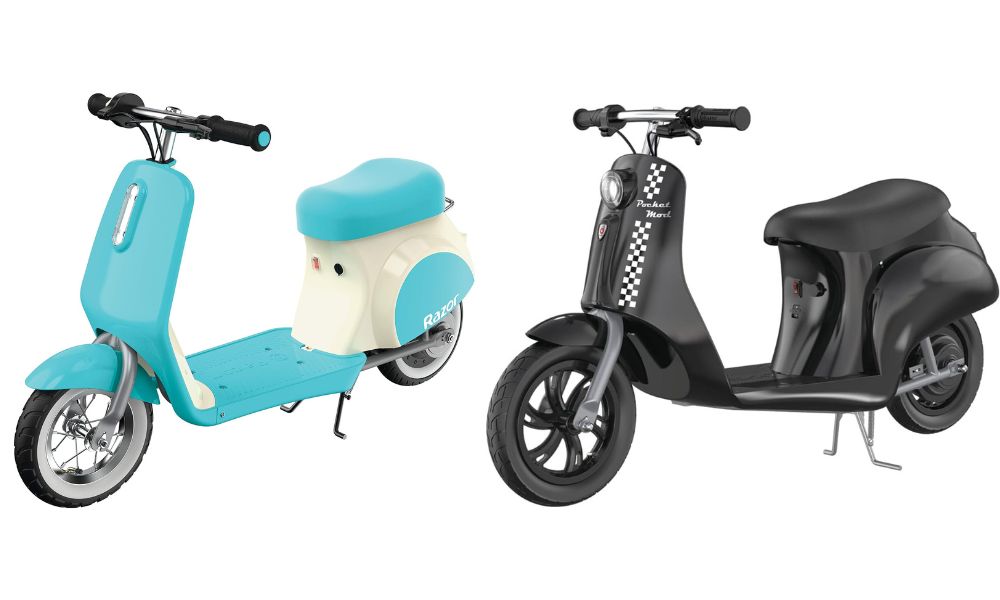
Razor Pocket Mod and Mod Petite
$319 (Petite), $369 (Pocket Mod)
AGE RECO: 7+ (Petite), 8+ (Pocket Mod)
WEIGHT LIMIT: 110 lbs (Petite), 15 mph (Pocket Mod)
MAX SPEED: 8 mph (Petite), 15 mph (Pocket Mod)
MAX RIDE TIME: 40 minutes
WHEELS: 10″ air (Petite) 12″ air (Pocket Mod)
THROTTLE: Twist grip (seated start)
BRAKE STYLE: Hand brake
FEATURES: Retro moto styling, under-seat storage, kickstand that lifts the rear wheel
Pros:
Cons:
What We Love About the Razor Pocket Mods
This retro moto was a surprise hit with our testers, girls and boys alike, ages 10 and up. It was easily the favorite, partly because it is quick and partly because kids feel so grown up riding a “motorcycle.”
The Pocket Mod comes in two sizes. The full-size Pocket Mod tops out at 15 mph on 12″ air tires and holds up to 170 lbs, which makes it a scooter for older, confident riders despite Razor’s 8+ rating. The Pocket Mod Petite is the smaller, slower version, capped at 8 mph on 10″ tires with a 110 lb limit, and it is the one we would hand a 7- or 8-year-old.
If you stick to pavement, both are a smooth ride, and the soft seat is an added bonus for young riders. The brakes offer great stopping power, and the small storage compartment under the seat can hold a phone, keys, and a snack.
A cool safety feature is the kickstand. It keeps the scooter upright and, when engaged, lifts the rear wheel off the ground so the scooter will not take off if the twist throttle is bumped. That came in handy at our house when little sister would not stop climbing on the seat.
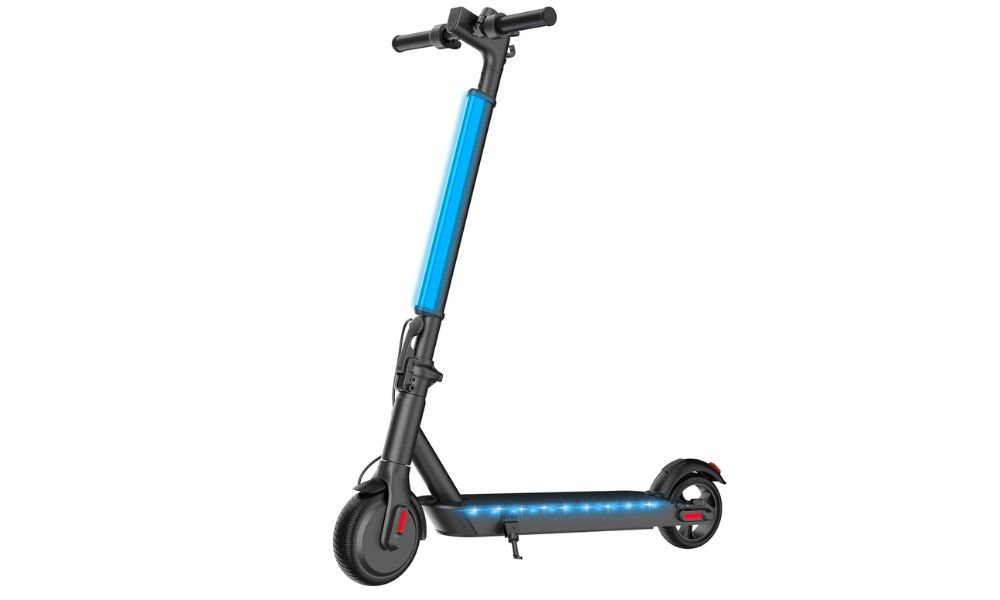
Hiboy S2 Lite
$299
AGE RECO: 12+ years
WEIGHT LIMIT: 180 lbs
MAX SPEED: 13 mph
MAX RIDE TIME: 10.6 miles
WHEELS: 6.5” solid tires
HANDLEBAR: Fixed height
THROTTLE: Kick start with push lever throttle
BRAKE STYLE: Footbrake and rear ebrake
NOTABLE FEATURES: Large LED front light and LED headlight
Pros:
Cons:
What We Love About the Hiboy S2 Lite
The Hiboy S2 Lite is a great choice for younger or more cautious riders in this speed class, thanks to its slightly smaller size and more manageable speed. At 13 mph (vs. 15.5 mph on the GoTrax GXL V2), it is easier for kids and preteens to control while still feeling fun and fast.
One standout is visibility. The S2 Lite has a bright LED headlight, glowing deck lights, and a large LED panel running down the front, which makes it one of the easiest scooters to spot in low light.
Another perk is hill performance. The S2 Lite climbs noticeably better than many scooters in its class, especially the Ninebot C2 Pro, which struggles on steeper grades.
Overall, the Hiboy S2 Lite is a confidence-building scooter that combines great lighting, solid hill-climbing power, and a kid-friendly design.
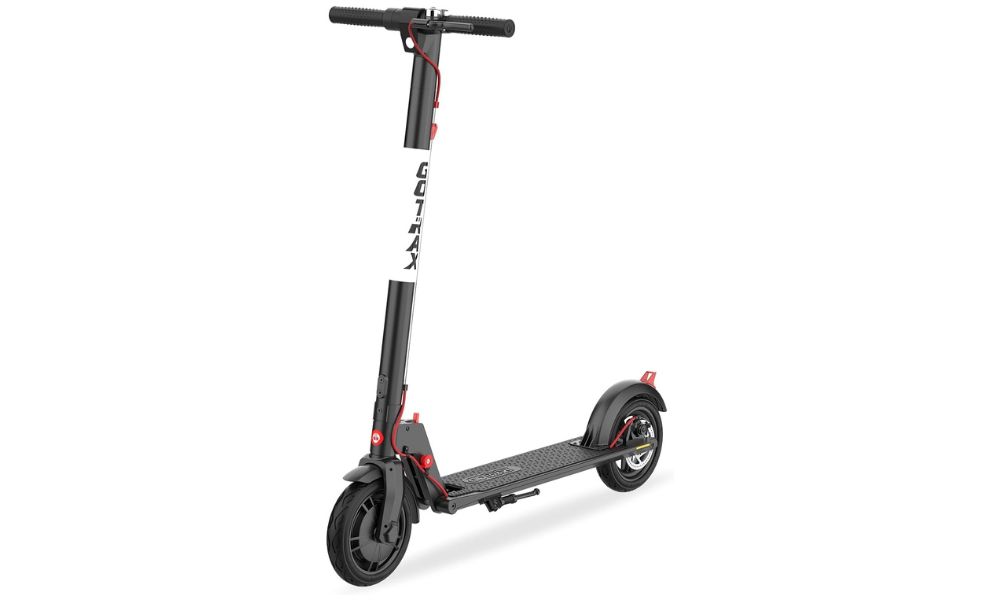
GoTrax GXL V2
$350
AGE RECO: 13+ years
MAX SPEED: 15.5 mph
RIDE TIME: About 12 miles
WHEELS: 8.5″ honeycomb, flat-free
HANDLEBAR: Fixed height
THROTTLE: Push dial, kick to start
BRAKE STYLE: Rear disc
Pros:
Cons:
What We Love About the GoTrax GXL V2
The GoTrax GXL V2 is a zippy, fun-to-ride scooter best suited for teenagers thanks to its fast 15.5 mph top speed. Unlike the Segway Ninebot models, the speed can’t be limited or adjusted, so it is not ideal for younger or more cautious riders, but teens will appreciate the extra pep.
Despite its higher speed, the GXL V2 stays impressively lightweight, making it easy for teens to carry up stairs or load into a car. It also has an integrated LED headlight for low-light rides, though the Hiboy S2 Lite’s headlight is larger and easier to see from a distance.
Overall, the GXL V2 is a solid, budget-friendly pick for confident teen riders who want a lightweight scooter that can keep up with them.
How to Choose the Best Electric Scooter for Kids
Before you pick a scooter based on looks or price alone, these are the features we pay the most attention to when we test. We have ordered them with safety first, because for kids that is what matters most.
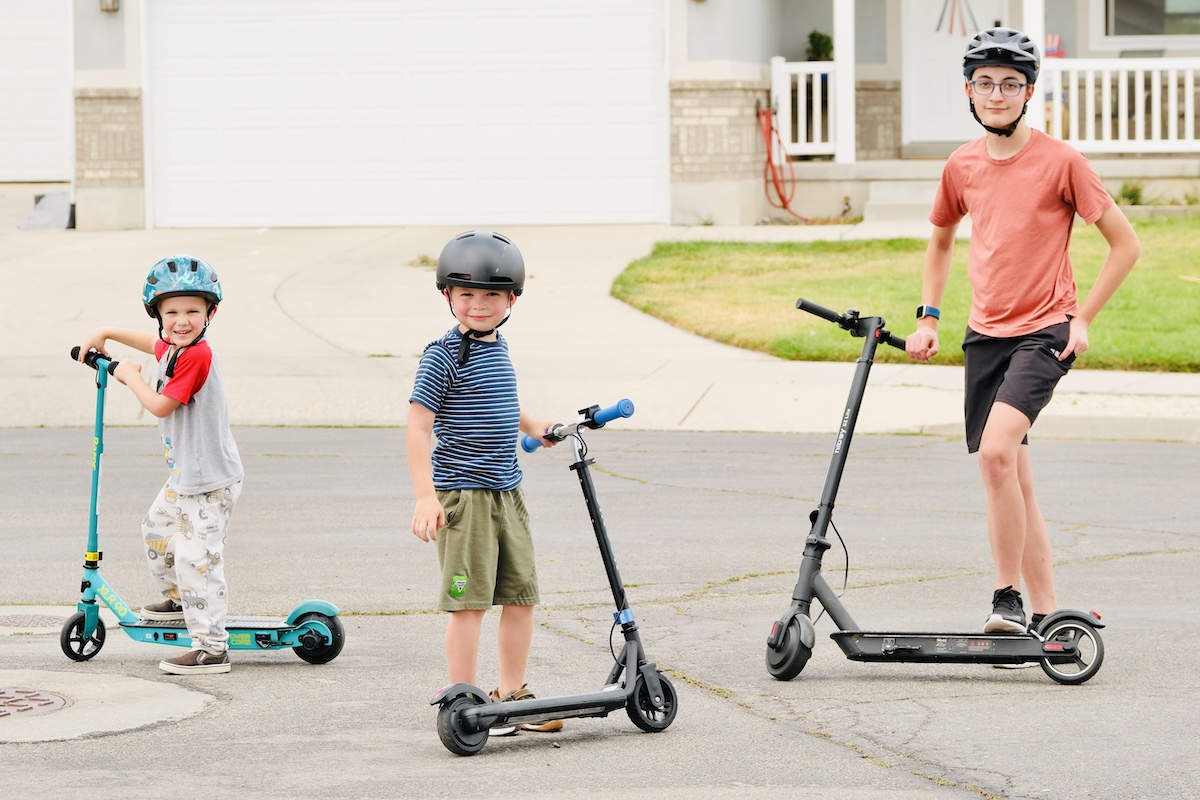
Can you limit and lock the top speed?
Kids should not be on full-powered electric scooters. They are simply too fast and too dangerous, and the younger the rider, the lower the maximum speed should be. That makes a scooter’s top speed, and whether you can limit and lock that speed, one of the most important things to know before you buy.
We list the top speed of each scooter in our mini-reviews above. Our slowest recommended scooters for ages 5+ come in at 6.2 mph, while the fastest scooter we recommend for teenagers tops out at 15.5 mph. But those are the max speeds.
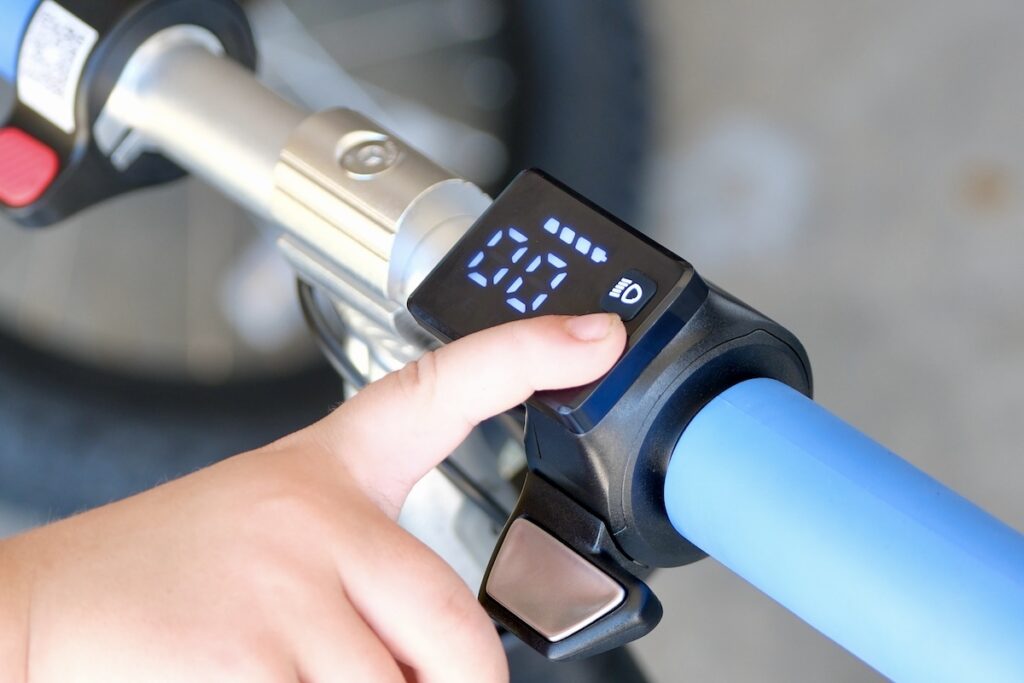
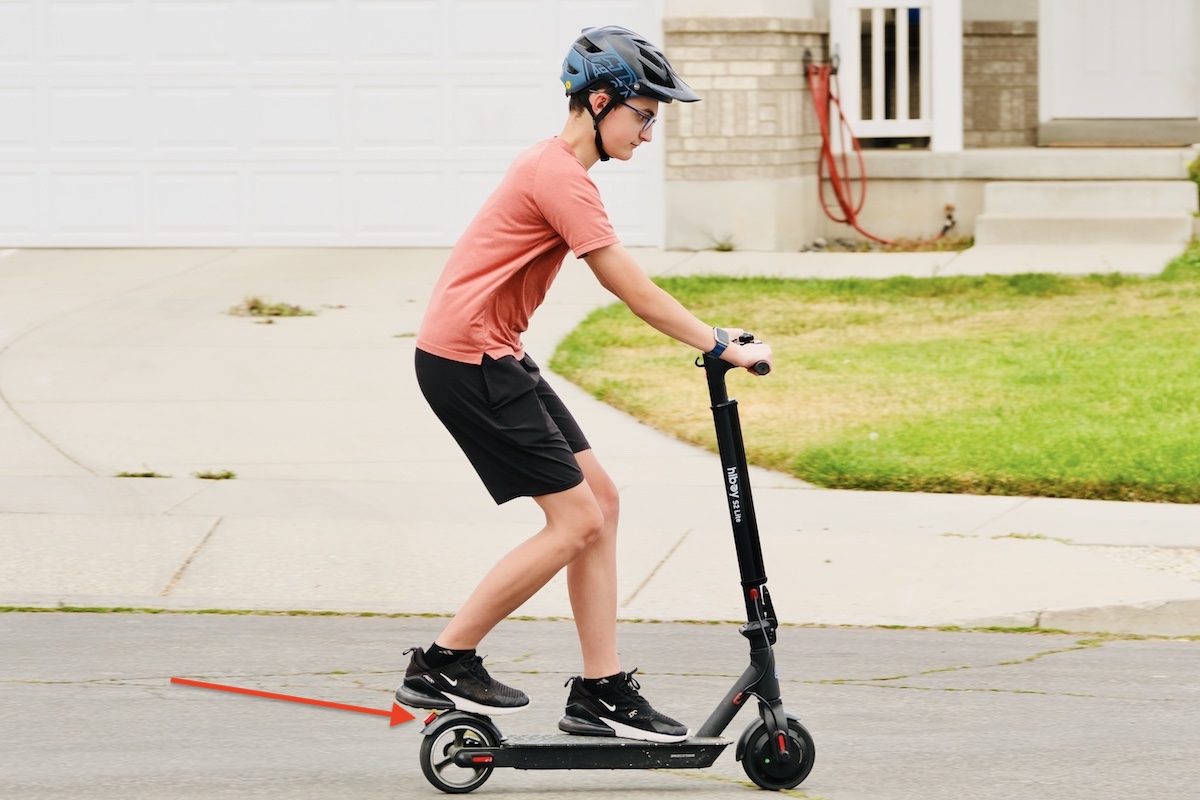
Most of our recommended scooters let you lower the max speed, for example from 15 mph down to 9 mph. Whether you can lock that lower speed (so the child or teenager can’t set it faster) is where a big difference lies in price. On lower-end scooters with adjustable speeds, kids can change the top speed (via the different modes – the red “S” signifies “Sport” mode) just by pressing the power button (red arrow).
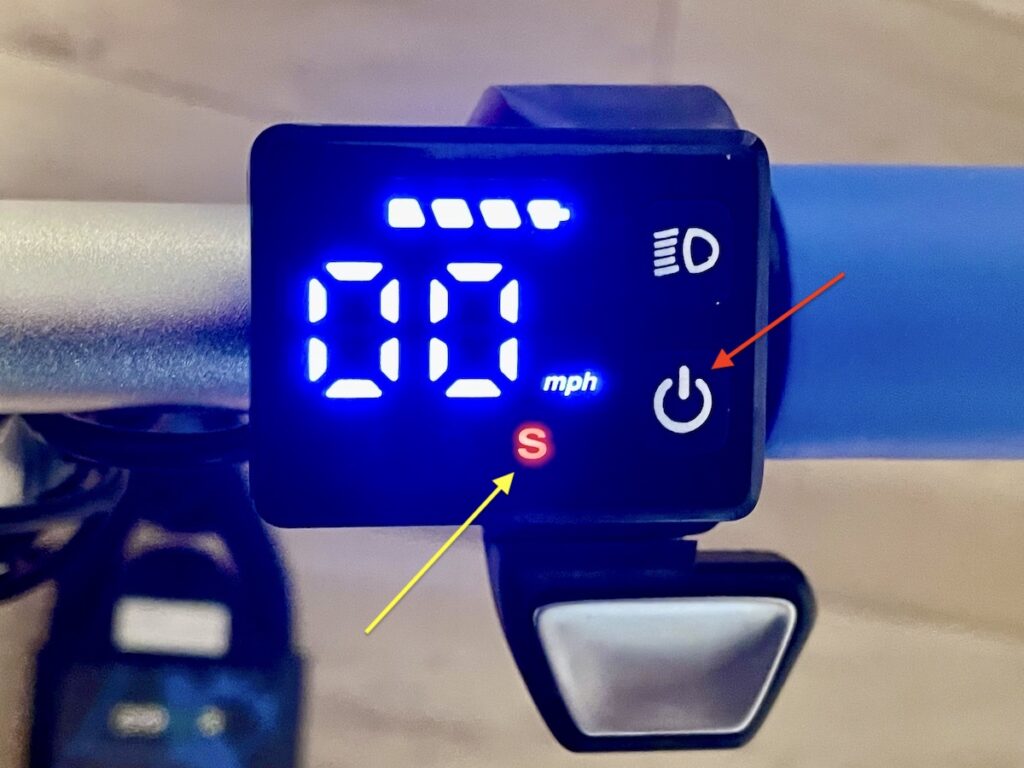
Since they are already familiar with turning the scooter on and off, our testers often bumped up their speed without even realizing it.
So don’t assume a scooter is ready for younger kids just because it can lower the top speed. As a parent, you’re likely going to want to lock the top speed out, or only buy a scooter whose max speed your child is already ready for. Of the scooters we have tested, only the Segway C2 Pro stops the child from changing the speed, because it requires an app. On the others, the speed could easily be changed by the child, on purpose or by accident.
What age and speed is right for your child?
Scooter brands list age recommendations, but only you know your child and what feels safe for them. As a rough guide from our testing:
- Under 8, or timid and new riders: look for a max speed around 6 to 8 mph.
- Ages 8 to 12: once confident on a scooter, most kids do well in the 9 to 12 mph range, ideally with adjustable speed modes.
- Teens: 13 to 15 mph scooters are a good fit for confident, coordinated riders.
Remember that the stated max changes with the terrain. Scooters slow down going uphill and can run well past their rated speed downhill. And keep in mind that scooters with adjustable max speeds are often very easy for kids to change, by accident or on purpose.
How does it start? (Throttle style)
While there used to be a variety of throttle styles, all of the current models we tested use the same push-dial throttle also found on many electric bikes. You simply push the throttle forward with your right thumb.
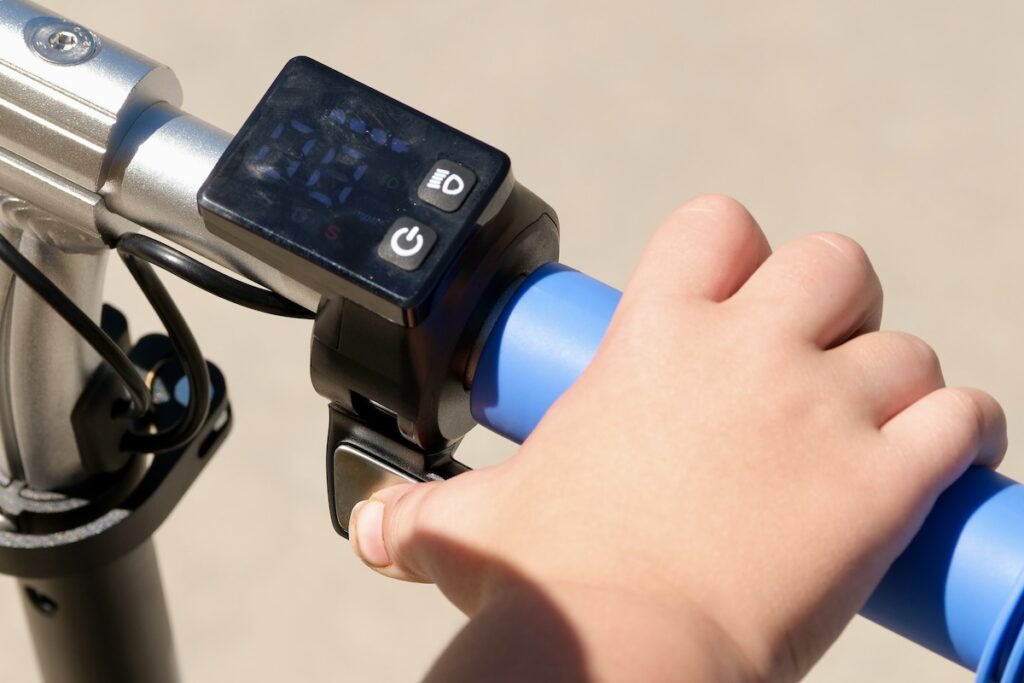
All the standing scooters we tested also have a push-to-start: the motor won’t engage until the scooter is already moving at around 3 mph. This forces kids to kick the scooter up to speed themselves and keeps it from taking off unexpectedly. The seated scooters don’t have this delayed start, since the child starts from a seated position.
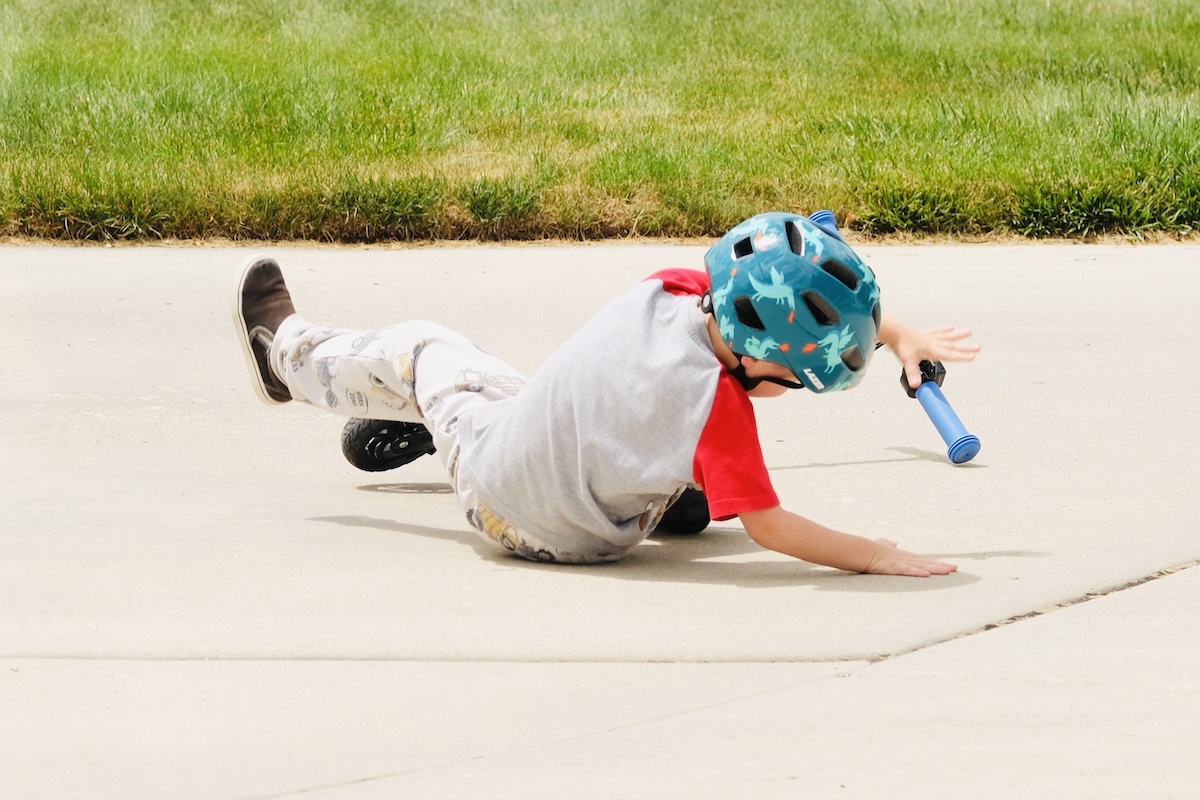
Even with the delayed start, we saw several crashes when kids tried to ride scooters that were too fast for them. Once the scooter hit 3 mph and the motor kicked in, the jump from 3 to 9-plus mph was often more than some kids could handle.
What kind of brakes does it have?
Kids scooters use a foot brake, a hand brake, or both. A foot brake is engaged by pressing down on the rear fender, which is great for a gradual slow down.
A hand brake can be a bike-style lever you pull with your fingers, or a dial you push down with your thumb.
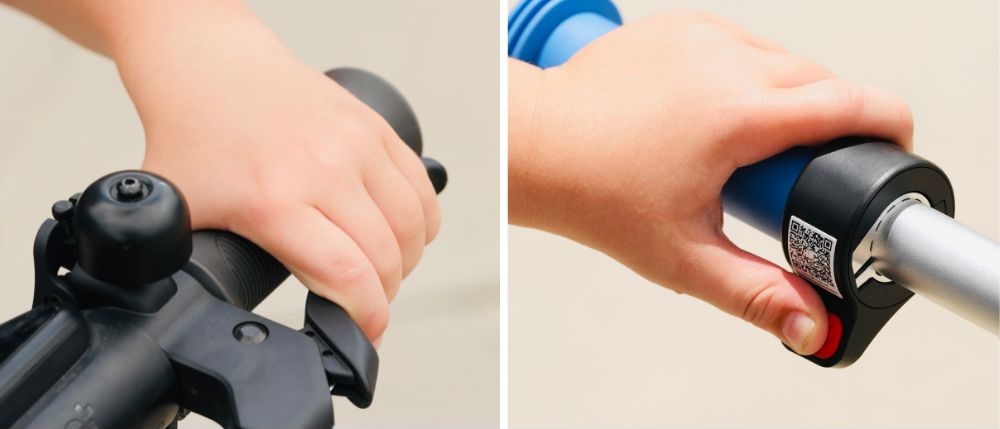
Some scooters have both styles, while others have just one. Across all three, our testers preferred the traditional hand lever, followed by the foot brake. The thumb dial worked, but it wasn’t as intuitive for kids as the hand lever.
Wheel size and type
In general, the larger the wheel, the better. Bigger wheels roll over obstacles more easily, so they are much less likely to get hung up on uneven sidewalks, small rocks in the road, or the concrete lip at the end of a driveway. In our testing, the Hiboy Joy Haul, with its 8.5″ front wheel, did a much better job rolling over uneven sidewalks than the 6″ front wheel on the Razor Power Core XLR90. Regardless of age, we have found that larger wheels are better.
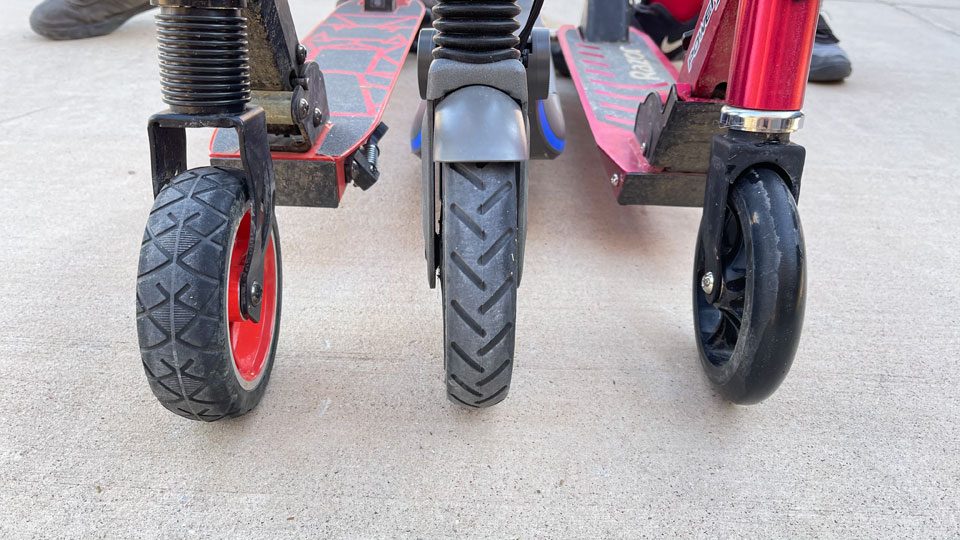
Besides size, wheels differ in what they are made of. There are three common types: urethane (a hard plastic), solid rubber, and rubber air (pneumatic) tires.
Urethane is the typical scooter wheel. They are the cheapest and need no maintenance, but it offers little cushioning, less grip when wet, and a bumpier ride. Urethane wheels also tend to be the narrowest, which can limit traction and make balancing a bit harder.
Solid rubber can’t go flat, grips well, and dampens vibration better than urethane. Most new scooters use solid rubber because it has the most upside and the fewest headaches. Some rubber tires are also “honeycomb” style and have compressible air compartments to provide a bit of cushioning.
Air tires give the best cushioning and traction, but they can go flat. Because of that flat risk, they have mostly disappeared from kids scooters. Among our picks, only the Razor Pocket Mods still use them (12″ air tires).
Is the battery UL certified?
Lithium battery safety matters, and it is easy to check. Look for UL 2272 certification, which means the electrical system was tested by an independent lab for fire and electrical safety. Every scooter we recommend is UL 2272 certified. We cover safe charging habits in the FAQ below.
Deck size and handlebar height
The foot deck has a big effect on comfort. Longer or wider decks give kids more room to plant their feet, which matters more as they grow, so look for a deck that will still fit a few years from now. In our testing, kids did not mind a narrower deck as long as it was long enough to rest both feet.
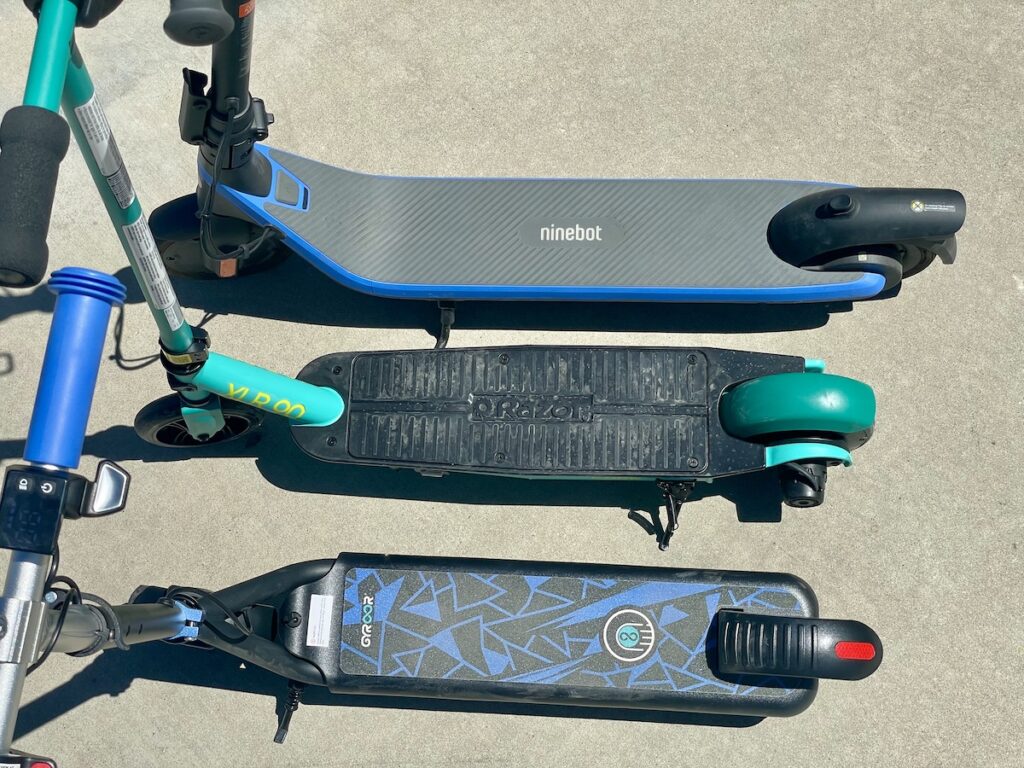
Handlebar height works best at about waist level, give or take a few inches. Of all the scooter we tested, the slower scooters also have shorter handlebar heights and decks to better accommodate younger riders.
As a result, if you’re looking to buy one scooter for a child to use for years, a scooter with an adjustable handlebar is a nice way to dial in the fit and get more years out of the scooter. It also makes sharing between siblings of different heights much easier.
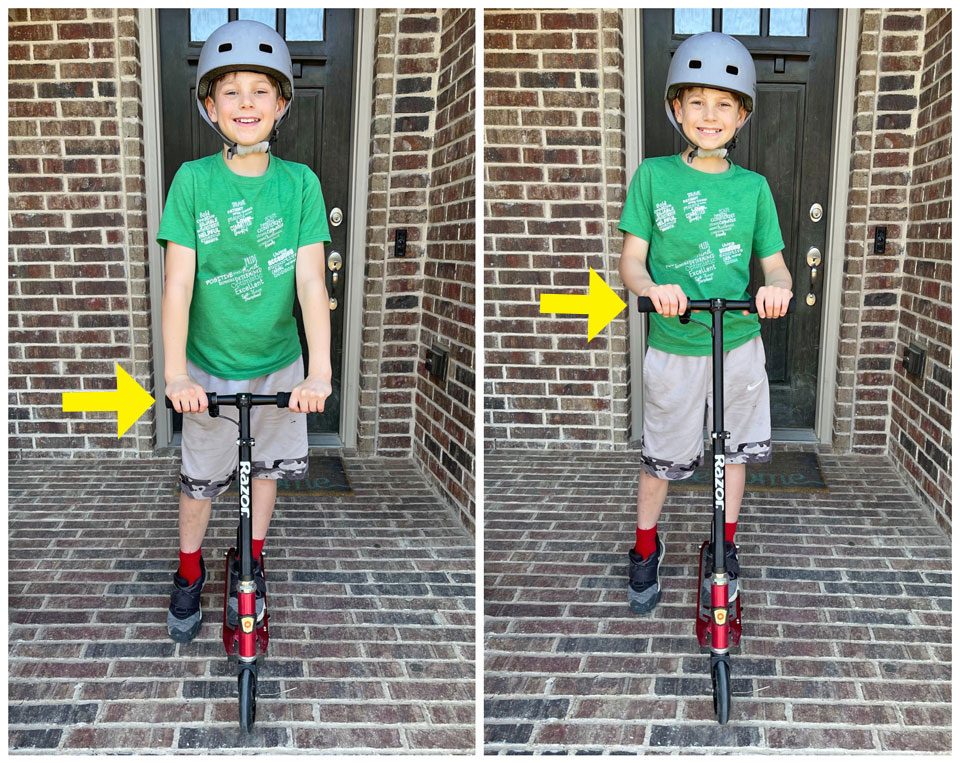
On our list, the Segway C2 Pro and the Gyroor H30 Max are the only scooters with adjustable height handlebars.
Does it have a seat?
A handful of scooters add a seat so kids can sit or stand. Seated scooters like the Razor Pocket Mod (best for 10 and up) and the Hiboy Q2 Lite and Joy Haul (best for ages 5 to 8) are great for younger riders.
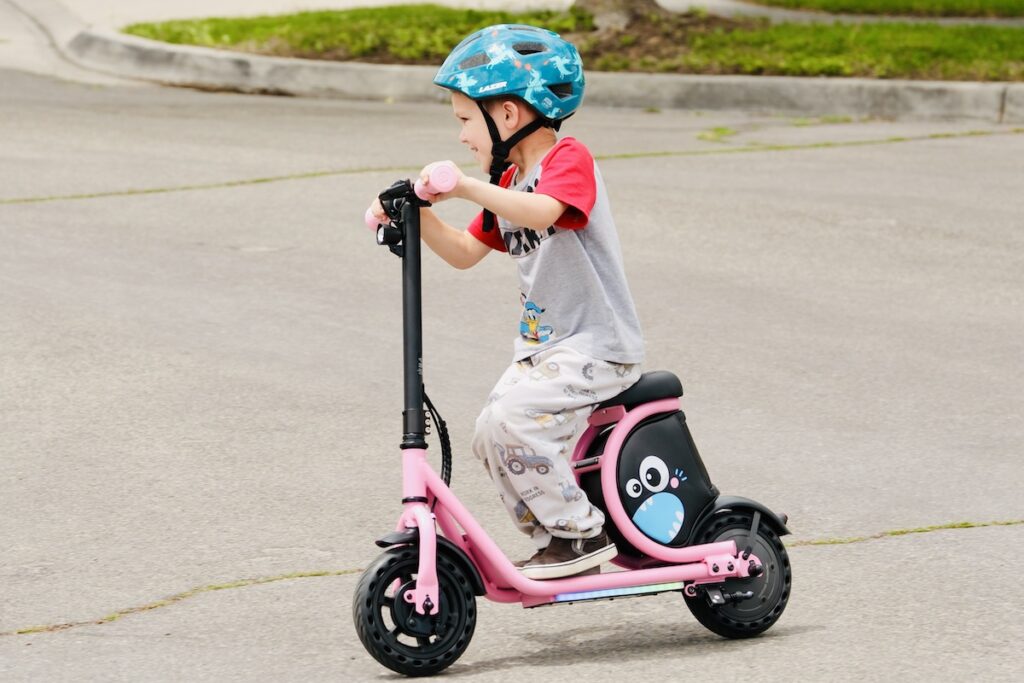
Not only are they easier to ride, they also have a lower center of gravity, since the rider is sitting rather than standing. That makes them more stable at speed and less likely to throw the rider when the front wheel gets hung up on a rock or uneven pavement.
Battery life
Ride times vary a lot, from about 4 miles on the low end to roughly 12 on the high end, with most landing near 40 minutes or 6 miles. One thing worth knowing: advertised range is measured in ideal conditions, and real-world range is usually only about 60 to 70 percent of the claim. A heavier rider or a loaded backpack shortens it further.
Can it fold for storage?
Of the scooters we tested, only the higher-end, faster models fold down for easier storage and transport. This becomes especially important if your kids ride to a friend’s house and you have to pick them up by car. Larger scooters often won’t fit in the trunk of even a big SUV unless they fold down. The smaller scooters for younger riders don’t fold, but they slide into a car trunk far more easily than the big non-folding models do. The Segway C2 Pro, the Hiboy S2 Lite, Hover-1 Neo Series and the GoTrax GXL V2 all fold.
Kids Electric Scooters FAQs
Yes, when the scooter is matched to the child and used with the right gear. To minimize risk of injury be sure to choose an age-appropriate top speed (ideally one you can limit), require a helmet every ride, and start your child off in an open, traffic-free space until they are comfortable braking and steering. Every scooter we recommend is UL 2272 certified for battery and electrical safety.
It depends on the child’s coordination and confidence more than a number, but as a general guide: kids under 8 do best on a slow scooter capped around 6 to 8 mph, kids 8 to 12 suit the 9 to 12 mph range (ideally with adjustable speed modes), and teens can handle 13 to 15 mph. A child should already be a confident regular (non-electric) scooter rider before moving up to an electric one.
It depends on the model. Many top out around 9 to 10 mph. Models built for older kids reach 12 to 15 mph, while scooters made for younger riders cap at 6 to 8 mph. Keep in mind that any scooter goes faster downhill and slower uphill than its rated speed, so choose a max with hills in mind.
They can be a great fit, especially for younger riders, longer rides, or kids who love the “mini motorcycle” feel. Seated picks like the Razor Pocket Mod (ages 10 and up) and the Hiboy Q2 Lite and Joy Haul (ages 5 to 8) let kids sit or stand.
This varies by state and even by city, so check your local rules before buying. Many places restrict where kids can ride (sidewalk versus street), set a minimum age, or require a helmet. Some are changing fast: New Jersey, for example, passed a law that bars children under 14 from riding electric scooters and bikes, taking effect in 2026. A quick search for your state plus “electric scooter law” will tell you what applies.
A properly fitted helmet, every single ride, is non-negotiable. For new riders we also recommend knee and elbow pads and closed-toe shoes. See our guides to the best kids bike helmets, helmet sizing, and the best kids knee and elbow pads to get the fit right.
Stick with a UL 2272 certified scooter (all of ours are), charge it on a non-flammable surface with the included charger while someone is awake and nearby rather than overnight unattended, and unplug it once it is full. Store and charge it at room temperature, away from heat, and stop using any scooter whose battery becomes swollen, hot, or damaged.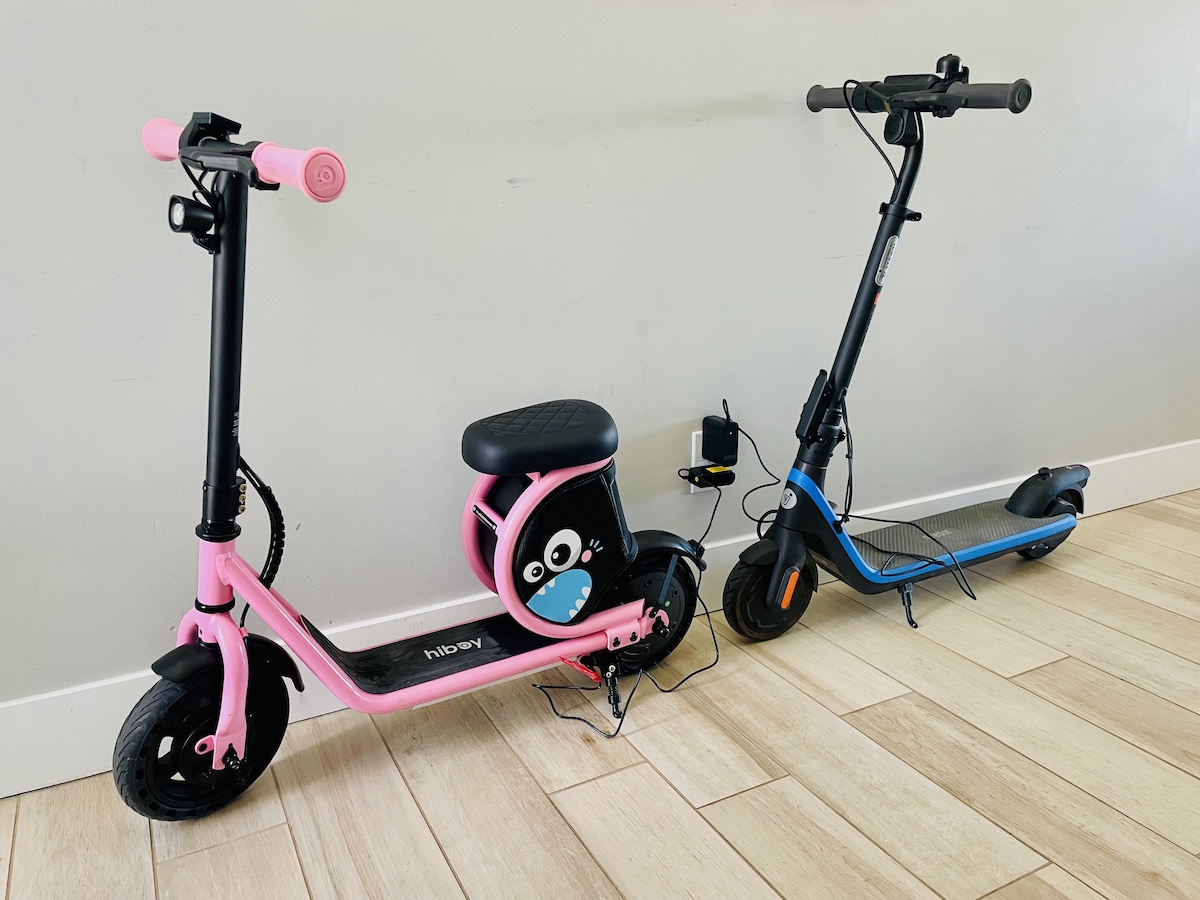
Most land between about $100 and $300. Budget beginner scooters start near $100 to $150, mid-range models with speed modes run roughly $180 to $250, and faster teen scooters or seated models reach $300 to $400.
The same scooters work well for any kid, so we recommend choosing by speed, size, and features rather than color. That said, many of our picks come in a range of colors, and several (like the Hiboy S2 Lite with its pink or blue lights) offer styles kids love. Match the scooter to your child’s age and confidence first, then pick the look they will be excited to ride.
Related Articles
If you’re interested in hoverboards, check out our 5 Best Kids Hoverboards and Safety Guide.
25 Fun and Easy Kids Bike Accessory Ideas: A lot of kids bike accessories are also fun for scooters! Check out baskets, lights, bells, bike helmets and more!
Best Hydration Packs for Kids: Need to carry more water? Hydration packs are a great alternative to water bottles.