Best & Safest Electric Bikes for Kids and Teens
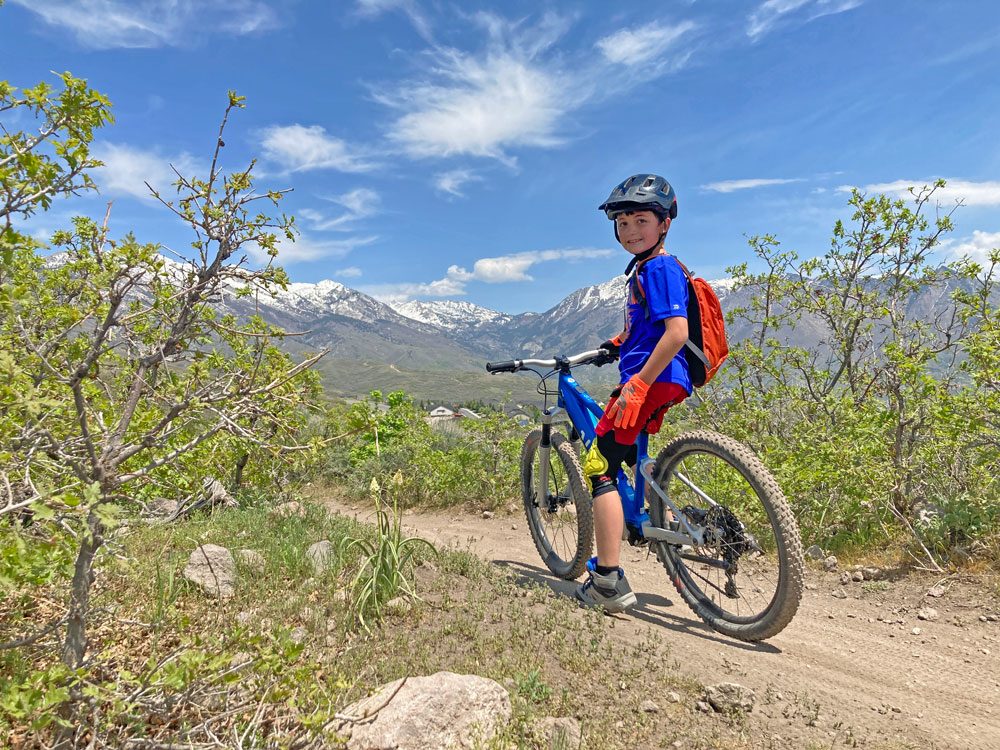
From kids riding longer distances with their parents to teens needing a budget e-bike to commute to work, it’s easy to see the appeal. But after many sad and devastating accidents involving kids on e-bikes — in our own neighborhood and across the country — we’re also very hesitant to recommend them.
So while we’ll share our advice on what to look for and what to avoid, our biggest piece of advice is this: don’t get one unless you truly see the need, and you as a parent are willing to ride along to keep your child safe. Let’s start with what to avoid.
⚠️ eBike Safety: Read This First
Before anything else, understand the one distinction that matters most: a real e-bike has working pedals, and the motor only helps while your child pedals. Many products sold as “kids’ e-bikes” are actually electric motorcycles — no real pedals, several times the power, and top speeds of 30–60+ mph. Do NOT buy these for kids or teenagers.
🚫 Do NOT buy a kids’ e-bike that:
- Has a throttle (unless it can easily be removed)*
- Can’t be propelled by pedaling, like a traditional bike*
- Has a motor over 750W or a top speed above 20 mph (ideally much less of both)
- Has a seat, deck, or foot pegs for a second rider
- Lacks a safety certification (UL or EN)
- Is sold as a bike but marketed as “no license required” or “off-road only,” or styled like a dirt bike
*Exception: electric balance bikes for young children (like the STACYC) have no pedals by design — that’s fine. They’re a separate low-speed category, covered below.
Age Recommendations: the CPSC says kids 9–12 shouldn’t ride anything that assists past 10 mph; experts advise against fast e-bikes for younger kids and set 16 and local rules increasingly add their own age limits, so check yours.
→ Before you buy, read our full buying guide below — torque sensors, throttles, weight, classes, and balance bikes explained.
The Best Electric Bikes for Kids
Kid-appropriate electric pedal bikes are very limited (as they should be). If you don’t see it here, a child-safe version likely doesn’t exist and for younger riders, a much slower electric scooter is often the better choice.
We haven’t personally ridden every bike on this list as models change quickly, but we’ve tested more than 20 different e-bikes and learned firsthand, both with our own kids and with other testers, exactly what to look for.
Every bike here fits the recommendations above and is lower-powered to help keep kids safe. If you have experience or feedback on any of these bikes, please let us know in the comments!
| Bike | Speed Assist | Price |
|---|---|---|
| Electric Balance Bikes for Kids 3 to 7 | ||
| Hiboy BK1 | 5.6 to 9 mph | $199 |
| STACYC 12/16 eDrive | 5 to 13.5 mph | $799+ |
| Electric Bikes for Kids 8 to 11 | ||
| Bluejay WILD | 12 to 15 mph | $2,995 |
| Commencal Meta HT 24 Power | 15.5 mph | $3,500 |
| Electric Bikes for Kids 12+ | ||
| Jetson Bolt Pro | 15.5 mph | $649 |
| GoTrax Nano | 15.5 mph | $449 |
| Bluejay WILD | 12 to 15 mph | $2,995 |
| Electric Bikes for Kids 16+ | ||
| Aventon Soltera 3 ADV | 15.5 mph | $1,499 |
| Velotric T1 ST Plus | 12 to 28 mph | $1,399 |
| Priority Glide | 20 mph | $1,799 |
| Cannondale Treadwell Neo 2 | 20 mph | $1,926 |
Best Electric Balance Bikes (Ages ~3–7)
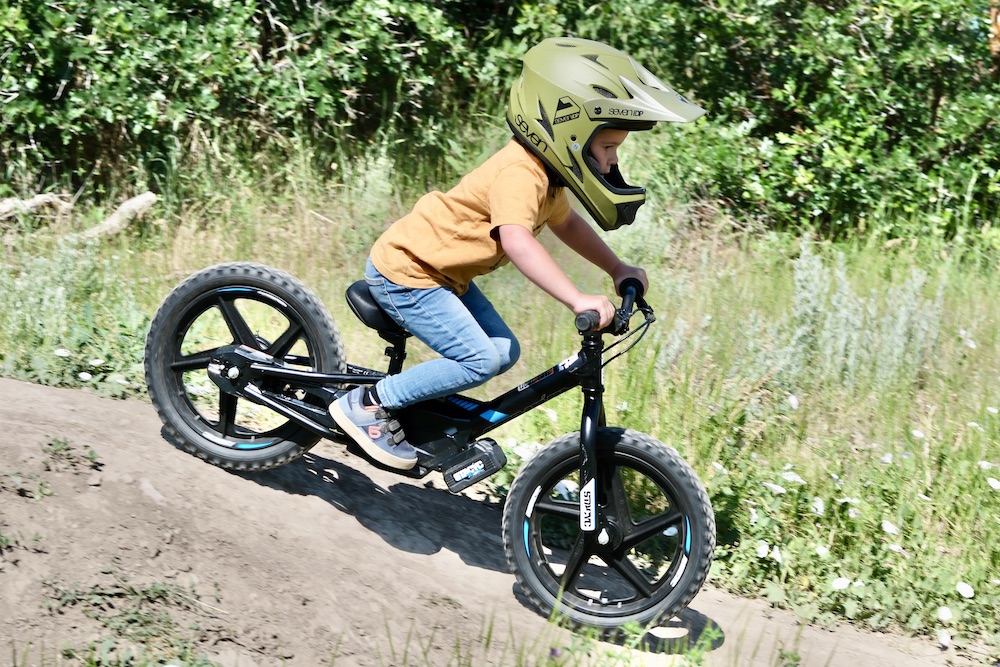
These little bikes strike the ideal balance between fun and safety. Whatever the rider’s experience level, start the bike on its lowest speed setting and have your child practice in a large, flat, grassy area.
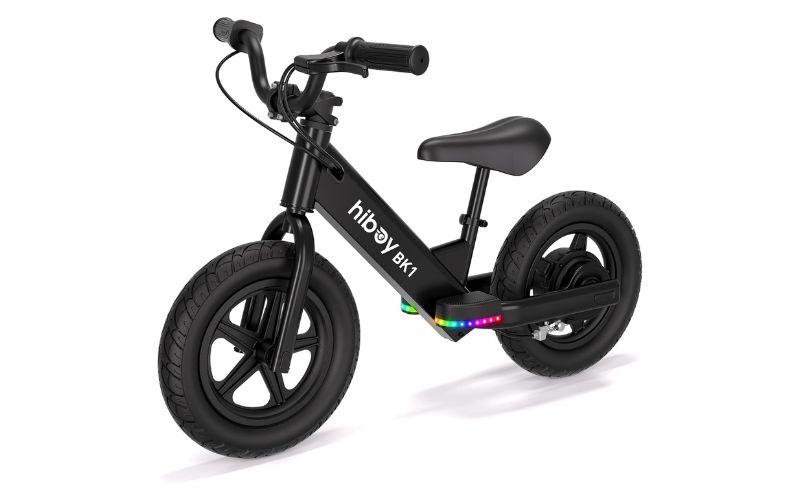
Hiboy BK1
$199
SIZE INFO: 17.2″–19.1″ seat height
MOTOR: 100W rear hub
BATTERY LIFE: ~4.9 miles
MAX SPEED: 5.6 or 9 mph
BRAKE: Rear drum
THROTTLE: Yes (balance-bike type, no pedals)
CERTIFICATION: UL 2271
LIGHT: No
WEIGHT: 20 lb.
About the Hiboy BK1
A budget-friendly electric balance bike for the youngest riders, with a low 5.6 mph beginner mode and a 9 mph higher setting. It’s the rare inexpensive option that still posts a real UL 2271 battery certificate, and at 20 lb it’s light enough for most kids to manage.
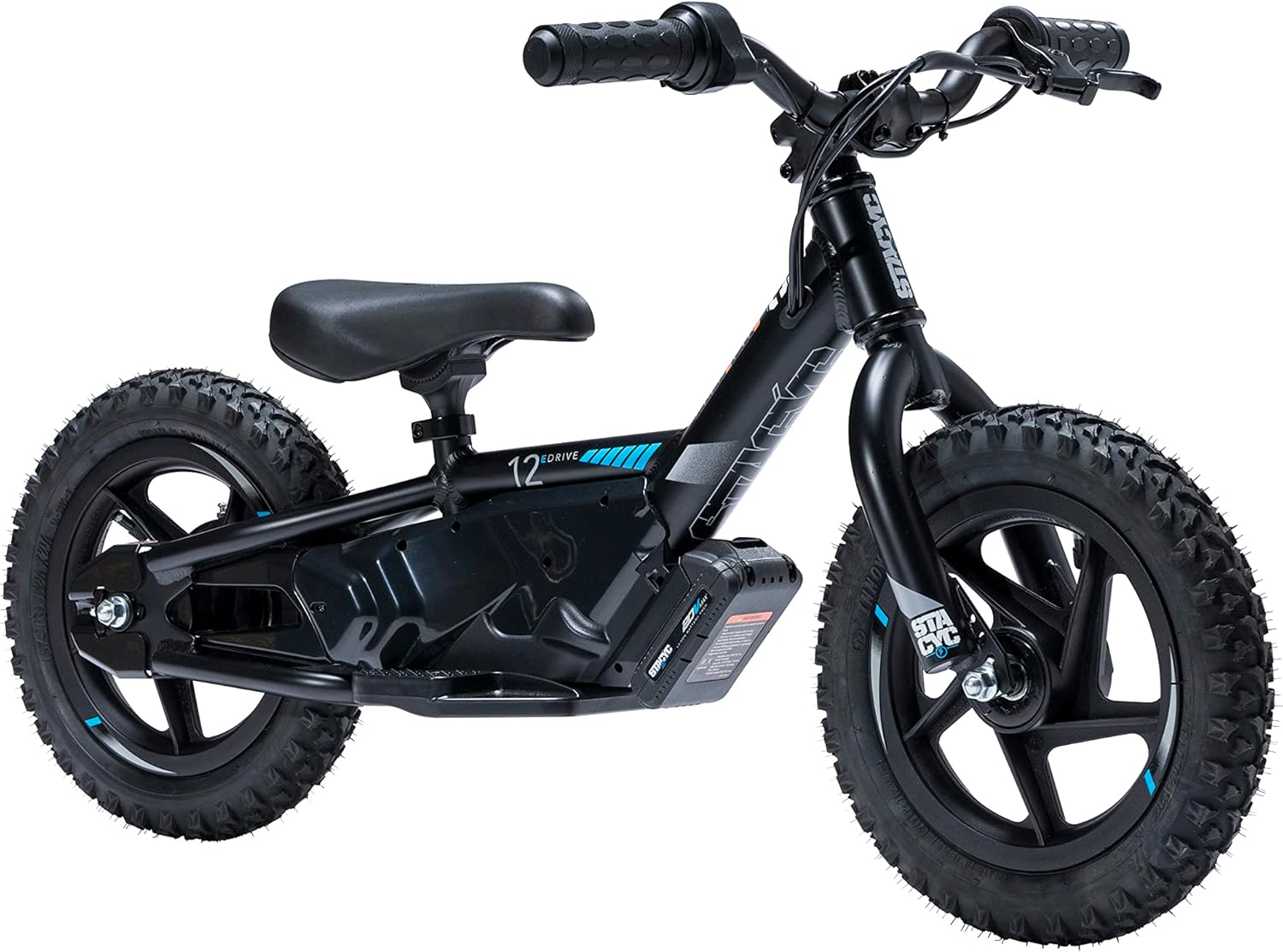
STACYC 12eDrive
$799
SIZE INFO: 13″ seat height (fixed)
MOTOR: 18V platform (mfr. doesn’t publish wattage)
BATTERY LIFE: 30–60 min (swappable batteries)
MAX SPEED: 5, 7, or 9 mph
BRAKE: Rear drum
THROTTLE: Yes (balance-bike type, no pedals)
CERTIFICATION: UL 2271
LIGHT: No
WEIGHT: 17 lb.
About the STACYC 12eDrive
The benchmark electric balance bike, owned by Harley-Davidson and built tough for the youngest riders (roughly ages 3–5). Three speed settings let a beginner start slow and work up, and at 17 lb it’s the lightest of the group. Premium price, but proven durability, a UL-tested battery and a huge STACYC community of users.
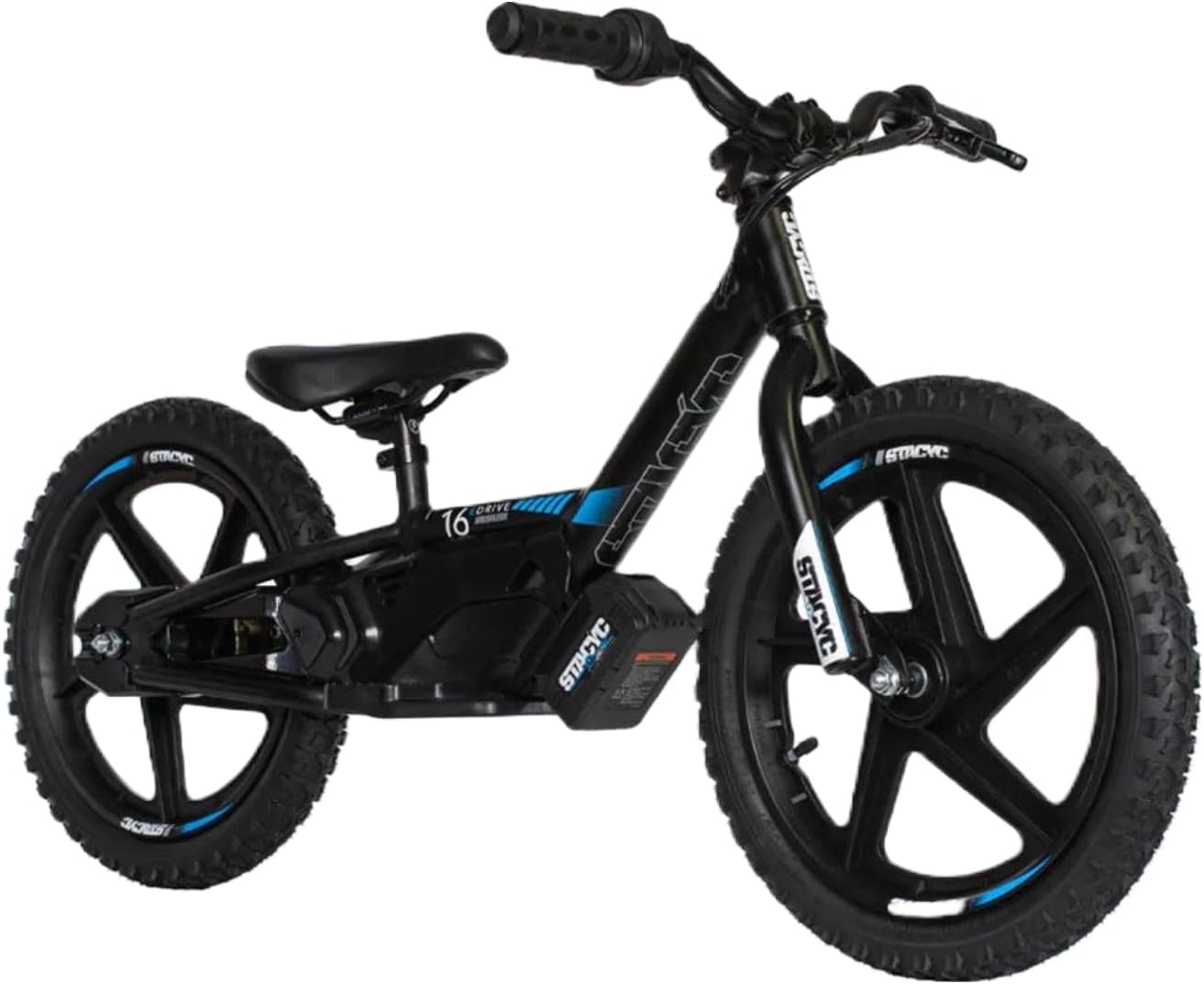
STACYC 16eDrive Brushless
$1,049
SIZE INFO: 17″ seat height (fixed)
MOTOR: 18V platform (mfr. doesn’t publish wattage)
BATTERY LIFE: 30–60 min (swappable batteries)
MAX SPEED: 6, 8, or 13.5 mph
BRAKE: Rear drum
THROTTLE: Yes (balance-bike type, no pedals)
CERTIFICATION: UL 2271
LIGHT: No
WEIGHT: 19 lb.
About the STACYC 16eDrive
The bigger sibling for slightly older riders (roughly ages 5–7), with a brushless motor and a higher 13.5 mph top setting for more confident kids. Same swappable-battery system and build quality as the 12eDrive. Because that top speed is quick, keep it on the lower settings until your child is genuinely ready for more.
Best Electric Bikes for Kids (Ages ~8–11)
This is a tiny, premium category, but there are some genuine kid-specific Class 1 options with pedal-assist, torque-sensors and no throttles, but they are still pretty pricey. There still isn’t an safe and affordable pedal e-bike for this age, so for budget or casual everyday use, a quality electric scooter or a regular pedal bike remains the better value.
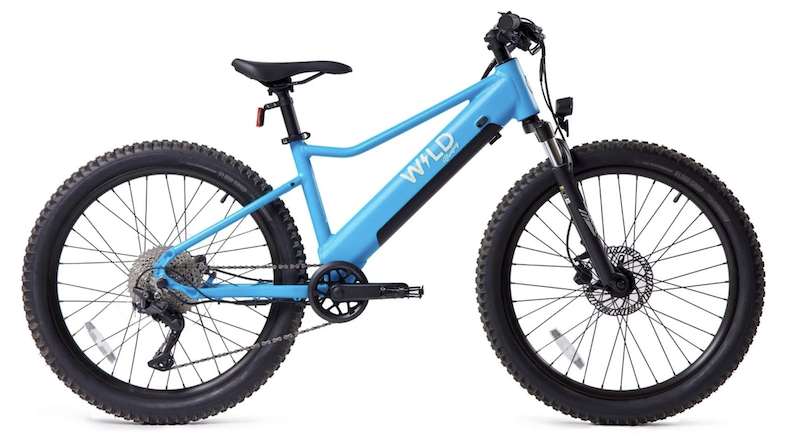
Bluejay WILD
$2,995
SIZE INFO: 3 sizes, riders 4’2″ to 5’10” (designed for ages 8–12)
MOTOR: 250W (45 Nm torque)
BATTERY LIFE: Up to 45–50 miles
MAX SPEED: 12 mph (small) or 15 mph (medium and large) — hardcoded in firmware, cannot be raised
BRAKE: Hydraulic disc
THROTTLE: No (pedal-assist only, torque sensor; 5 assist levels, Shimano Deore 10-speed)
CERTIFICATION: UL 2849-compliant components (per Bluejay)
LIGHT: Yes
WEIGHT: ~44 lb. (small) / ~47 lb. (medium)
About the Bluejay WILD
An all-road bike built for streets, paths, and gravel the Bluejay is great for everyday neighborhood and family riding. Its standout safety feature is the top speed: 12 mph on the small frame, 15 mph on medium and large, all hardcoded in firmware so a tech-savvy kid can’t raise them. It’s on the heavier side at 44–47 lb, but it’s no-throttle with a smooth torque sensor and comes in three sizes that grow with your child.
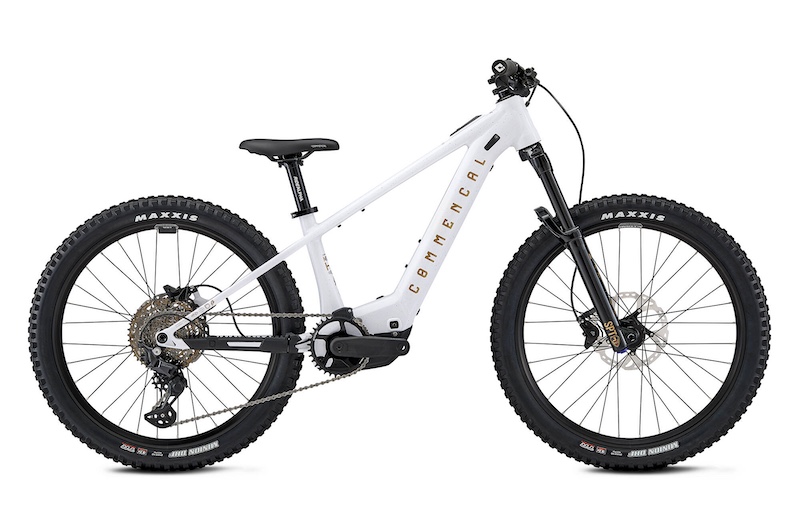
Commencal Meta HT 24 Power
$3,500
SIZE INFO: One size, riders ~4’2″ to 4’11” (Commencal recommends ages 8–9)
MOTOR: Bosch mid-drive (2026 redesign; earlier models used a 250W Shimano STEPS E7000)
BATTERY: Integrated (2026 redesign; earlier models used a 418 Wh external pack)
MAX SPEED: ~15.6 mph assist cutoff (confirm on the current model)
BRAKE: Hydraulic disc
THROTTLE: No (pedal-assist only, torque sensor)
CERTIFICATION: EN 15194 (Bosch systems are also built to UL 2849 — confirm)
LIGHT: No
WEIGHT: ~36 lb. (2026 model; about 5 lb lighter than the previous version)
About the Commencal Meta HT 24 Power
This is a serious trail e-mountain bike for young riders ready for real singletrack — and, with the Specialized Turbo Levo SL Kids discontinued, it’s essentially the only kids’ eMTB still sold in the US. The 2026 redesign added a Bosch drive system and integrated battery, dropping the weight to about 36 lb. It’s expensive, but for a trail-riding family it’s the only real game in town.
Best Electric Bikes for Kids Ages 12+
For older kids who can already handle a regular bike confidently and want a little extra power, these limited-power, lower-speed bikes make good “starter e-bikes.” (For younger kids, we’d stick with a balance bike or an electric scooter as an 15 mph pedal e-bike is too much for most riders under 12.) Models change often, but when you’re shopping, look for a motor under 500W and a top assist speed under 20 mph.
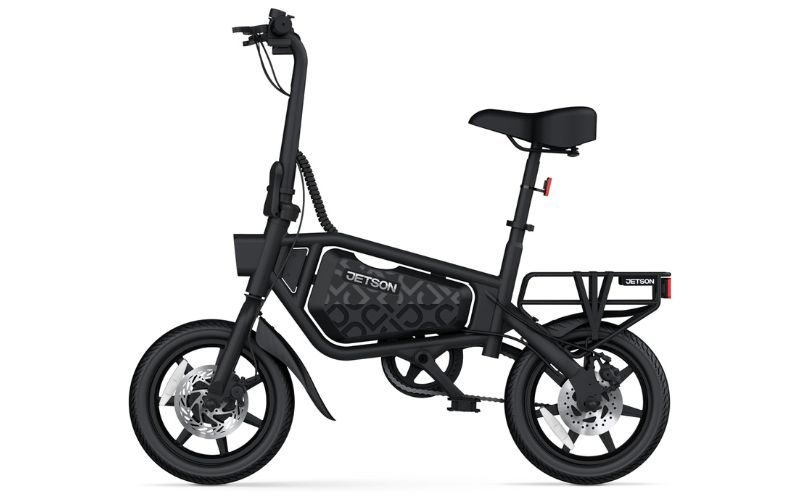
Jetson Bolt Pro
$659
SIZE INFO: 25″–33″ seat height
MOTOR: 350W rear hub
BATTERY LIFE: Up to 15 miles
MAX SPEED: 15.5 mph
BRAKE: Dual mechanical disc
THROTTLE: Yes (removable)
CERTIFICATION: UL 2849
LIGHT: LED headlight
WEIGHT: 42 lb.
About the Jetson Bolt Pro
A budget starter e-bike for tweens, with a low 15.5 mph cap and a throttle that can be removed to make it pedal-assist only. The small wheels and compact frame make it more of an around-the-neighborhood runabout than a natural-pedaling bike. Affordable and UL-certified, but remove the throttle before handing it over.
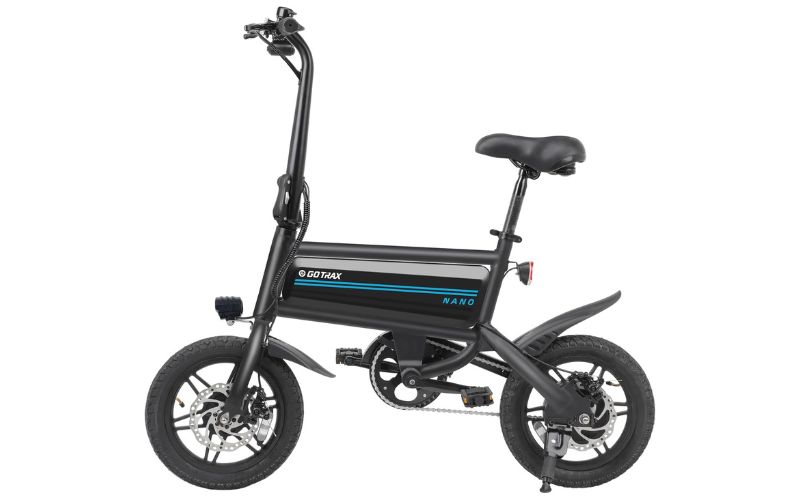
GoTrax Nano
$379
MSRP: $379
SIZE INFO: Adjustable seat (height not published)
MOTOR: 250W rear hub
BATTERY LIFE: Up to 15.5 miles
MAX SPEED: 15.5 mph
BRAKE: Dual mechanical disc
THROTTLE: Yes (removable)
CERTIFICATION: UL 2849
LIGHT: LED headlight
WEIGHT: 51 lb.
About the GoTrax Nano
The cheapest pick here — a compact folding bike with a removable throttle and the same 15.5 mph cap. It’s heavy at 51 lb and not the most natural to pedal, but it’s a low-cost, certified way to get a tween riding. We’d remove the throttle and treat it as an entry point rather than a long-term bike.
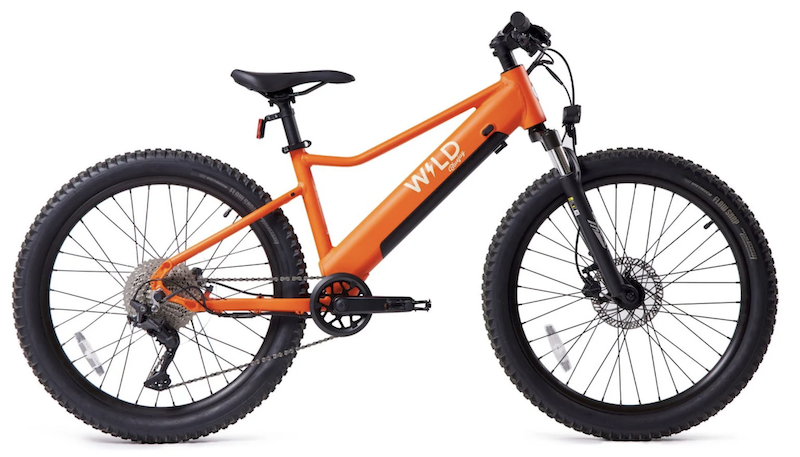
Bluejay WILD – size Large
$2,995
SIZE INFO: 3 sizes, riders 4’2″ to 5’10” (designed for ages 8–12)
MOTOR: 250W (45 Nm torque)
BATTERY LIFE: Up to 45–50 miles
MAX SPEED: 12 mph (small) or 15 mph (medium and large) — hardcoded in firmware, cannot be raised
BRAKE: Hydraulic disc
THROTTLE: No (pedal-assist only, torque sensor; 5 assist levels, Shimano Deore 10-speed)
CERTIFICATION: UL 2849-compliant components (per Bluejay)
LIGHT: Yes
WEIGHT: ~44 lb. (small) / ~47 lb. (medium)
About the Bluejay WILD
The kids’ Bluejay WILD listed above isn’t only for 8–11 year-olds — its large frame fits riders up to about 5’10”, which covers a lot of tweens and young teens. For this age it’s the standout no-throttle, pedal-assist option: firmware-locked at 15 mph (so it can’t be sped up) and built specifically for kids, which makes it safer than stepping a 12-year-old onto a faster adult e-bike. It costs more than the budget picks above, but it’s the one we’d choose for a tween who’ll grow into it.
Best Electric Bikes for Kids Ages 16+
For older riders who may already be driving and understand the rules of the road, a more powerful e-bike is often appropriate. That said, many teens still aren’t ready for the heavy weight of a typical e-bike combined with its higher speed. So for riders 16 and up, we emphasize lightweight bikes that top out around 20 mph but still feel like riding a traditional pedal bike.
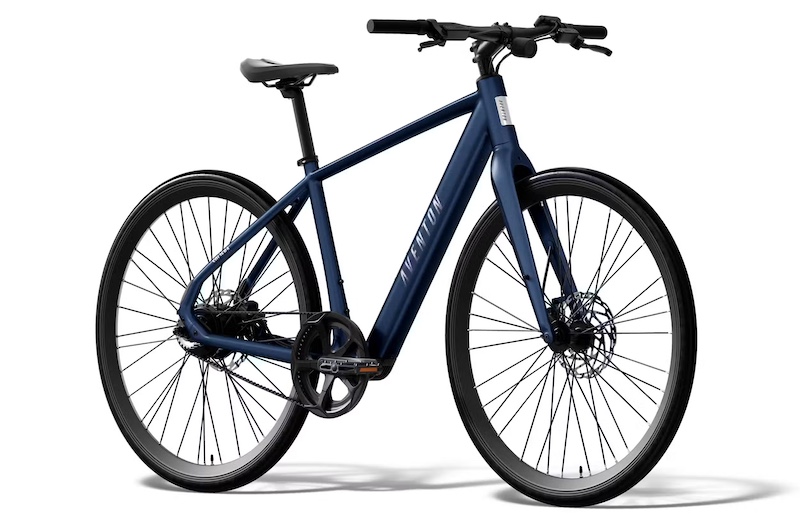
Aventon Soltera 3 ADV
$1,499
SIZE INFO: 3 sizes, riders 5’1″ to 6’4″
MOTOR: 250W rear hub
BATTERY LIFE: Up to 70 miles
MAX SPEED: 15.5 mph
BRAKE: Dual hydraulic disc
THROTTLE: No
CERTIFICATION: UL 2849 and UL 2271
LIGHT: LED headlight
WEIGHT: 37 lb.
About the Aventon Soltera 3 ADV
The lightest bike on the list at 37 lb, with a low-maintenance belt drive and a stealthy look that doesn’t shout “e-bike.” It’s true no-throttle pedal-assist, and Aventon’s nationwide dealer network makes test rides and service easy to find. A great low-key pick for a responsible teen who wants a bike, not a moped.
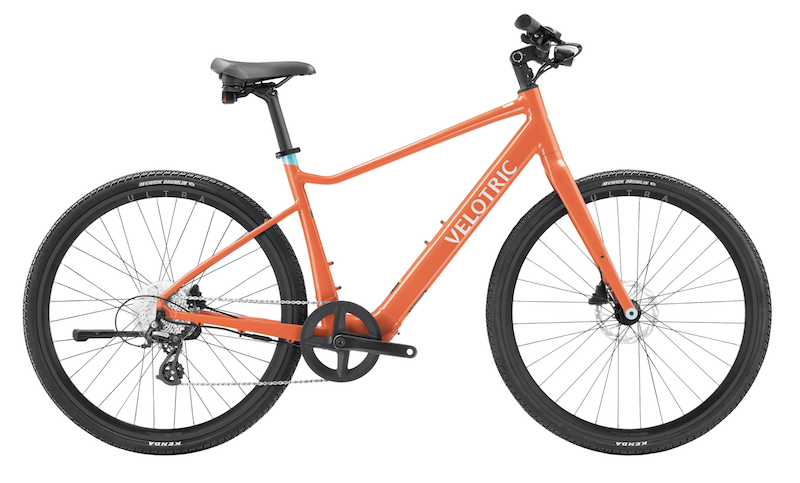
Velotric T1 ST Plus
$1,399
SIZE INFO: 2 sizes, riders 4’11” to 6’4″
MOTOR: 350W rear hub (600W peak), 40 Nm
BATTERY LIFE: Up to 70 miles
MAX SPEED: 20 mph default (adjustable 12–28 mph in the app)
BRAKE: Dual hydraulic disc
THROTTLE: No (pedal-assist only, torque sensor)
CERTIFICATION: UL 2271 (battery) + UL 2580 (cells)
LIGHT: LED front and rear
WEIGHT: 39 lb.
About the Velotric T1 ST Plus
The best value in this tier, a 39 lb, no-throttle, torque-sensor bike that rides like a normal road bike, at $1,399 with up to 70 miles of range. It ships as Class 1 (20 mph) and can be dialed down to 12 mph, so a parent can cap it lower for a teen. Unlike the Bluejay’s locked limit, though, this one isn’t tamper-proof as it can also be raised to 28 mph in the app, so set it and check it.
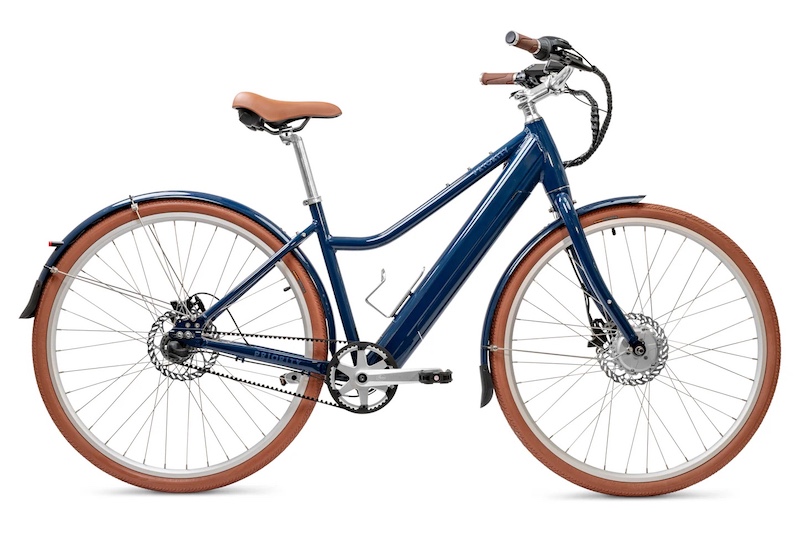
Priority Glide
$1,799
SIZE INFO: 2 sizes, riders 5’2″ to 6’2″
MOTOR: 350W front hub
BATTERY LIFE: Up to 60 miles
MAX SPEED: 20 mph
BRAKE: Dual hydraulic disc
THROTTLE: Yes (removable)
CERTIFICATION: UL 2271
LIGHT: LED headlight
WEIGHT: 49 lb.
About the Priority Glide
A belt-drive commuter built for low maintenance — the carbon belt means no greasy chain to clean or lube, a real perk for a teen’s bike. It ships with a throttle that can be removed for pedal-assist-only riding. Heavier (49 lb) and pricier than the Soltera or Velotric, but durable and comfortable.
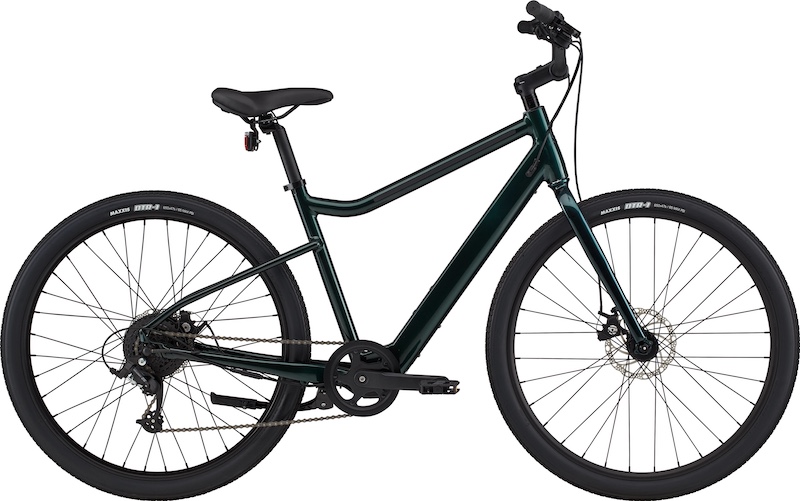
Cannondale Treadwell Neo 2
$1,925
SIZE INFO: 2 sizes, riders 4’11” to 6’0″
MOTOR: 250W rear hub
BATTERY LIFE: Up to 47 miles
MAX SPEED: 20 mph
BRAKE: Dual mechanical disc
THROTTLE: No
CERTIFICATION: EN 15194
LIGHT: No
WEIGHT: ~39 lb.
About the Cannondale Treadwell Neo 2
A genuine bike-shop-quality option from a major brand, with a light ~39 lb frame and true no-throttle pedal-assist. It’s certified to the European EN 15194 standard rather than UL, and buying from a Cannondale dealer means local service and support. The priciest pick here, but the most “kids bike” look of the bunch.
How to Choose a Safe Kids’ E-Bike
This is how to choose well among the e-bikes that are appropriate for kids. We focus only on the features that matter specifically for kids — things like battery volts, motor torque figures, and the finer points of e-bike electronics affect adults and kids alike, so we won’t rehash them here. For a general primer, REI’s How to Choose an Electric Bike is a great resource. (Our Best Electric Bikes for Women guide also covers options for older teens and adults.)
Why an e-bike for a kid?
For a lot of families, it’s simply fun. Bikes like the Jetson and GoTrax are simple, low-powered options for rides around the neighborhood or on the bike path together. But the bigger payoff is range and terrain: an e-bike lets a kid ride farther and climb hills that would otherwise be too much, which is where a kids’ e-mountain bike like the Commencal Meta HT Power shines.
In our own family testing, an e-bike has a way of turning a ride that used to be too long, too hard, or too boring into an adventure kids actually want to go on.
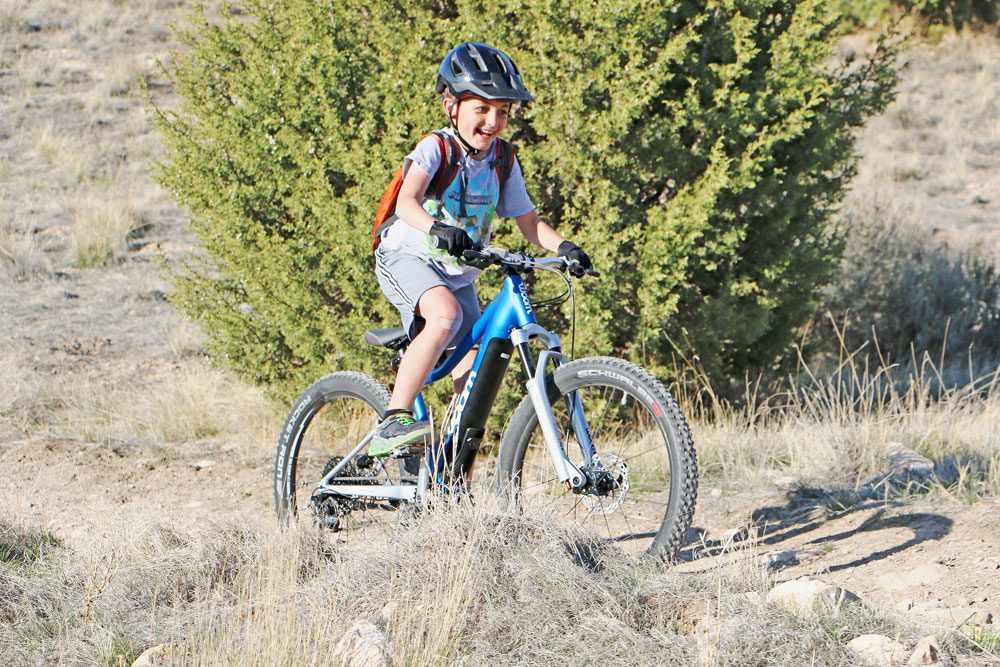
What a kid-ready e-bike has
- Functional pedals your child pedals to make it go
- A motor that only assists while pedaling — no throttle, or one that can be removed
- An assist cut-off of 20 mph or less (we prefer 12–16 mph for younger riders)
- A motor rated 750W or under
- A UL 2849 (system) or UL 2271 (battery) certification — or the EN 15194 equivalent — to reduce fire risk
Understand the three e-bike classes
Before you shop, it helps to know the three classes, because they decide where a bike can legally be ridden and often who can ride it. The two things that separate the classes are whether the bike has a throttle and the top speed at which the motor will keep assisting. A throttle is a lever or button that powers the motor without pedaling; with no throttle, the motor runs only when the rider pedals.
| Class | Max assisted speed | Throttle |
|---|---|---|
| Class I | 20 mph | No |
| Class II | 20 mph | Yes |
| Class III | 28 mph (20 mph on throttle) | Optional |
The three-class system was created by PeopleForBikes and has been adopted by roughly 40 states; the exact definitions and where each class may be ridden vary by state.
- Class I: the motor assists only while pedaling and stops helping at 20 mph. You can pedal faster under your own power, but the motor won’t push you past 20. No throttle.
- Class II: same 20 mph motor limit, but adds a throttle that can move the bike with no pedaling. The rider can still choose to pedal instead.
- Class III: assists up to 28 mph while pedaling (and up to 20 mph if it has the optional throttle). Because they’re faster, Class III bikes are the most regulated and are often limited to street use only.
Every kid-specific e-bike we recommend is a Class I bike with no throttle — and the good ones cap assistance even lower for safety. The Commencal Meta HT Power, for example, is a kids’ eMTB whose motor stops assisting at 15.6 mph, well under the 20 mph Class I limit. Don’t assume an inexpensive big-box or online bike is Class I, though; plenty ship as Class II with a throttle, or exceed the limits altogether.
Laws vary by class and location: many areas bar kids under 16 from Class III, and many don’t allow anyone — even adults — to ride Class II on bike paths and trails. Check PeopleForBikes’ Electric Bike Laws for your state’s rules, and see the age guidance above before you buy.
Look for a torque sensor
A torque sensor lets the rider control the bike’s speed with the pedals: pedal harder and it gives more help, ease off and it backs down. Without one — on a cheaper cadence-sensor bike — pedaling slower will not slow the bike down, which is confusing and genuinely dangerous for a kid.
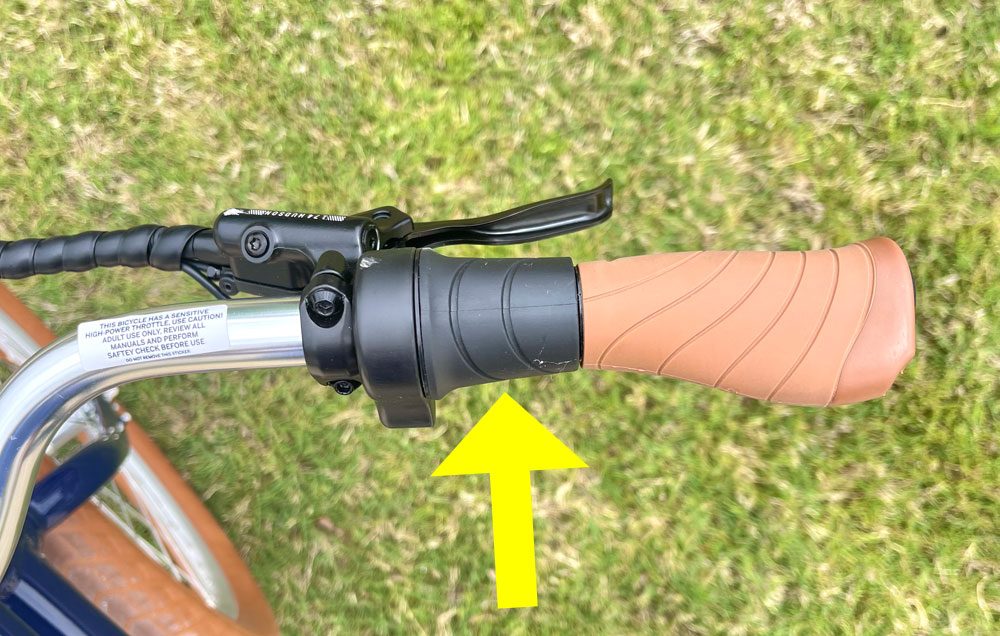
Say no to the throttle
Throttles let kids reach high speed instantly without pedaling, and we’d avoid them for children. The good news: the throttle on essentially every e-bike can be turned off or removed after purchase (the one exception is electric balance bikes, which have only a throttle). Better still, choose a bike that never had one.
Insist on a fire-safety certification (UL or EN)
The spec we never skip is fire-safety certification, because the real hazard with cheap e-bikes isn’t just speed, it’s the lithium battery. The two US standards to look for are UL 2271, which certifies the battery pack itself against overheating, short circuits, and fire, and UL 2849, the tougher system-level standard that certifies the whole electrical setup — battery, charger, and controller together. UL 2849 is the gold standard, but UL 2271 covers the part that actually catches fire, so either is a meaningful signal.
Established bike-shop brands like Trek, Specialized, and Cannondale often certify instead to EN 15194, the European e-bike standard, or build around UL-compliant Bosch or Shimano systems; EN 15194 is rigorous, and California law treats it as equivalent to UL 2849, so we count it too. What we won’t accept is no certification at all — which is exactly what the no-name bargain bikes carry, and a big reason we don’t recommend them.
One practical tip: a trustworthy brand will show you the certificate, not just say “UL tested.” The best listings post the actual certificate PDF right on the product page, with the standard number on it. If a bike only claims certification with no document and no standard number, you legally can ask the seller for it (a legitimate company will hand it over) or look the brand up in UL’s directory at verify.ul.com before you buy.
Mind the weight
E-bikes are heavy. The motor helps get the bike rolling, but the extra mass still makes them harder to maneuver than a regular bike, especially in tight turns and quick stops. The problem is biggest for tweens and teens on adult e-bikes, which can weigh up to 70 lb., more than half some riders’ body weight, and far too much to handle safely.
As with regular bikes, lighter e-bikes tend to be expensive, and you’ll notice many budget brands don’t even publish a weight (they’d rather you not realize how heavy the bike is). When in doubt, track the weight down before you buy.
Sizing: e-bikes vs. regular bikes
Unlike regular kids’ bikes, where wheel size doubles as a sizing guide, so a child on a 24″ pedal bike usually fits another 24″ pedal bike, wheel size is not a reliable way to size an e-bike. Some adult e-bikes roll on 20″ wheels, and plenty of kids’ e-bikes use 24″ wheels, so two bikes with the same wheel size can fit completely different riders.

The best way to size an e-bike is by minimum and maximum seat height matched to your child’s height and inseam. (Not sure what size your child needs? See our Kids’ Bike Sizing Guide.)
E-bikes vs. electric balance bikes
Small electric balance bikes without pedals (such as STACYC) typically aren’t covered under e-bike laws, but they should still be used with caution and adult supervision. They’re the right answer for the youngest riders, who won’t yet fit a true pedal e-bike.

Skip any bike built to carry a passenger
Some comfort and “kids'” e-bikes come with a long saddle, a rear deck, or foot pegs that invite a second rider. Avoid them: a passenger’s weight dramatically changes how the bike balances, steers, and stops, and the feature itself encourages exactly what you don’t want — kids doubling up and riding with friends.
A child’s e-bike should be built for one rider. (A family cargo bike (like the Aventon Abound below), where an adult does the riding and a child comes along, is a different story.)

Bottom line: if you can’t find a kid-appropriate version of the bike you’re picturing, it’s often because a safe version doesn’t exist yet — and that’s genuinely okay. Limited options here are a feature, not a failure. For younger riders especially, a quality electric scooter is frequently the smarter, safer choice.
Frequently Asked Questions
In most U.S. states, yes — a 12-year-old can legally ride a Class 1 (pedal-assist, no throttle) or Class 2 (throttle, 20 mph) e-bike, while faster Class 3 bikes are usually restricted to riders 16 and up. But legal and advisable aren’t the same thing. The CPSC recommends that kids 9–12 not ride anything faster than 10 mph, so for this age we steer families toward the lowest-speed, pedal-assist-only options — and we’d skip any throttle entirely. Always confirm the rules in your own city or county, since local limits are increasingly stricter than state law.
They can be — on the right bike, with the right speed limits, a properly fitted helmet, and adult judgment about where and when a child rides. But this is a category that carries real risk, and we won’t pretend otherwise. E-bike injuries are more likely to require hospitalization and tend to be more severe than regular-bike injuries, and helmets cut head-injury risk dramatically — yet the large majority of injured young riders weren’t wearing one. Injury datasets also often don’t distinguish true speed-limited e-bikes from far more powerful out-of-class machines, which inflates how alarming the raw numbers can look. Choose a genuine, low-speed, pedal-assist bike and insist on a helmet, and you’ve eliminated most of the risk that shows up in those statistics.
No. Despite being sold and marketed right alongside e-bikes, machines like the Sur-Ron and Talaria are electric motorcycles. Motorcycles with no functional pedals designed for off-read use with motors many times more powerful than a legal e-bike, and speeds of 30–60+ mph. In most places they aren’t street-legal as bicycles and require registration, a license, and motorcycle-grade safety gear, which puts them off-limits to most minors. We do not recommend them for kids, full stop. If a “bike” can’t be pedaled, it isn’t a bike.
Three things: pedals, power, and speed. A real e-bike has working pedals, a motor of 750W or less, and tops out at 20 mph of assist. An electric dirt bike or e-motorcycle has no functional pedals (or fake ones), a motor often 1,000–8,000W, and speeds well past 20 mph. Legally they’re treated completely differently, one is a bicycle, the other a motor vehicle. The marketing deliberately blurs this line, so judge by the hardware, not the product name.
The best kid-specific e-bikes don’t. A throttle lets a rider hit high speed instantly without pedaling, which we consider the opposite of what you want for a child still developing judgment and bike-handling skills. A pedal-assist bike keeps your child engaged and in control as the motor only helps while they pedal, and stops assisting the moment they stop pedaling. Most e-bikes with a throttle let you remove or disable it, and we’d recommend doing exactly that before handing the bike to a teen. Better yet, choose a bike that never had one.
Kid-specific e-bikes are typically capped at 12–16 mph, and any Class 1 or Class 2 bike caps motor assist at 20 mph. The slowest options are electric balance bikes for the youngest riders, many of which have selectable speed modes as low as 5–7 mph, a feature we love for new riders, because it lets a child ease in before unlocking more speed (and the adjustment is usually hidden so kids can’t bump it up themselves).
Don’t size an e-bike by wheel size the way you would a regular kids’ bike, some adult e-bikes use 20″ wheels and plenty of kids’ e-bikes use 24″, so wheel size isn’t a reliable fit guide. Go by seat height instead, which vary a lot by brand.
Expect roughly $400 for a basic electric balance bike, and $1,500–$3,000 for a quality kid-specific e-mountain bike. The price climbs because the features that make an e-bike safe and pleasant for a child — a torque sensor that lets them control speed with their legs, a quality battery with UL certification, light weight, and real customer support — are genuinely expensive to build in. Bargain-priced “kids’ e-bikes” usually cut exactly those corners, which is why we don’t recommend them.
It depends entirely on how they’ll ride it. For trails and serious off-road riding, a kid-specific Class 1 e-mountain bike like the Commencal Meta HT Power is the answer — currently the only kids’ eMTB sold in the US. For getting around the neighborhood or commuting, a lightweight, no-throttle Class 1 bike that fits a taller tween or teen — like the Aventon Soltera 3 ADV — is a better, more affordable fit. Whatever the use, our advice is the same across the board: pedal-assist only, 20 mph max or less, and a certified battery (UL or EN). See our picks above, organized by age.
FTC Disclosure: Affiliate links are included in this review. No monetary compensation was provided for this review, however, some of the reviewed products were supplied by the manufacturer or distributor to help facilitate this article. All opinions and images are that of Two Wheeling Tots LLC. All content and images are copyrighted and should not be used or replicated in any way. View our Terms of Use.